
Cooking sous vide burgers gives you juicy hamburgers with a consistent texture from edge to edge. Sous vide, also known as precision cooking, uses a temperature-controlled water bath to cook food evenly.
The technique is used in fine-dining restaurants, but it is also useful for home cooks who want to try something different with a familiar meal. This guide shows you how to shape, season, and cook your burger exactly how you like it.

⬇️ Table of Contents
How to Make Sous Vide Burgers
Sous Vide Cooking
The sous vide hamburger technique involves placing food in airtight sealed bags, putting the bags into temperature-controlled water, and setting the machine to the exact temperature you select.
One of the most useful parts of this sous vide burger recipe is that your food does not overcook in the usual way. You set the temperature and cooking time, creating repeatable results.
Ingredients
- 1 pound ground beef / Serves 4 burgers
- 1 egg yolk / Never add the egg whites to sous vide burgers
- 2 teaspoons kosher salt / Or to taste
- ½ teaspoon black pepper
Burger Buns
These are two of our suggested buns. You can find more options in our guide to types of burgers:
- King's Hawaiian burger buns
- Potato burger buns
Optional Ingredients
- Worcestershire sauce / Do not add too much. You can always add more after cooking when you eat.
- 2 teaspoons minced garlic / The finer the cut, the better.
Seasoning & Shaping
- Add all your seasonings, such as salt and pepper, at one time. Try not to overmix the ingredients with the meat. Work quickly to combine.
- Adding egg yolks helps bind the meat together. Use 1 egg yolk per pound. Whip the egg yolk before adding it to the protein.
- Form the burgers quickly. Do not keep working the ground beef into shape. The heat from your hands starts to break down the fat. In other words, the fat begins melting.
- Once the burgers are shaped, place them in the refrigerator to chill and set up for 20-30 minutes. This helps the burgers stay together while they cook.
- Excellent option: grind your beef for a luxurious, out-of-this-world experience.

Add salt and pepper to taste. I suggest at least 2 teaspoons of salt per pound of ground beef. I used garlic salt for a little extra flavor. The key is not adding too much to the ground beef, or you risk masking the meat's natural flavor.
When shaping the burgers, I like using a burger shaper. It keeps the thickness consistent across all the patties, so everyone gets a burger that looks like everyone else's.
The main reason to use a burger shaper is the consistency it creates while cooking. If every burger has the same thickness, all the burgers will be done at the same time.
Be gentle, and do not press the beef into shape too firmly. Lightly press down instead. Pushing hard will result in tough, gummy burgers.


Place the sous vide burgers in the refrigerator for 20 to 30 minutes. This helps the burgers set up and keep their shape while cooking.
Our Selection of Beef: Sirloin Flap, aka Bavette
- Sirloin flap is highly marbled, which offers more flavor.
- Only 12 pounds per steer or cow, which makes it special.
- Excellent for fajitas. The photo below shows the sirloin flap.

Sous Vide Burger Temperature Chart
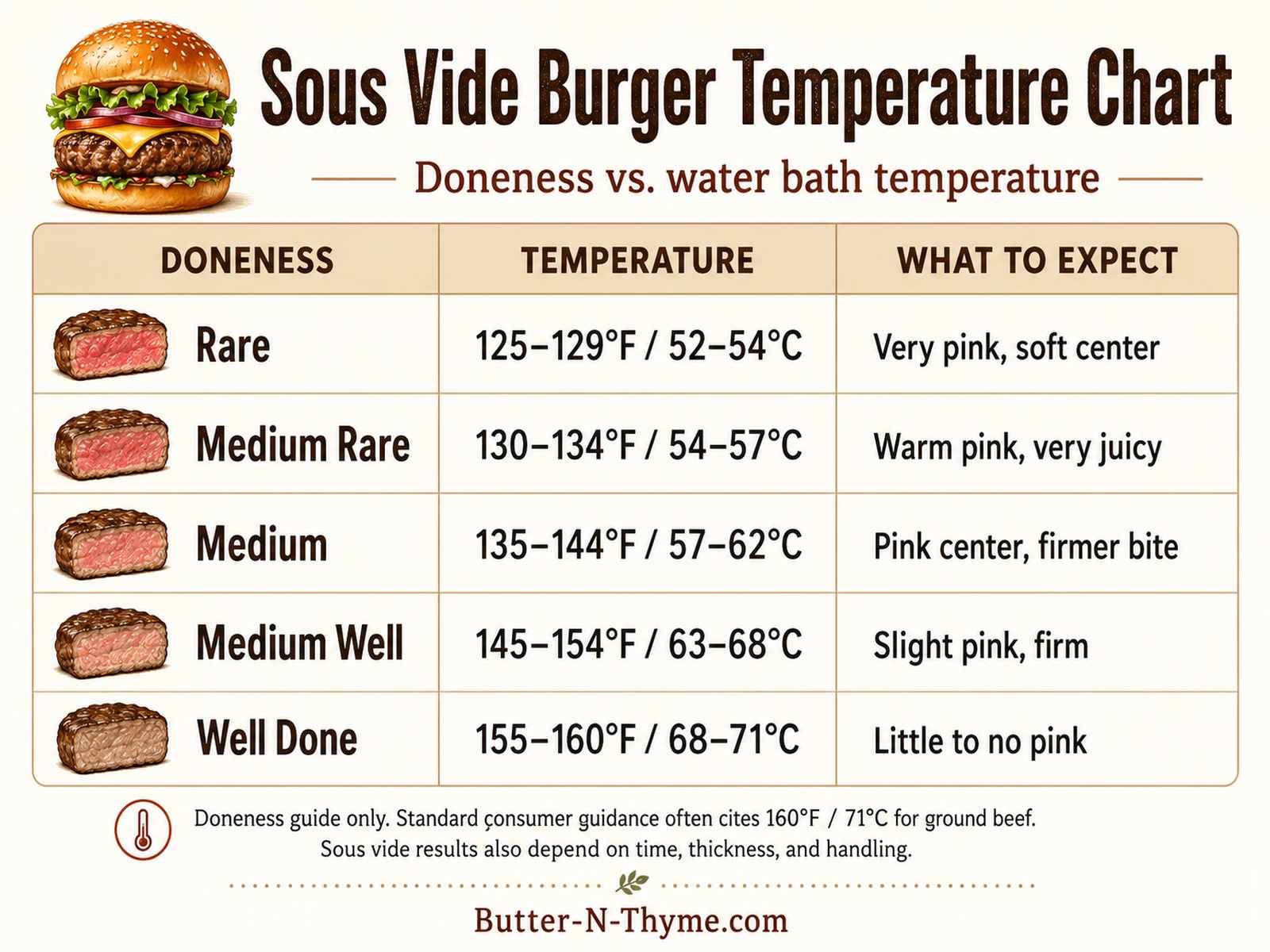
Choose the water-bath temperature for the texture you prefer. The final result also depends on the cooking time, patty thickness, and how gently you handle the ground beef.
Food-safety note: This infographic is a doneness guide. FDA consumer guidance recommends cooking ground meat to an internal temperature of 160°F as measured with a food thermometer. Use the approach appropriate for your household, especially when serving children, older adults, pregnant people, or anyone with a weakened immune system.

Once the machine reaches the desired temperature, place the sealed burgers in the water bath and set the timer for at least 1 hour. The controlled water temperature helps cook the patties evenly from edge to edge.
Grinding Meat for Sous Vide Burgers
Using a KitchenAid mixer, first unscrew and remove the protective cap shown in the photo below. Next, attach the meat grinder to the utility port at the front of the mixer.

Putting the KitchenAid grinder together is a snap.
Start by placing the grinding gear in the middle of the grinder base and push it all the way to the back to secure it.
Next, add the blade, followed by the extruder plate, which determines the size of the ground meat. Screw on the front cap, and you are all set to go. See below.

Secure the meat grinder attachment to the KitchenAid mixer with the front plate screw.

Place the blade onto the KitchenAid grinder first, as shown below on the left.
Follow it with the grinder plate, shown below on the right.

Last, place the front cap on to secure everything in place.

To grind the meat, slice it into long strips that fit into the grinder. Run all the meat through.
If you would like a typical ground-meat size, remove the grinder plate, switch it out for the second one with the smaller holes, and grind with the smaller plate a second time. Use the long stick to help push the beef through.
TIP: With beef, do not try to grind with the small plate before using the large plate first. You need to tenderize the meat with the large one first. Plus, the machine will give you trouble if you try to use the small one first. Yeah, I made that mistake before.

Meat Substitutions
Ground Beef
- A classic burger option that is sure to be juicy.
- Beef stands up to big flavors such as onions, bacon, and mustard.
- Shop for beef labeled 80% meat / 20% fat. An even higher fat percentage is often used in restaurants.
- Tip: for more fat and flavor, grind bacon and add it to the beef.
- Grinding your meat is easy, plus you can blend different cuts of beef. Create a burger flavor profile like no other.
- Examples of cuts of beef to grind: short rib, sirloin, brisket, flank, bison, and skirt steak.
Ground Chicken
- Most grocery stores sell either ground chicken or fresh chicken sausage. As an option, you can remove the ground chicken from the sausage casing and form it into burger patties.
- Chicken is an excellent protein to grind yourself.
- Adding additional fat is very helpful. I like grinding bacon and mixing it in. Just be sure it is ground very well, so the bacon plays the part of a backup singer, not the lead.
Salmon / Fish
- Pulse fresh salmon in the food processor a few times to break up the protein. You do not want to puree the salmon. Pulse it about 4 to 7 times, depending on your machine. You will want texture in the burger.
- Add extra moisture and help bind the burger with ingredients such as mayonnaise, bacon grease, sour cream, butter, or ricotta cheese. You can also try our homemade ricotta recipe.
- Add more texture with cooked quinoa, cooked barley, or Ritz crackers. See our guide to cooking quinoa.
- Once the salmon is cooked, I like painting on something such as mayonnaise, adding panko bread crumbs, and finishing by pan-frying at a medium-low temperature for a few minutes. This creates a nicer presentation and added texture.
Enjoy our guide to how to sous vide salmon.
Machine Setup
Remove the sous vide machine from its case. Attach the holder that keeps it in place, connect it to the edge of the temperature-safe tub, and screw it into position.
Slide the machine into place and plug it in. Fill the tub with water to the indicated fill line. Make sure you fill it to a safe level to protect your motor.

Setup Consists Of:
- Anova sous vide immersion circulator
- Temperature-safe water tub
This helps with setting the temperature and a cooking timer. The app also includes many recipes with instructions.

The Anova app is helpful, with clear instructions and Bluetooth control.


The Anova Precision Cooker is useful for hands-off cooking because it keeps the water bath at a consistent temperature. The app also provides instructions and Bluetooth control.

Great sous vide burgers happen when you pay attention to a few details. Protecting the texture of the ground beef is the key.
Cooks often overwork the ground beef and end up with tough burgers. Be gentle with the meat and break it up with two forks.
FAQs
Our recipe calls for egg yolks, but no egg whites.
The reason is that egg whites do not begin to coagulate until a temperature of 137 degrees.
Many sous vide burger cooking temperatures are lower than 137 degrees, resulting in uncooked egg whites. More information.
Answer: Yes. The factor is what kind of protein you are cooking.
Ground beef can be cooked for around 2 hours.
Ground chicken can be cooked for around 2 hours.
Salmon can be cooked for around 90 minutes at 125.
FDA consumer guidance recommends cooking ground meat to an internal temperature of 160°F as measured with a food thermometer. The sous vide temperature chart on this page is a doneness guide. Results also depend on cooking time, patty thickness, and handling.
📖 Recipe

Sous Vide Burgers Step-by-Step Tutorial
Suggested Equipment
Ingredients
- 1 pound Ground Beef Serves 4 burgers
- 1 Egg Yolk Tip: never add the egg "whites" to sous vide burgers
- 2 teaspoons Kosher Salt Or To Taste
- ½ teaspoon Black Pepper
Burger Buns
- 4 Hawaiian Kings Burger Buns
Optional Ingredients
- 2 teaspoon Worcestershire sauce Do not add a lot. If more is needed, then add more after the cook and when you eat
- 1 teaspoon Minced Garlic The finer the cut the better

Instructions
Preparing The Burgers
- If you enjoy grinding your own meat, this would be an excellent time to do so. I find the burger texture like no other when you grind it fresh for burgers.
- Remove the beef from the packaging and place it into a large bowl. Using two forks, separate the beef. Fluffing it up the packaged beef is the idea.
- In a small bowl, add 1 egg yolk and mix well (if you decide to use Worcestershire sauce, I would add it straight to the egg yolk mix) incorporates the best this way. Tip: Never add egg 'Whites"... READ the notes sections below for a reason why not to use egg white
- Add in the salt and pepper. I like to sprinkle the salt and pepper very evenly. Watching someone just adding a bunch of salt to one section of the meat drives me crazy, lol. You'll never get even seasoning that way.
- Combine all the ingredients and then begin forming the burgers.I like using a burger shaper tool. They look like a cookie-cutter. A large circle. Place the burger shaper on a plate and add/fill with as much meat as you like. This recipe makes 4 burgers, so I would suggest dividing up into 4 sections evenly before shaping, so you know for sure you'll have 4 burgers the same size.

- Place the burgers into the refrigerator for 20-30 minutes to set up. This will help the burger stay together during the cook.

Cooking The Burgers
- Two options: 1) Place the burgers into a large food saver bag and remove the air using the machine.2) Or place each burger into a freezer bag. Freezer bags are temperature safe.(To remove the air, dip the plastic bag into the water bath. As the bag is lowered into the water, the air will be forced out.
- Add the sealed burgers to the heated water tub.TIP: You do not want the burgers floating around in the water. Keep them away from the machine motor or risk the bags becoming unsealed, allowing water to enter.It is a good option to place a large plate on top of the burgers to keep them submerged. Or adding weights to the bags.
Sous Vide Machine Setup
- Select a temperature-safe countertop (the machine temperature doesn't exceed 160 degrees.Use a temperature-safe water bath/tub, fill the tub up with water 80% of the way. You need to ensure there is enough water to protect the motor to be under the waterline.
Cook Times & Temperatures
- Next, set the sous vide machine temperature to the desired doneness.Blue/Rare 125-128°F / 51.6-53.8°CMedium Rare / Medium 129-135°F / 54.4-57.2°C Well Done 136-140°F / 57.7-60°C TIP: once you set the temperature, make sure the machine is on. You'll hear and see the machine moving the water around.
- Cooking Time: cook time is 45 minutes on the low end to 1 hour.If you choose temperatures between 125-130°F / 51.6-55°C, the cook times can be extended up to 2 hours.
Video


Leave a Reply