
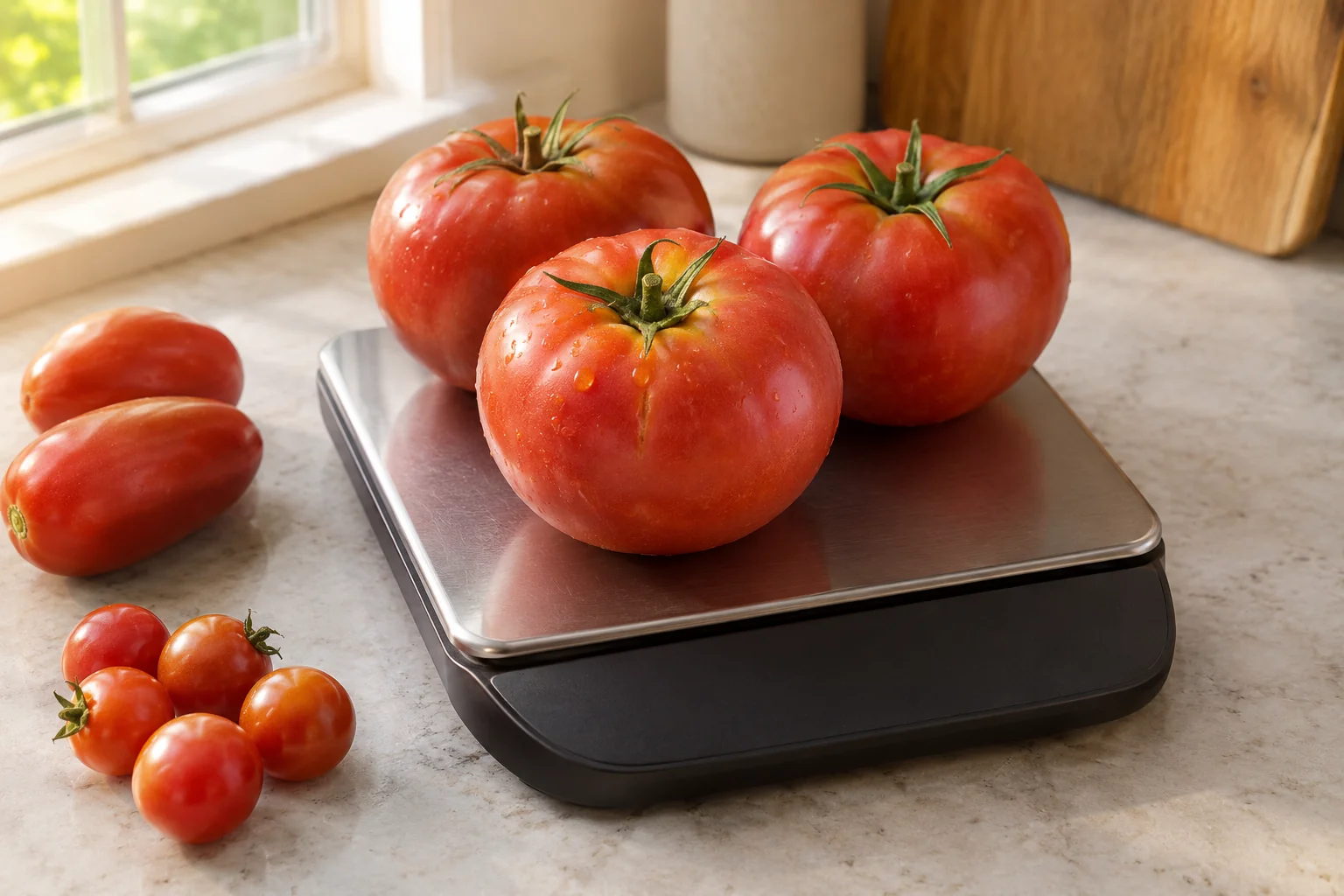
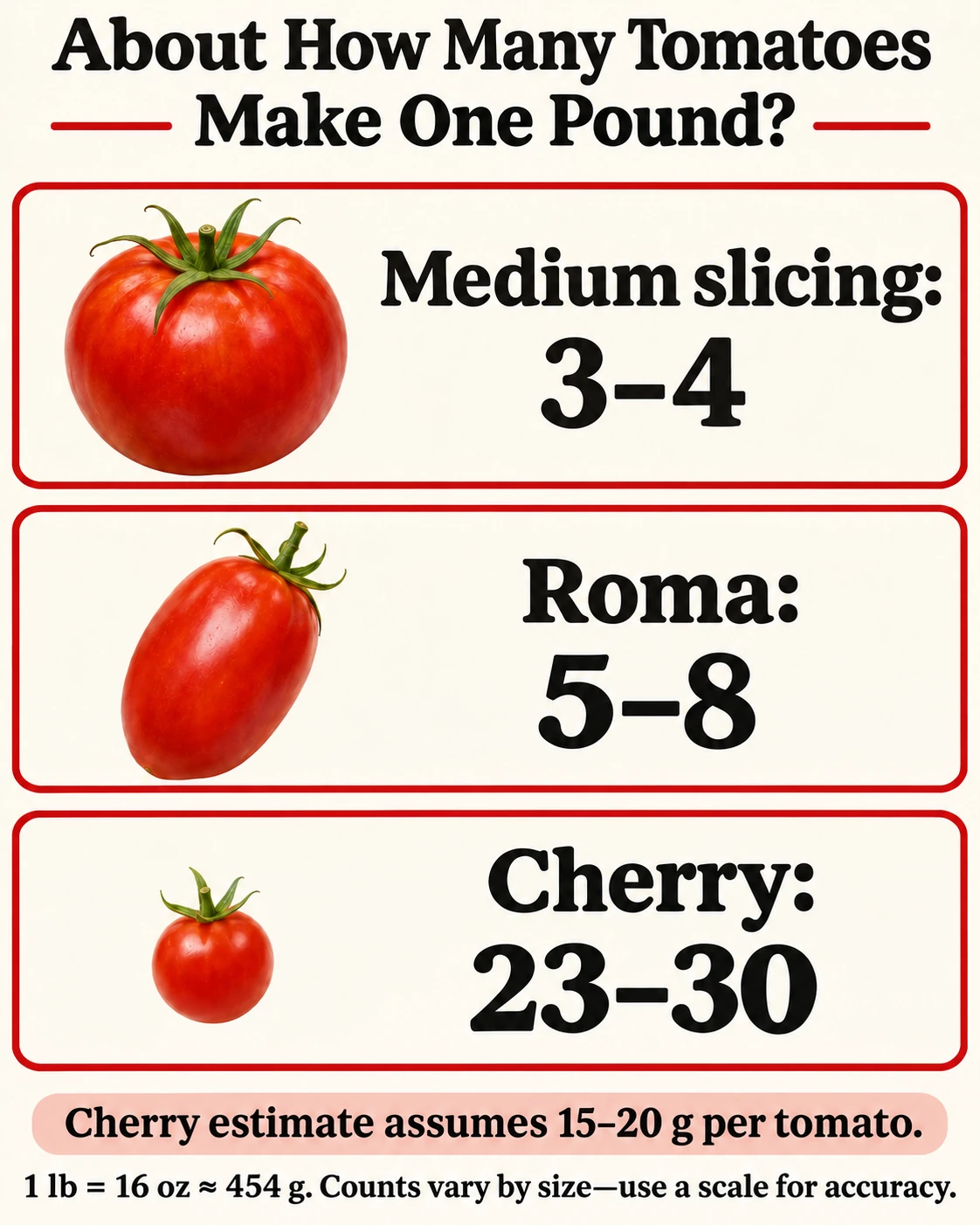
One pound of tomatoes is approximately 3 medium slicing tomatoes, 5 to 8 Roma tomatoes, or 23 to 30 cherry tomatoes. It also yields about 2½ cups chopped.
The count depends on the size of each tomato. Use these estimates for shopping and everyday cooking; use a kitchen scale when a recipe specifies weight.
| Tomato type or size | Approximate tomatoes per pound | Approximate weight each |
|---|---|---|
| Medium slicing | 3 to 4 | 4 to 6 oz |
| Roma | 5 to 8 | 2 to 3 oz |
| Cherry | 23 to 30 | 15 to 20 g |
These are rounded estimates, not fixed sizes. One pound equals 16 ounces, or approximately 454 grams.
How Many Medium Tomatoes Are in a Pound?
About 3 medium tomatoes make a pound. Smaller medium tomatoes may take closer to four.
The FDA uses 148 grams as its reference weight for one medium tomato. At that size, three tomatoes weigh 444 grams-just under a pound. See the FDA raw vegetable reference.
Large slicing tomatoes and beefsteaks vary much more. Weigh them rather than assuming that two large tomatoes always equal a pound.
How Many Roma or Plum Tomatoes Are in a Pound?
Plan on 5 to 8 Roma tomatoes per pound, with about six as a convenient shopping estimate.
Roma tomatoes belong to the plum, or paste, group. "Roma" and "plum" are overlapping descriptions, so they should not be treated as separate, standardized sizes. Other plum varieties may be larger or smaller.
If your tomatoes weigh about 2 ounces each, you will need eight to make a pound. At 3 ounces each, you will need about five or six. A scale resolves that difference quickly.
Paste tomatoes are useful for sauce because their relatively meaty texture means less watery pulp to cook down. For variety recommendations, see the best tomatoes for sauce. Compare varieties in this guide to types of tomatoes and their best uses.
How Many Cherry Tomatoes Are in a Pound?
For cherry tomatoes weighing 15 to 20 grams each, one pound contains approximately 23 to 30 tomatoes.
Very small cherry tomatoes will give you a higher count. Larger varieties will give you fewer. Grape tomatoes also vary in size, so do not assume that their count will always match cherry tomatoes.
For packaged tomatoes, check the container's net weight. A 10-ounce package contains less than a pound, regardless of how many tomatoes it holds.
Tomatoes per Pound: Shopping Chart
Use this chart to estimate how many tomatoes to buy.
| Weight needed | Medium slicing | Roma | Cherry, at 15–20 g each |
|---|---|---|---|
| 1 pound | 3–4 | 5–8 | 23–30 |
| 2 pounds | 6–8 | 10–16 | 46–60 |
| 3 pounds | 9–12 | 15–24 | 69–90 |
| 5 pounds | 15–20 | 25–40 | 115–150 |
The ranges are shopping estimates scaled from the one-pound figures. They do not account for trimming or unusually sized fruit.
How Many Cups of Chopped Tomatoes Are in a Pound?
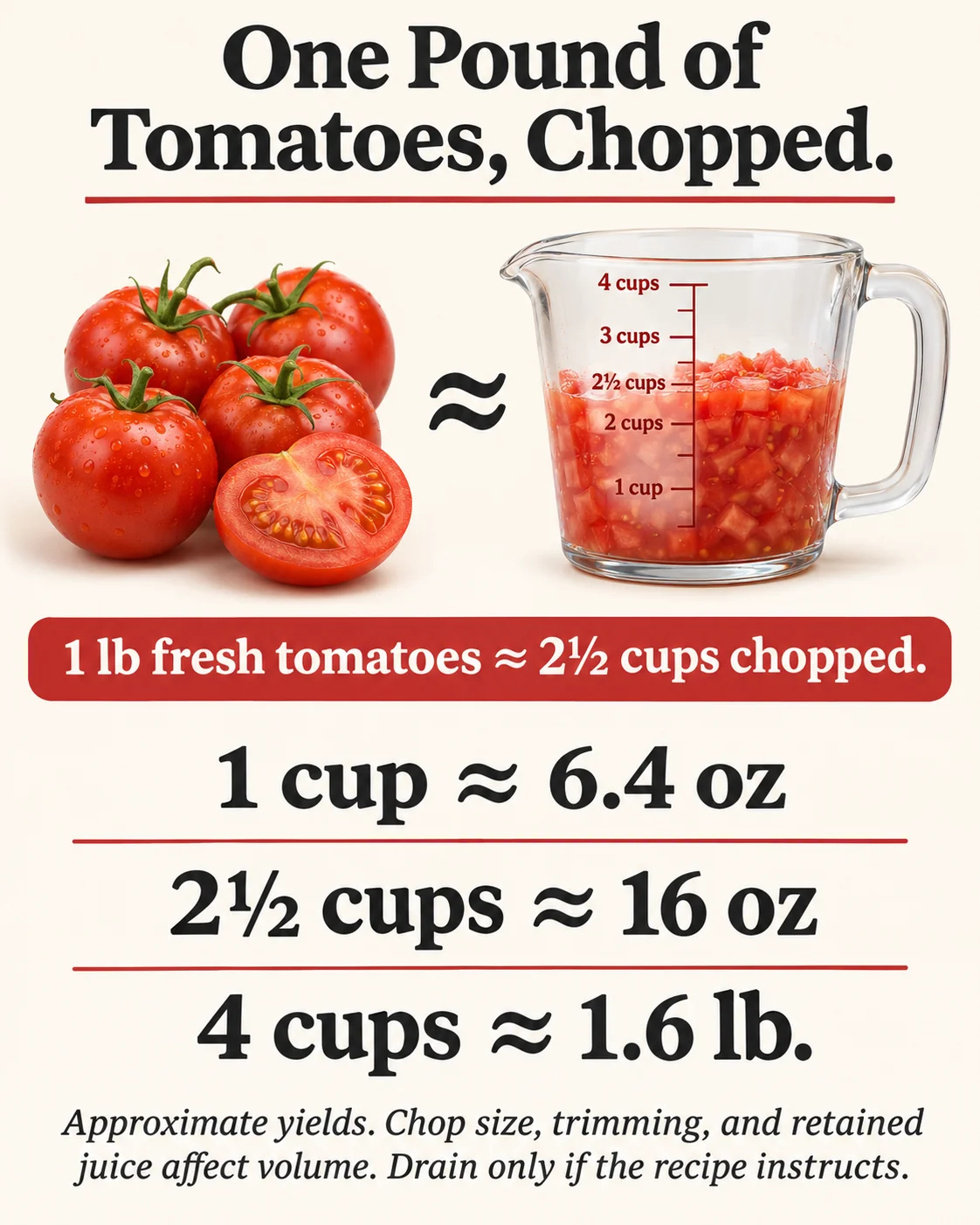
One pound of fresh tomatoes yields about 2½ cups chopped, according to University of Kentucky Extension's tomato guide.
| Chopped tomatoes | Approximate weight |
|---|---|
| 1 cup | 6.4 oz / 181 g |
| 2 cups | 12.8 oz / 363 g |
| 2½ cups | 1 lb / 454 g |
| 4 cups / 1 US quart | 1.6 lb / 726 g |
The smaller and larger quantities are calculated from the approximate 2½-cup yield.
Chop size, trimming, and retained juice affect the result. Do not drain tomatoes automatically: follow the recipe's instructions. If it calls for drained tomatoes, measure them after draining and expect the conversion to differ.
A quart of chopped fresh tomatoes is a volume measure. It is not interchangeable with a quart of finished sauce or a quart jar of canned tomatoes.
How Many Pounds of Tomatoes Do You Need for Sauce?
Cooking removes water, so finished sauce requires more fresh tomatoes than the same volume of chopped tomatoes. The National Center for Home Food Preservation gives these average quantities:
| Finished sauce | Fresh tomatoes needed |
|---|---|
| 1 quart thin sauce | About 5 lb |
| 1 quart thick sauce | About 6½ lb |
These are average yields, not guarantees. Variety, preparation losses, and how far you reduce the sauce affect the final amount. See NCHFP tomato sauce guidance.
For everyday cooking, try this homemade tomato sauce recipe. For canning, follow the complete tested recipe, including acidification and processing directions.
How Many Tomatoes Do You Need for Canning?
For crushed tomatoes, NCHFP lists an average of 22 pounds for a seven-quart canner load. It also gives a broader yield estimate of 2¾ pounds per quart.
Those published averages do not scale exactly to one another. When planning a full batch, use the quantity given for that batch rather than multiplying the single-quart estimate. See NCHFP crushed tomato guidance.
Use the tested recipe for the specific product you are making. Whole tomatoes, crushed tomatoes, and sauce have different preparation methods and yields. This guide to canning tomatoes at home explains the workflow; use the linked NCHFP instructions for the product's acidification and processing requirements.
Can You Substitute Canned Tomatoes for Fresh?
Canned tomatoes can work in cooked dishes such as soups, chili, and braises, but there is no universal fresh-to-canned conversion.
The net weight on a can includes its packing liquid. Whether you retain or drain that liquid changes the amount going into the dish. Check the recipe's instructions before substituting, and adjust the added liquid or cooking time as needed.
Tips for Measuring Tomatoes
- Use weight when the recipe gives weight. Counts are useful for shopping, but tomato sizes vary.
- Follow the ingredient wording. "One pound tomatoes, chopped" means weigh first; "one cup chopped tomatoes" means chop before measuring.
- Drain only when instructed. Removing juice changes both weight and volume.
- Allow for trimming. Damaged fruit, cores, skins, and seeds can reduce usable yield.
- Treat the chart as a starting estimate. For a precise amount, put the tomatoes on a scale.
Frequently Asked Questions
Using NCHFP's average yields, one pound of fresh tomatoes makes about ⅘ cup of thin sauce or about ⅗ cup of thick sauce. Actual yield varies with the tomatoes and how far you reduce the sauce.
Yes, for an everyday cooked sauce, substitute by weight rather than by tomato count. Flavor and texture vary by variety. Blend the sauce or use a food mill if you prefer a smoother texture. For canning, follow a tested recipe rather than assuming an everyday sauce substitution applies.



Leave a Reply