
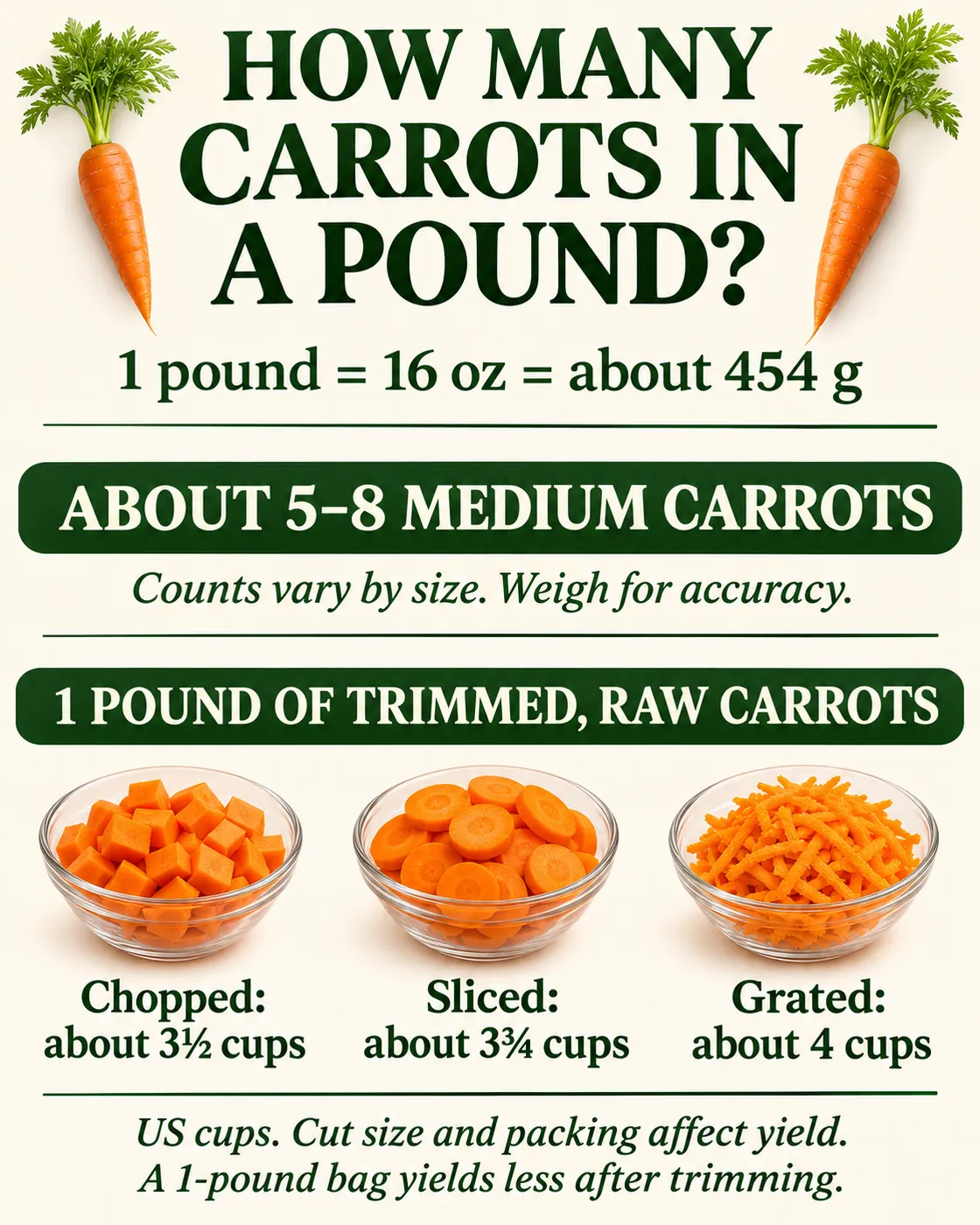
A pound is roughly 5 to 8 medium carrots, depending on their size. Carrots vary considerably in thickness and weight, so use that as a shopping estimate. A kitchen scale gives the most reliable answer for your carrots: 1 pound equals 16 ounces, or about 454 grams.
If you have 1 pound of trimmed, raw carrots, that is approximately 3½ US cups chopped, 3¾ cups sliced, or 4 cups grated. A 1-pound bag of whole carrots gives less prepared carrot after you trim the ends or peel them.
Carrot weight and count at a glance
| Weight | Approximate grams | Approximate medium carrots* |
|---|---|---|
| ½ pound | 227 g | 3–4 |
| 1 pound | 454 g | 5–8 |
| 2 pounds | 907 g | 10–16 |
| 5 pounds | 2,268 g | 25–40 |
These are broad estimates based on carrots weighing roughly 55-85 g each before trimming. Individual carrots can fall outside that range. Weigh them if the recipe needs a precise amount.
How many carrots do I have?
If you can weigh a few carrots, divide their combined weight by the number of carrots to find their average weight. Then divide the weight you need by that average. For example, if your carrots average 75 g each, 454 ÷ 75 = about 6 carrots per pound. Carrot sizes can vary even in the same bag.
How much does one carrot weigh?
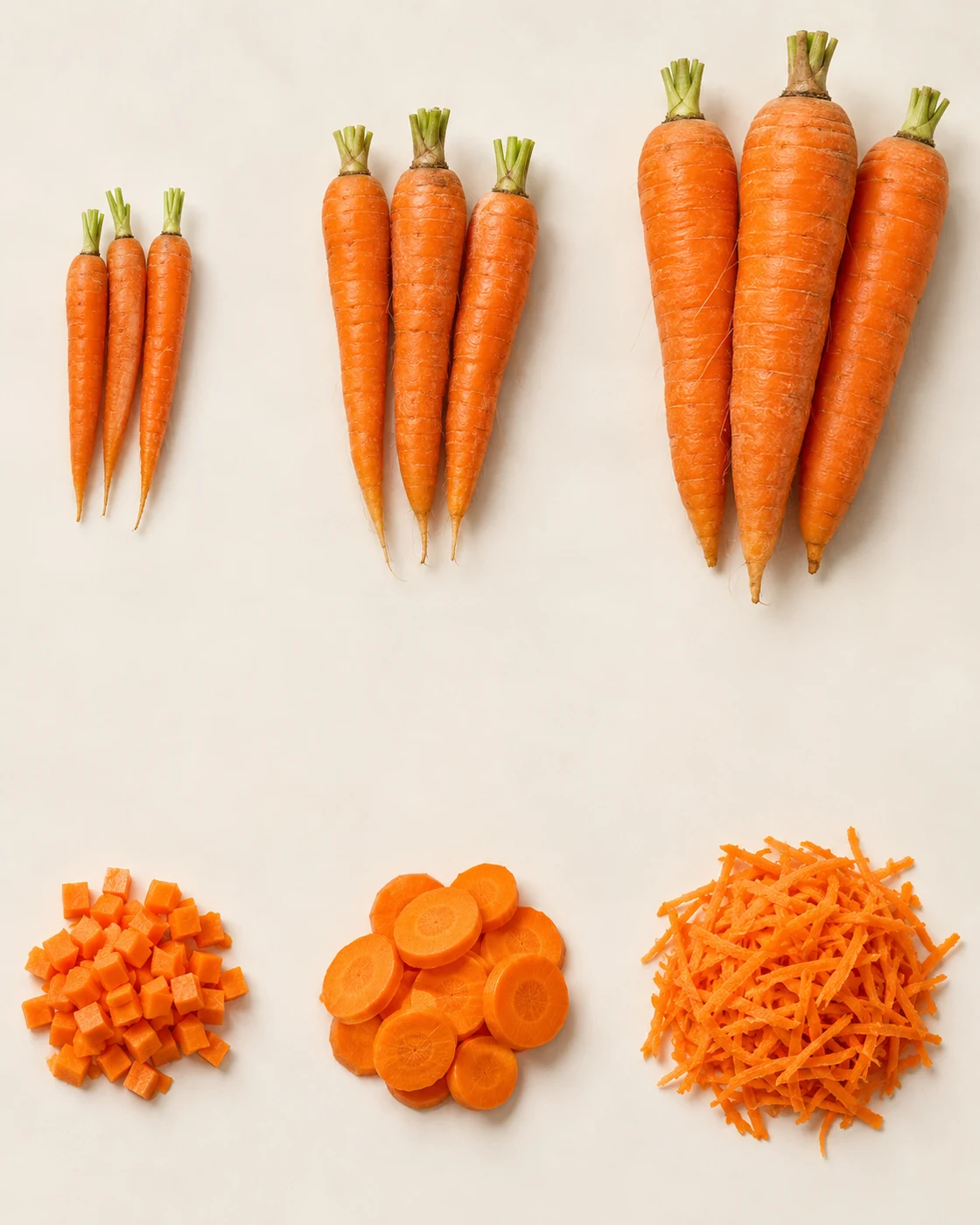
There is no single weight for a small, medium or large carrot. A short, thick carrot can weigh more than a long, slender one. These examples are not strict size grades:
| Weight of each whole carrot | About how many make a pound? |
|---|---|
| 50 g (about 1¾ oz) | 9 |
| 75 g (about 2⅔ oz) | 6 |
| 115 g (about 4 oz) | 4 |
| 150 g (about 5¼ oz) | 3 |
For comparison, Health Canada lists a medium raw carrot at 61 g edible portion. That works out to about 7½ carrots per pound of edible carrot. A whole carrot weighed before trimming may be heavier.
How many cups are in a pound of carrots?
Start with 454 g of trimmed, raw carrot for the estimates below. The size of the pieces and how you fill the cup affect the result.
| Raw preparation | Approximate weight per US cup | Cups per pound of prepared carrot |
|---|---|---|
| Chopped | 128 g | 3½ |
| Sliced | 122 g | 3¾ |
| Grated | About 110 g | About 4 |
A USDA nutrient report lists 128 g for a cup of chopped raw carrots. The FDA cites 122 g for sliced carrots. The grated estimate converts Health Canada's 116.2 g per 250 mL to a US cup and rounds it. These are reference amounts, not guarantees for every cut or grater.
How many carrots make one cup?
One US cup of chopped raw carrot weighs about 128 g. Using the example of a 75 g whole carrot, that is roughly 1¾ carrots by weight before accounting for trimming. Buy about two of that size, then chop and measure. Smaller carrots or more trimming may require more.
For a recipe measured in cups, multiply the cups by the appropriate weight above. For example, 2 cups chopped is approximately 256 g of prepared carrot, or a little over ½ pound. If you buy whole carrots, allow extra for whatever you trim away.
How much does a 1-pound bag yield after trimming?
A 1-pound bag starts at about 454 g. Once you remove ends, tops or peel, weigh what remains. The amount lost depends on the carrots and how you prepare them.
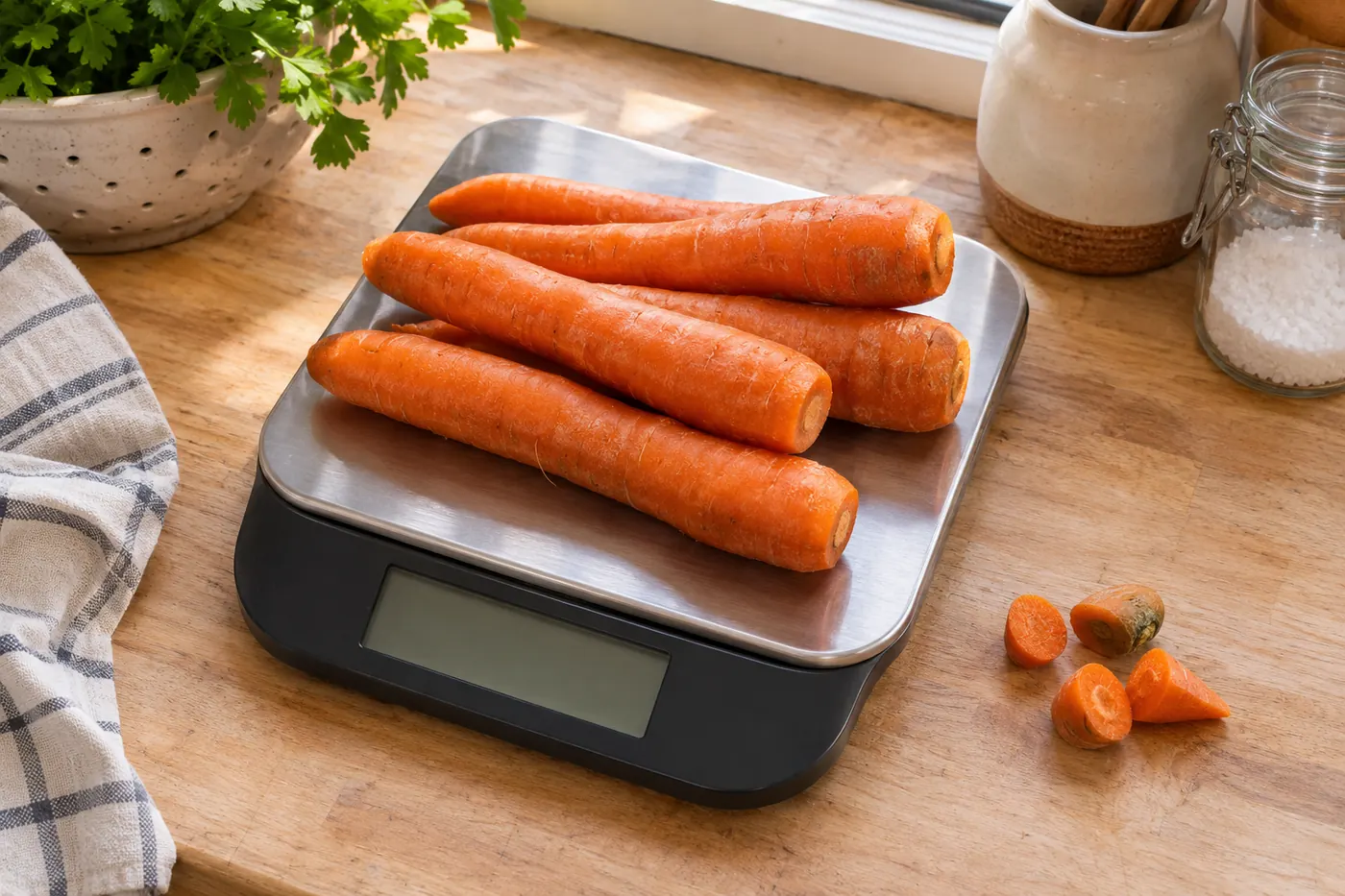
For example, if 400 g of usable carrot remains, it makes about 3⅛ cups chopped (400 ÷ 128). That is an illustration, not a fixed yield for every bag. If the recipe calls for a pound of prepared carrots, buy extra or weigh after trimming.
Bag of carrots vs. a bunch
A bag's label gives its net weight. A bunch can vary in size and may include leafy tops, so weigh the roots after removing the greens if the recipe calls for prepared carrots. Don't assume a bunch always equals a pound.
How many baby carrots are in a pound?
A 16-ounce bag of baby-cut carrots weighs 1 pound, but the number of pieces depends on their size and the brand. If you need a count for snacks, count the pieces in your bag; if you need a pound for a recipe, use the labeled weight or a scale.
Baby-cut carrots can replace trimmed whole carrots by weight in soups, stews and roasting. Cut them into similar-sized pieces so they cook evenly. Whole carrots are generally easier to grate for carrot cake.
Putting the conversions to work
- Soup or stew: Use the count chart for shopping, then chop the amount the recipe calls for. A small difference in carrot size is usually easy to accommodate.
- Carrot cake or muffins: Follow the recipe's weight if it supplies one. If it uses cups, grate and measure as directed; fine and coarse shreds can fill a cup differently.
- A side dish: A starting portion is about ¼ pound of whole carrots per person, or 1 pound for four people. Adjust for appetites, other dishes and trimming.
- Home canning: Use the National Center for Home Food Preservation's tested carrot directions and follow the specified preparation and processing instructions.
For more on different shapes and colors, see our guide to carrot varieties.
Chef's measuring and storage tips
Build mirepoix by weight. A classic starting ratio is 2 parts onion to 1 part carrot to 1 part celery by weight, making carrots one quarter of the vegetables. For a batch of homemade chicken stock, a little more or less carrot is fine.
Remove carrot tops before storing. The University of Maine Cooperative Extension recommends removing greens, which draw moisture from the roots. Keep the roots in a bag in the refrigerator.
For more produce conversions, see how many apples are in a pound and the jalapeño weight and cup chart.
Frequently asked questions
Approximately 10-16 medium carrots using the broad 55-85 g-per-carrot estimate. Large carrots will reduce the count and small carrots will increase it. Two pounds equals about 907 g.
About 3-4 medium carrots is a practical estimate. Half a pound is 8 ounces, or approximately 227 g. Weigh the carrots if your recipe requires an exact quantity.
They can be substituted at equal prepared weight in many cooked dishes, though their shapes and cooking times may differ. Match the cut size and check for doneness.
Follow the recipe. If it calls for a pound of peeled or trimmed carrots, weigh after preparation. If it specifies a pound of whole carrots, weigh them before trimming. When the instruction is unclear, weigh after trimming for the closest match to the prepared amount.




Leave a Reply