
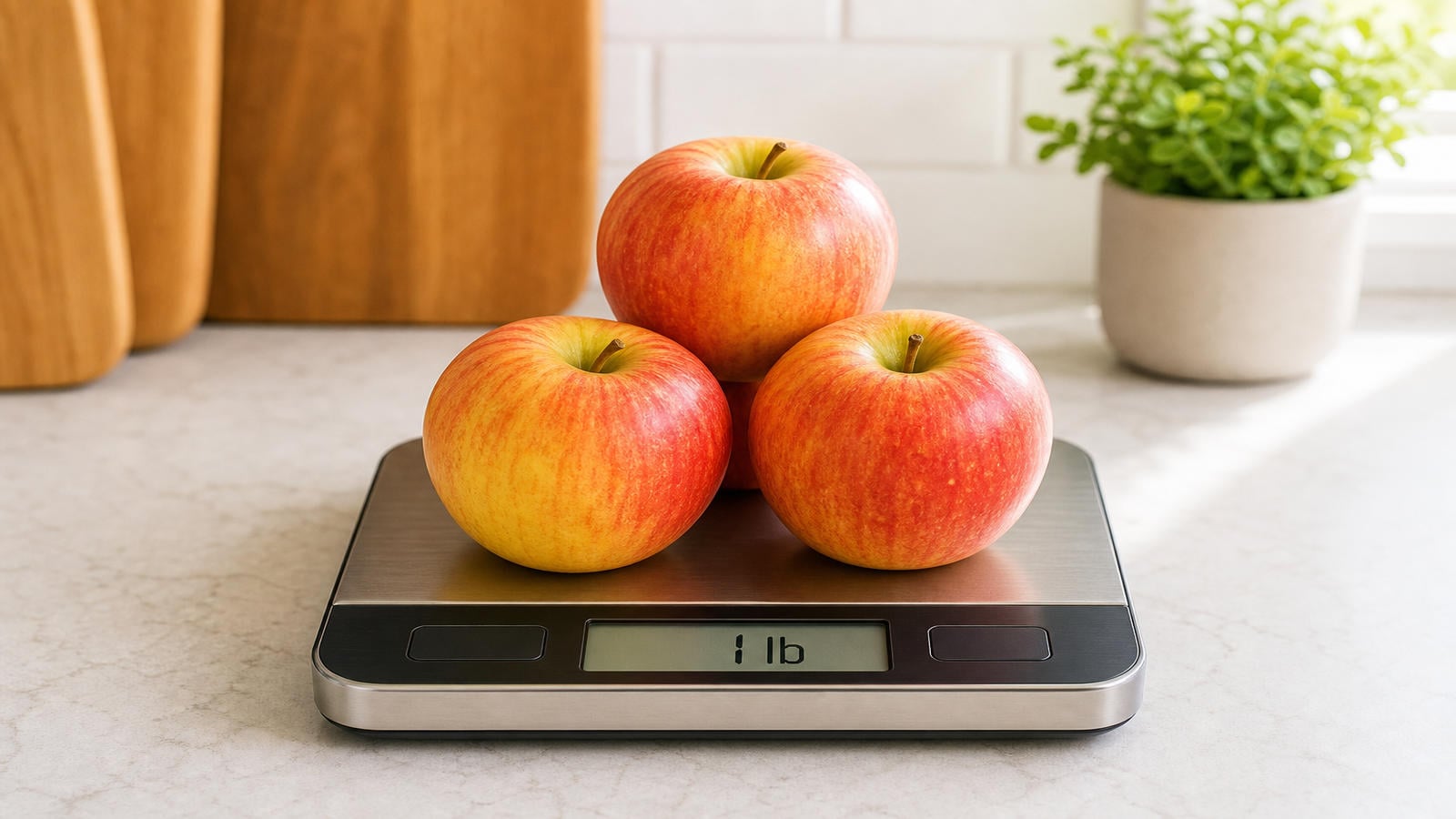
One pound (454 g) of apples equals about 3 medium apples, 2 large apples, or 4 to 5 small apples. After coring and slicing or chopping, 1 pound yields about 2¾ to 3 cups prepared apples with the peel on, or about 2½ to 2¾ cups when peeled. For bulk buying, a bushel is about 42 to 48 pounds, or roughly 120 to 150 medium apples.
Use this guide when a recipe lists cups, pounds, pecks, bushels, or apple count and you need to know how many apples to buy for pies, crisps, applesauce, canning, cider, baking, or grocery shopping.
Apple Conversion Calculator
Enter pounds, apples, cups, quarts, pecks, bushels, or grams to estimate how many apples to buy.
Conversion Results
How Many Apples in a Pound: Cups, Pecks, and Bushels Chart
These are approximate shopping and kitchen estimates; apple size, preparation, cut, and packing change the yield. Utah State University Extension estimates about 2¾ cups of peeled, sliced apples per pound and 3 cups diced. For the source, see the bushel section below. The ranges in this guide are estimates, not a documented kitchen test.
| Amount | Approximate equivalent |
|---|---|
| 1 pound | About 3 medium apples |
| 1 pound whole, then prepared | 2¾–3 cups unpeeled, or 2½–2¾ cups peeled |
| 1 quart, sliced | 4 cups; allow about 4–6 medium apples |
| 1 peck | About 10½–12 pounds |
| 1 bushel | About 42–48 pounds |
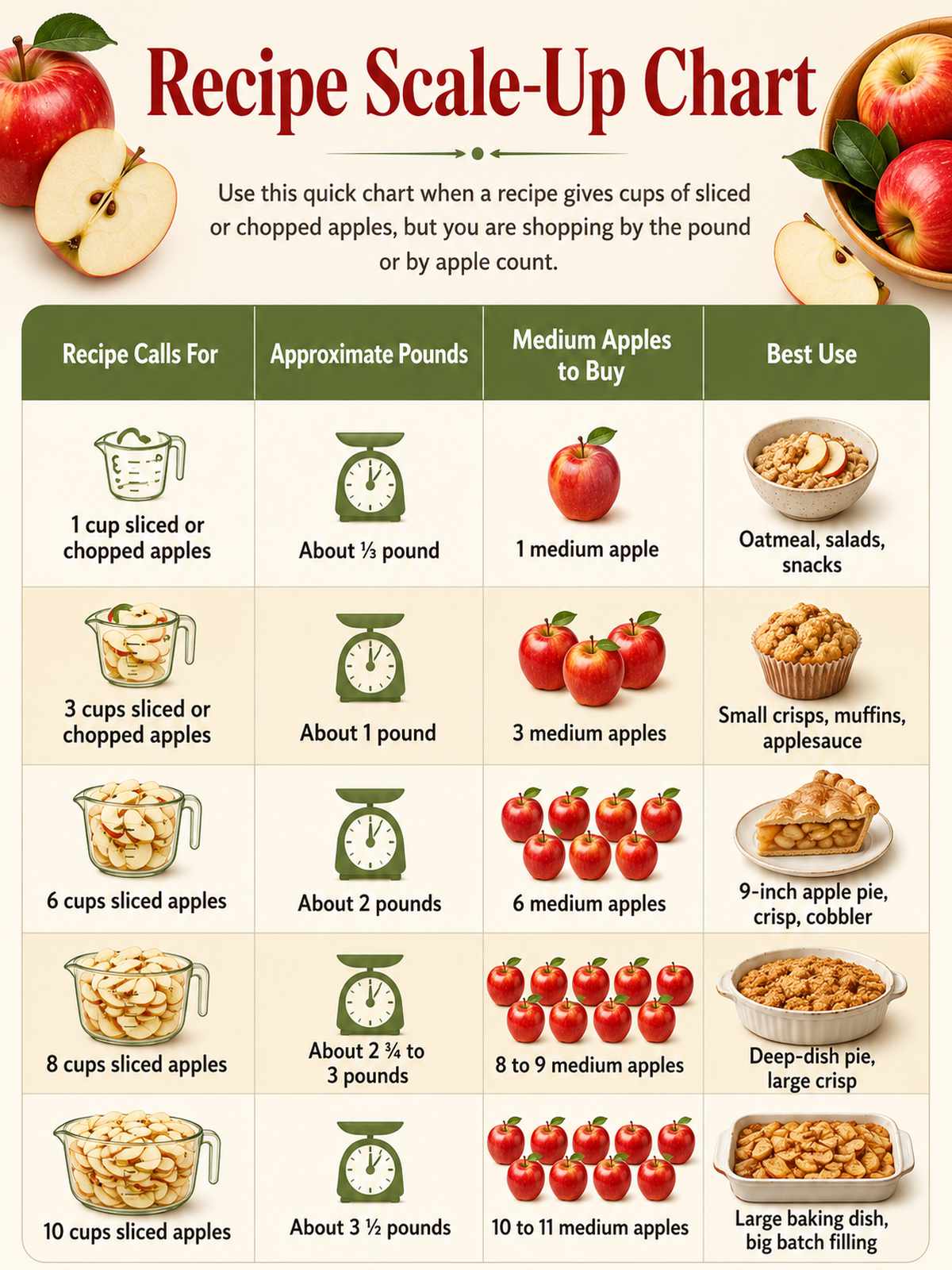
Recipe Scale-Up Chart
Use this quick chart when a recipe gives cups of sliced or chopped apples, but you are shopping by the pound or by apple count.
How Many Apples Do You Need for Apple Pie?
For a standard 9-inch apple pie, plan on about 2 pounds of apples, or roughly 6 medium apples. That usually gives about 5 to 5½ cups of sliced apples after peeling, coring, and trimming.
For a deep-dish pie or a very full apple filling, buy closer to 2 ½ to 3 pounds, or about 8 to 9 medium apples. Firm baking apples such as Granny Smith, Honeycrisp, Braeburn, Pink Lady, and Golden Delicious hold up better than very soft apples. Compare flavor and texture in our guide to apple varieties.
Apple Measuring Tips for Pie and Baking
Buy by whole weight, not filling weight. A pound of whole apples does not give you a pound of pie filling. The USDA Food Buying Guide puts the yield at about 0.78 pound of peeled, cored apples per pound purchased, so expect roughly 12½ ounces (354 g) of usable fruit from each pound. If a recipe calls for 2 pounds of prepared apples, buy about 2½ pounds whole.
Expect the filling to settle. Apple filling sinks as it bakes, which can leave a gap under the top crust. Soft apples such as McIntosh shrink the most. King Arthur Baking's pie-gap tests show that firmer apples, a vented top crust, and precooking the filling on the stovetop all reduce the gap.
Follow the prepared amount when a recipe gives one. Slice thickness and pan depth change how much fits. Thin slices pack tighter than chunky pieces, so measure cups after slicing, not before.
Use weight where ratios matter. Cups work for everyday recipes like crisps, oatmeal, muffins, and small-batch applesauce. For home canning, follow a tested recipe and its specified measurements and processing instructions.
How Many Apples Are in a Bushel?
A bushel of apples is commonly estimated at 42 to 48 pounds. For home cooking, orchard shopping, canning, and cider, that is usually about 120 to 150 medium apples, depending on apple size and how tightly the apples are packed.
Use 42 pounds when following agricultural yield references, and 48 pounds when using many orchard, canning, or produce-market estimates. Utah State University Extension lists a bushel of apples at 42 to 48 pounds and notes that 1 pound equals about 4 small apples, 3 medium apples, or 2 large apples. Oregon State University Extension lists a bushel at about 48 pounds and notes that it yields about 16 to 20 quarts of sliced fruit or 15 to 18 quarts of sauce. After a bulk buy, see how to store apples so they stay crisp.

How Many Apples Are in a Half Bushel?
A half bushel of apples is usually about 21 to 24 pounds, depending on whether you are using a 42-pound or 48-pound bushel estimate. That is roughly 60 to 75 medium apples.
What Is a Peck of Apples?
A peck is one-quarter of a U.S. dry bushel, or 8 dry quarts. Using the 42- to 48-pound bushel estimates above gives about 10½ to 12 pounds per peck. Actual weight varies with apple size and packing. The calculator uses 45 pounds per bushel, or 11¼ pounds per peck.
A peck may contain about 24 large apples, 32 to 36 medium apples, or 40 to 48 small apples. Use this estimate for orchard shopping, apple picking, preserves, and baking projects.
Average Apple Size and Weight
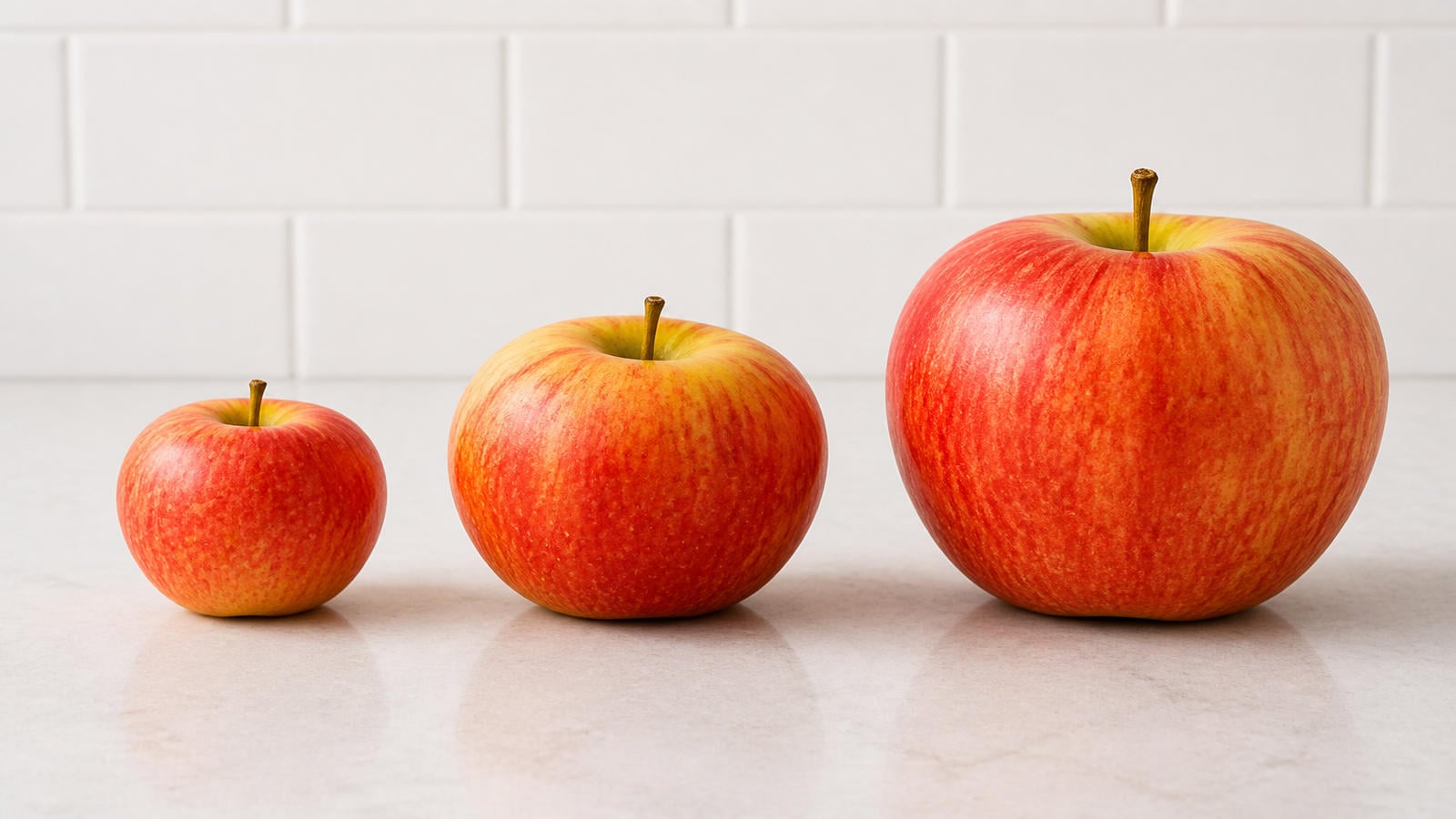
Apple size varies by variety and growing conditions. A medium apple is often about 2½ to 3 inches wide and weighs about 5 to 6 ounces (140 to 170 g). Small apples run about 3½ to 4 ounces, and large apples about 7 to 8 ounces or more.
The same weigh-it approach works for heavier fruit, too. Our guide to how many mangoes are in a pound breaks mangoes down by size and weight.
| Apple Size | Weight (oz) | Weight (g) | Apples Per Pound |
|---|---|---|---|
| Small apple | About 3½ to 4 ounces | About 100 to 115 g | 4 to 5 apples |
| Medium apple | About 5 to 6 ounces | About 140 to 170 g | About 3 apples |
| Large apple | About 7 to 8 ounces | About 200 to 225 g | About 2 apples |
How Many Apples Are in a Cup or Quart?
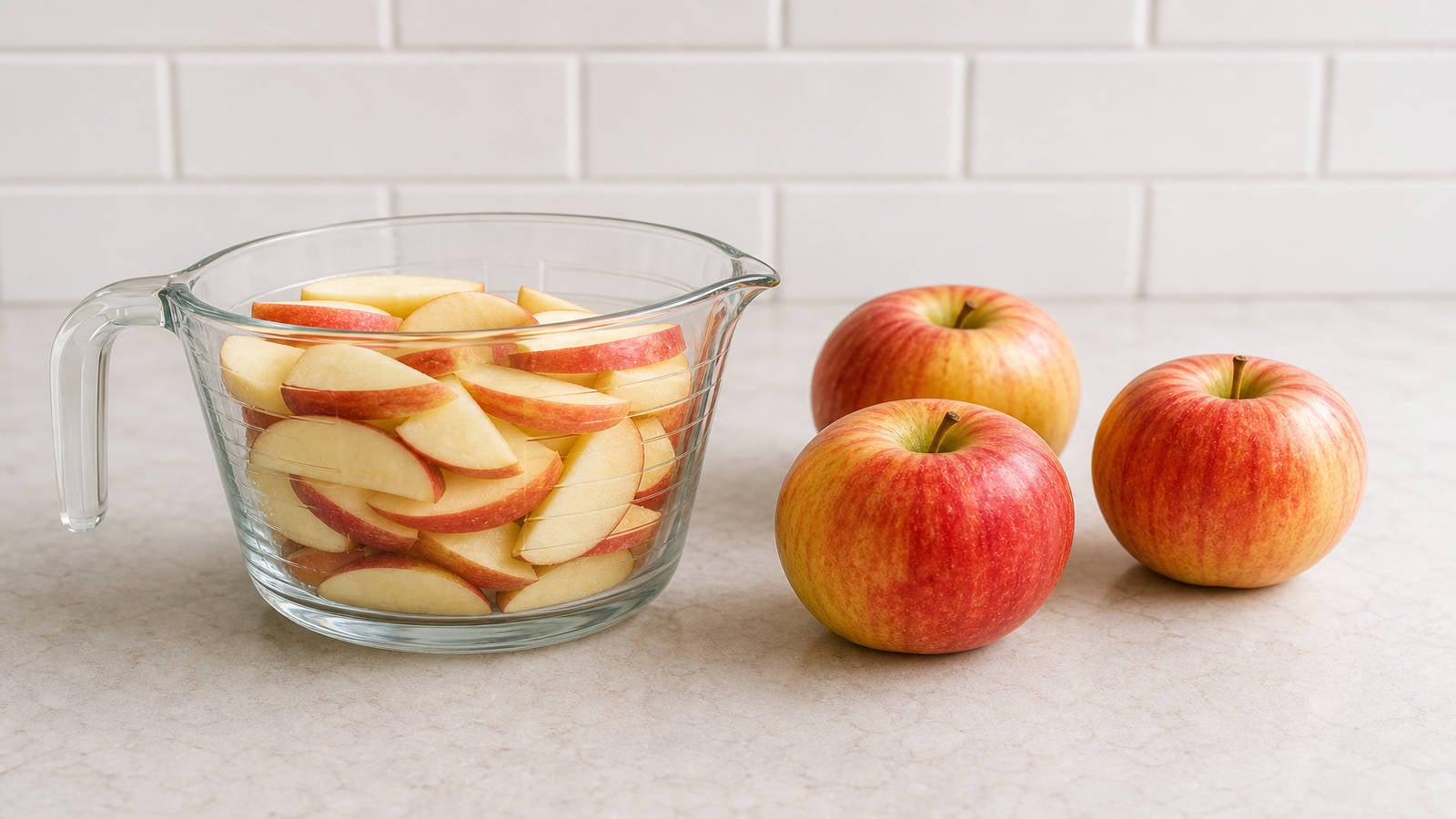
One medium apple usually gives about ¾ to 1 cup chopped or sliced after trimming and coring. Sliced apples are often closer to 1 cup, while chopped apples can measure slightly less depending on dice size.
| Apple Amount | Approximate Cups | Best Use |
|---|---|---|
| 1 small apple | About ½ to ¾ cup chopped | Snacks, oatmeal, small salads |
| 1 medium apple | About ¾ to 1 cup chopped or sliced | Baking, pies, crisps, applesauce |
| 1 large apple | About 1 ¼ to 1 ½ cups chopped or sliced | Large recipes, apple filling, compotes |
| 1 pound apples | About 2¾ to 3 cups unpeeled, or 2½ to 2¾ cups peeled | Pie, applesauce, baking |
| 1 quart sliced apples | 4 cups | Apple filling, applesauce, small batches |
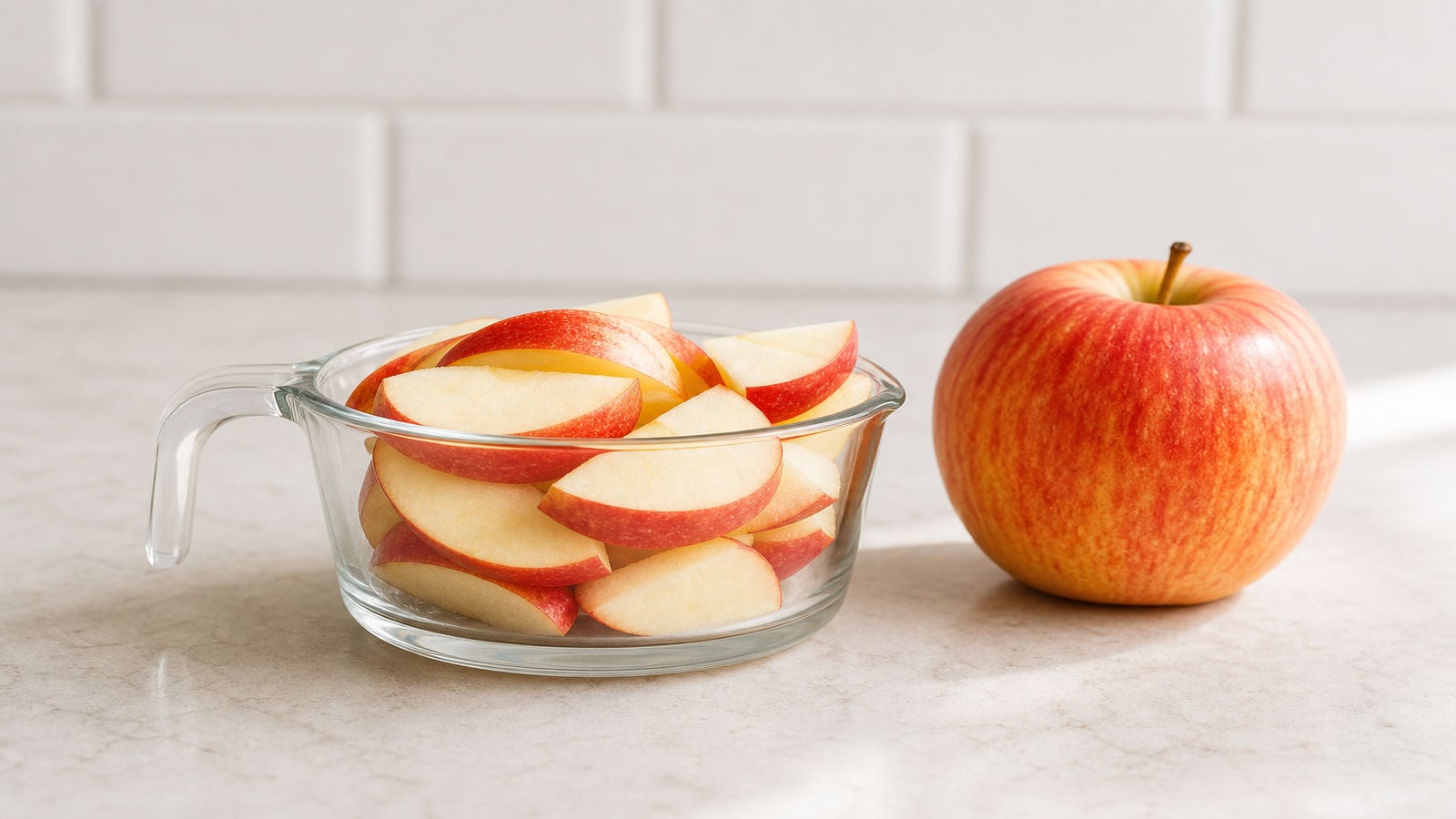
A quart is 4 cups. At roughly ¾ to 1 cup per medium apple, allow about 4 to 5½ medium apples for one quart of sliced or chopped apples. Buy 5 to 6 if you need a full quart; actual yield varies with apple size, trimming, cut, and packing.
How Many Grams Are in One Apple?
A practical medium grocery-store apple weighs about 140 to 170 grams, which works out to about 3 apples per pound (454 g). USDA SNAP-Ed uses 182 grams for one medium apple, but that figure describes a full 3-inch apple, closer to 2½ apples per pound. Small apples run about 100 to 115 grams, and large apples 200 grams or more.
Best Apples for Pie and Applesauce
Apple variety note: For pies and crisps, firm apples such as Granny Smith, Honeycrisp, Pink Lady, Braeburn, and Golden Delicious hold their shape better. For applesauce, softer apples such as Gala, Fuji, Golden Delicious, and McIntosh cook down faster.
For a sweeter filling, see our sweet apples for pies and applesauce. For bright acidity, try tart green apples such as Granny Smith.
FAQs
One pound of apples usually equals about 3 medium apples, 2 large apples, or 4 to 5 small apples. The exact count depends on apple size and variety.
Expect about 1¼ to 1½ cups of applesauce per pound of whole apples. Oregon State University Extension estimates that a 48-pound bushel makes 15 to 18 quarts of sauce.
Weigh whole apples when a recipe lists pounds of apples, and weigh prepared fruit only when the recipe says peeled, cored, or sliced. One pound of whole apples gives about 12½ ounces (354 g) of peeled, cored fruit, so buy about 30 percent more than a prepared weight.
The top crust sets before the apples finish softening and releasing juice, so the filling sinks below it. Soft apples such as McIntosh shrink the most. Mix in firm apples, vent the top crust, or precook the filling so most of the settling happens before baking.
Drop slices into cold water with a squeeze of lemon juice as you cut, then drain and pat dry before measuring. For pie, tossing the slices right away with the lemon juice and sugar in the recipe does the same job.
Use weight when accuracy matters, especially for baking, canning, cider, and large batches. Cups are helpful for everyday recipes like crisps, oatmeal, applesauce, and snacks.
Leave a Reply