
Chipotle peppers are ripe red jalapeño peppers that have been smoked and dried. They have a bold, smoky, earthy flavor with medium heat, making them one of the most useful chile peppers for sauces, marinades, chili, salsa, rubs, beans, and adobo sauce.
Most chipotle peppers start as red jalapeños that are left on the plant longer than green jalapeños, then slowly smoked until dried. This process concentrates the pepper's flavor and gives chipotles their signature BBQ-like aroma, deep chile taste, and rich smoky finish.
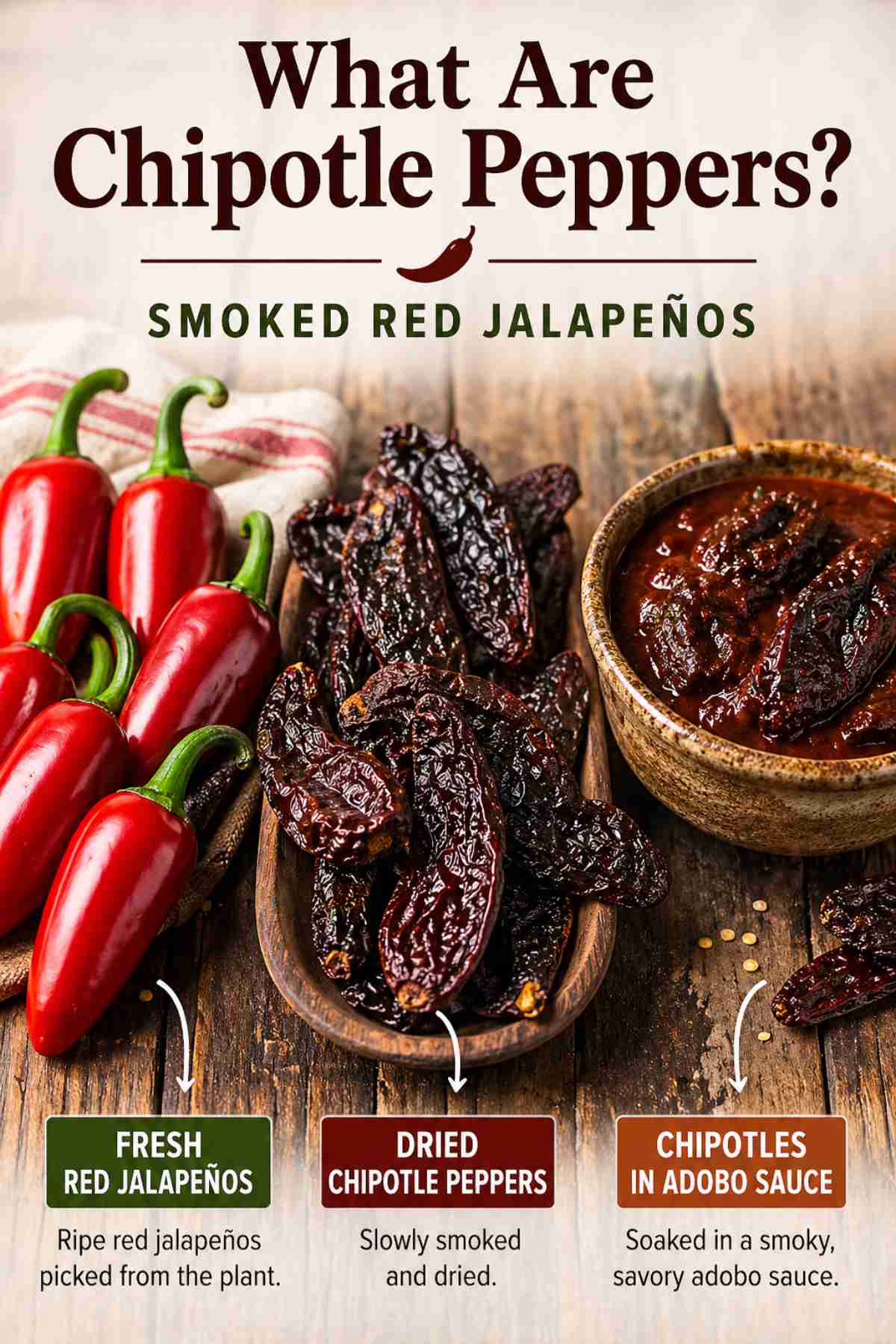
There are two common types of dried chipotle peppers: Morita, which is darker, softer, fruitier, and slightly sweeter, and Meco, which is tan, drier, smokier, and more traditional in appearance.
Because chipotles start as jalapeños, they fit naturally into the larger family of types of peppers. For fresh pepper heat, see how hot jalapeño peppers are, or compare them with other chiles using the Scoville scale.
If you are buying fresh jalapeños to smoke, dry, or turn into chipotles, use this jalapeño pound conversion chart to estimate how many peppers you need.
⬇️ Table of Contents
- What Are Chipotle Peppers?
- Chipotle Morita vs Chipotle Meco
- What Do Chipotle Peppers Taste Like?
- Are Chipotle Peppers Spicy Hot?
- How Are Chipotle Peppers Related to Jalapeños?
- What's the Difference Between Jalapeño and Chipotle Peppers?
- What's the Difference Between Green Jalapeño and Red Jalapeños?
- Where To Buy Dried Chipotle Peppers
- How To Store Chipotle Peppers
- Ways To Use Chipotle Peppers
- FAQs
- 📖 Recipe
What Are Chipotle Peppers?
A chipotle chile is a fully ripe red jalapeño pepper that has been slow-smoked and dried. Britannica describes chipotle as a jalapeño chile pepper dried through smoking, which is the key difference between fresh jalapeños and chipotles. Instead of being used fresh like a green jalapeño, the pepper is left to mature until red, then smoked until much of its moisture is removed.
The result is a dried chile pepper with concentrated flavor, gentle sweetness, medium heat, and a deep smoky aroma. Chipotle peppers are commonly used in Mexican cooking, Tex-Mex recipes, adobo sauce, chili, marinades, salsa, spice rubs, beans, soups, and barbecue-style dishes.
In Mexico, ripe red jalapeños are often valued for making chipotles because they have a more developed flavor than green jalapeños. They need to stay on the vine until they turn a deep red color before being smoked and dried.

Producing chipotles takes time because the peppers must smoke slowly until they dry down. A common rule of thumb is that about 10 pounds of fresh red jalapeños may produce around 1 pound of dried chipotle peppers once moisture is removed.
This transformation is the key difference between jalapeños and chipotles: a jalapeño is the fresh pepper, while a chipotle is the smoked and dried version of a fully ripe red jalapeño.
Traditional chipotle peppers are often smoked over mesquite, which gives them their signature smoky flavor. Hickory or oak can also be used for a deeper, richer smoke profile.
The process of preserving chile peppers by smoking and drying has deep roots in Mexican food history. Today, chipotles remain an essential ingredient for adding smoke, heat, and depth to sauces, stews, beans, meats, and marinades.
If you want to make your own homemade chipotle peppers, check out the how-to recipe card at the end of this post.
Chipotle Morita vs Chipotle Meco
Chipotle peppers are most often sold as either Morita or Meco. Both are smoked, dried jalapeños, but they look and taste different.
Chipotle Morita peppers are usually darker, softer, and reddish-purple in color. The word Morita translates to "small mulberry," which describes their darker appearance. Moritas often taste fruitier and slightly sweeter, with a softer texture than Meco chipotles.
Chipotle Meco peppers are usually tan, grayish-brown, and drier. They are sometimes called ahumado or típico. Meco chipotles have a stronger smoked flavor and can look dusty or cigar-like after drying.
| Type | Color | Flavor | Best Uses |
|---|---|---|---|
| Chipotle Morita | Dark red to reddish-purple | Smoky, fruity, slightly sweet | Adobo sauce, salsa, marinades, chili |
| Chipotle Meco | Tan to grayish-brown | Deep smoke, earthy, intense | Traditional sauces, stews, beans, dry rubs |
Morita chipotles are usually easier to find in U.S. grocery stores and work well in homemade chipotles in adobo sauce. Meco chipotles are drier and more smoke-forward, making them useful for long-cooked beans, stews, and spice blends.
What Do Chipotle Peppers Taste Like?
Chipotle peppers taste smoky, earthy, fruity, bold, and slightly sweet with a peppery finish. Whole dried chipotles often smell like barbecue, smoke, and roasted chile peppers. That smoky flavor is what makes them stand out from fresh jalapeños.
In dried powder form, chipotle can taste more concentrated and spice-forward. Start with a small amount, taste, and add more as needed. A little chipotle powder can quickly change the flavor of chili, taco seasoning, beans, soups, sauces, and marinades.
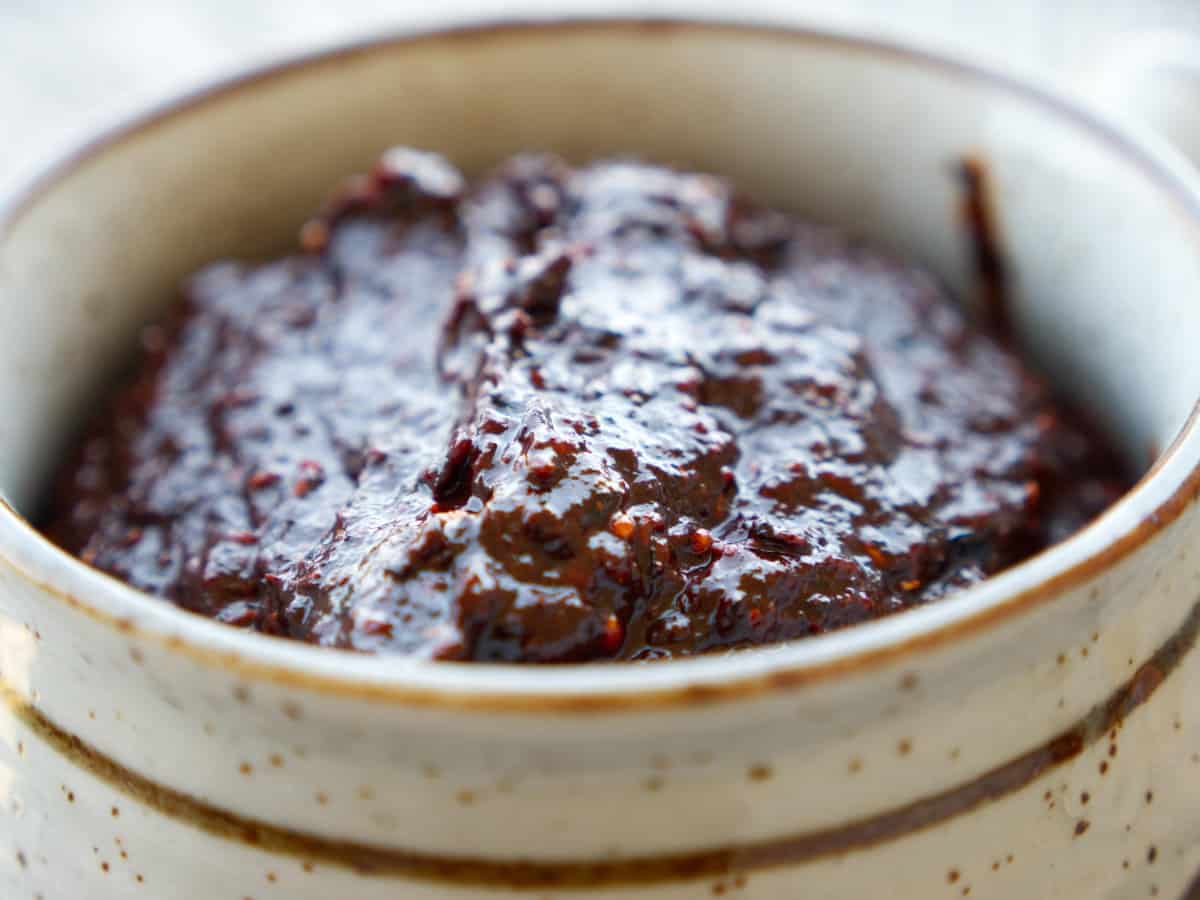
Recipe to try: Homemade Chipotles in Adobo Sauce is an easy way to use chipotle peppers in a classic sauce for Mexican and Tex-Mex cooking.
Are Chipotle Peppers Spicy Hot?
Chipotle peppers are usually considered medium in heat. Because they are made from ripe jalapeños, their heat is connected to jalapeño pepper heat, but the drying process concentrates their smoky flavor and can make the spice feel deeper in sauces, rubs, chili, and marinades.
The idea that chipotles are always extremely hot is not completely true. Their final heat depends on the jalapeño variety, how much of the seeds and inner ribs are used, and how much chipotle is added to the recipe.
For a more detailed heat breakdown, read how hot jalapeño peppers are, including Scoville units, flavor differences, and mild-to-hot jalapeño varieties.
Chipotle Pepper Tips
- Decide whether the recipe needs more smoky depth, more heat, or both.
- Remove the seeds and inner ribs if you want more chipotle flavor with less spicy heat.
- When working with whole dried chipotles, rehydrate them in hot water until softened before blending or chopping.
- Start with a small amount of chipotle powder, paste, or canned chipotles in adobo, then add more after tasting.
Tip: You can grind dried chipotle peppers into chipotle powder or blend them into a paste. If grinding dried peppers, work in a ventilated area and avoid breathing in the pepper dust.
How Are Chipotle Peppers Related to Jalapeños?
Chipotle peppers begin as fully ripe red jalapeños. Green jalapeños are picked earlier, while red jalapeños stay on the plant longer, giving them a sweeter, more mature chile flavor before they are smoked and dried.
That means chipotles are not a separate fresh pepper variety. They are a preserved form of jalapeño with a smoky, dried flavor profile. For fresh jalapeño sizes and cooking conversions, see how many jalapeños are in a pound.

What's the Difference Between Jalapeño and Chipotle Peppers?
Jalapeño peppers are fresh chile peppers commonly used in salsa, nachos, poppers, guacamole, and many Mexican and Tex-Mex dishes. They taste bright, green, crisp, grassy, and spicy.
Chipotle peppers are smoked, dried red jalapeños. They taste deeper, smokier, earthier, and more concentrated than fresh jalapeños. Use jalapeños when you want fresh green chile flavor, and use chipotles when you want smoke, warmth, and depth.
| Pepper | Form | Flavor | Common Uses |
|---|---|---|---|
| Jalapeño | Fresh green or red pepper | Bright, grassy, crisp, spicy | Salsa, poppers, guacamole, chili, nachos |
| Chipotle | Smoked, dried red jalapeño | Smoky, earthy, fruity, bold | Adobo sauce, marinades, rubs, chili, beans |
For a broader comparison of fresh, dried, mild, sweet, and hot chiles, start with the types of peppers hub.
What's the Difference Between Green Jalapeño and Red Jalapeños?
The difference between green jalapeños and red jalapeños is mostly maturity. Green jalapeños are picked earlier, before they fully ripen. They usually taste bright, grassy, fresh, and moderately spicy.
Red jalapeños are left on the plant longer. They usually taste sweeter, fruitier, and more developed. Because chipotle peppers are made from ripe red jalapeños, they carry that deeper mature chile flavor after smoking and drying.
If you are choosing fresh peppers for cooking, red jalapeños are best when you want sweetness and depth, while green jalapeños are best when you want a brighter, sharper chile flavor.
Where To Buy Dried Chipotle Peppers
You can find dried chipotle peppers at Mexican markets, Latin grocery stores, spice shops, and online retailers that specialize in Mexican or Latin American ingredients. They may be sold whole, ground as chipotle powder, or canned in adobo sauce.
When choosing dried chipotle peppers, look for peppers with good color, a smoky aroma, and no signs of mold. Morita chipotles are usually darker and softer, while Meco chipotles are usually tan, drier, and more intensely smoky.
How To Store Chipotle Peppers
Whole dried chipotle peppers should be stored in an airtight container in a cool, dark, dry place. Keep them away from heat, moisture, and direct sunlight so they hold their flavor longer.
Chipotle powder should also be kept sealed and dry. Canned chipotles in adobo should be refrigerated after opening and used within several days, or frozen in small portions for longer storage.
Ways To Use Chipotle Peppers
Chipotle peppers can be used whole, chopped, blended, canned in adobo, or ground into powder. They are especially useful when a dish needs smoky heat without adding liquid smoke.
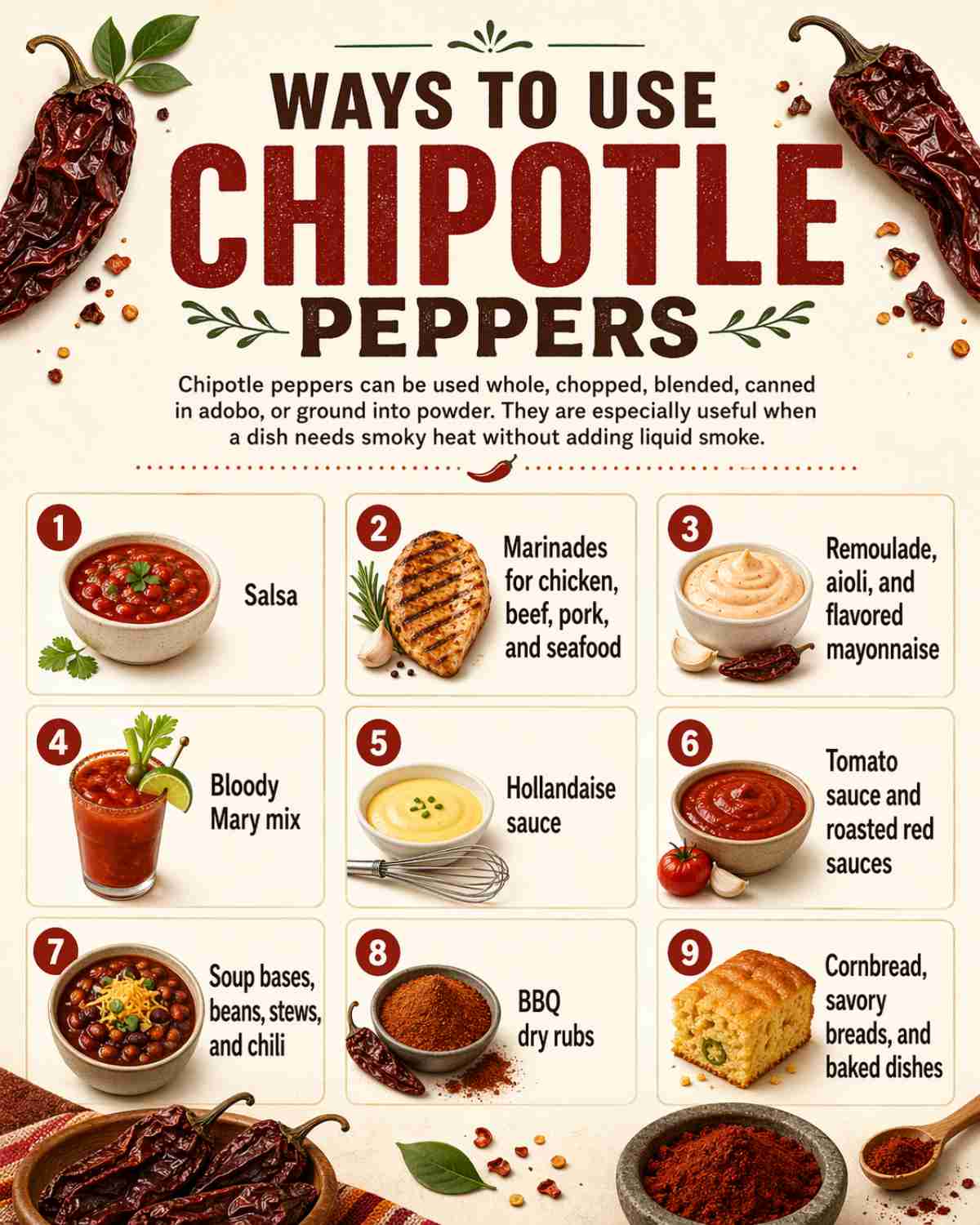
- Salsa
- Marinades for chicken, beef, pork, and seafood
- Remoulade, aioli, and flavored mayonnaise
- Bloody Mary mix
- Hollandaise sauce
- Tomato sauce and roasted red sauces
- Soup bases, beans, stews, and chili
- BBQ dry rubs
- Cornbread, savory breads, and baked dishes
FAQs
Chipotle peppers are ripe red jalapeño peppers that have been smoked and dried. They have a smoky, earthy, slightly sweet flavor with medium heat.
Yes. Chipotle peppers are made from fully ripe red jalapeños. The peppers are left on the plant until red, then smoked and dried.
Chipotle peppers are usually medium in heat because they come from jalapeños. Their smoky flavor can make the heat feel deeper, especially in sauces, rubs, chili, and marinades.
Chipotle Morita peppers are darker, softer, fruitier, and slightly sweeter. Chipotle Meco peppers are tan, drier, more intensely smoky, and more traditional in appearance.
Chipotle peppers taste smoky, earthy, bold, and slightly fruity, with a peppery finish. They add depth and heat to sauces, chili, marinades, beans, rubs, and salsa.
Use chipotle peppers whole, chopped, blended, canned in adobo, or ground into powder. They work well in adobo sauce, salsa, chili, marinades, BBQ rubs, beans, soups, and roasted sauces.
Store whole dried chipotle peppers in an airtight container in a cool, dark, dry place. Keep chipotle powder sealed and dry, and refrigerate opened canned chipotles in adobo.
Chipotle peppers are one of the easiest ways to add smoky depth to a recipe. Use whole dried chipotles when you want traditional chile flavor, canned chipotles in adobo for sauces and marinades, and chipotle powder when you need fast smoky heat.
Related Pepper Guides
- Types of Peppers
- How Hot Are Jalapeño Peppers?
- Scoville Scale
- How Many Jalapeños in a Pound?
- Homemade Chipotles in Adobo Sauce
- Traditional Texas Chili Recipe
- Special BBQ Dry Rub
📖 Recipe

How To Make Chipotle Peppers
Suggested Equipment
Ingredients
Types Of Smoking Wood
- 1 stack Pecan Wood Pecan Wood (traditional) (If a lot of bark is present, peel back or remove a part of the bark.)
- 20 chips wood chips Wood chips can be used to add additional flavor. Experiment and see what you enjoy best. Ideas include, cherry wood, apple wood, oak wood, peach wood, hickory wood.
Peppers To Use
- 1 bag Jalapenos Use as much as you like to make a quality of your choosing. 10 to 1 ratio on volume.

Instructions
The Jalapenos
- The jalapenos need to completely ripen before beginning the process.The jalapenos need to ripen to the point they have turned red in color. If you grow your own jalapenos, you can ripen them on the vine for max favor.If using store-bought jalapeno peppers. To ripen them further, place them on the counter in the open air to allow the denaturing process to continue. The jalapenos will change in color to orange and red. Have you ever noticed this at the grocery store? Looking at the jalapenos, a few already turned orange/red.
Smoking The Jalapenos
- The process takes days to complete. The goal is to smoke the jalapenos at a low enough temperature to remove the moisture. Around 180°f to 200°f degrees.Place the red jalapenos peppers in the smoker on a flat surface inside the smoker. Make sure the surface allows smoke to penetrate, like a grill grate. The jalapenos will smoke for days until most of the moisture is removed. Over the first 3 days, the red jalapenos will decrease from 88% to 81% in size. By the end, and how you'll know you're done, the moisture level will reach a value of around 6%. Once to 6% remaining moisture, you will have Chipotles.Key Tip: Every few hours the red jalapenos need to be turned over in the smoker.Time-Saving Tip: you can speed up the process by beginning with smoking the jalapenos for a few hours to impart the smokey flavor. Then finish using a food dehydrator to remove the excess moisture.
How To Store Chipotles
- Method #1The classic method of preserving whole chipotles is using adobo sauce. The sauce has the perfect ingredients to keep the flavor and stop spoilage. Below within the Note section, you can find our amazing adobo sauce recipe.
- Method #2Another method to freshness is using a food saver machine to remove the excess air. This will give your chipotles a longer shelf life.
- Method #3Allow the chipotles to rehydrate in water. You can then puree them and store them in glass jars in the refrigerator.
Notes
- There are over a hundred types of jalapenos in the world.
- Classic chipotle pepper originated in Chihuahua Mexico.
- Chipotle Morita is the name given to the peppers produced in Chihuahua State Mexico.
- Check Out Butter N Thyme's Adobo Sauce Recipe


Leave a Reply