
Jalapeño peppers usually range from 2,500 to 8,000 Scoville Heat Units, making them a mild to medium-hot chile pepper. Most grocery store jalapeños taste manageable, especially when picked green, but ripe red jalapeños and hotter varieties can bring noticeably more heat.
The heat comes mostly from capsaicin concentrated around the inner white ribs and placenta, not just the seeds. Removing the ribs and seeds makes jalapeños taste milder, while using the whole pepper gives salsas, poppers, chili, and sauces more spice.
Cooking with fresh jalapeños? Start with the heat level first, then choose the right amount. If you are buying peppers by weight, see how many jalapeños are in a pound for whole, sliced, chopped, and seeded conversions.
For a broader comparison, see the full types of peppers guide, or compare jalapeños against other chile peppers in the Scoville scale guide.
⬇️ Table of Contents
- How Hot Are Jalapeño Peppers?
- Jalapeño Scoville Units
- Why Are Some Jalapeños Hotter Than Others?
- Green vs Red Jalapeños
- What Do Jalapeño Peppers Taste Like?
- How To Make Jalapeños Less Spicy
- Types of Mild Jalapeños
- Types of Medium Jalapeños
- Types of Hot Jalapeños
- How To Choose the Right Jalapeño Pepper
- How To Store and Freeze Jalapeños
- Cooking With Jalapeños
- FAQs

How Hot Are Jalapeño Peppers?
Jalapeño peppers are considered mild to medium in heat. Most fall between 2,500 and 8,000 Scoville Heat Units, often written as SHU. That makes them much hotter than a bell pepper, which has no heat, but far milder than peppers like habaneros, ghost peppers, or Carolina reapers.
The exact heat depends on the variety, growing conditions, ripeness, and how the pepper is prepared. A green jalapeño from the grocery store may taste bright and mildly spicy, while a fully ripe red jalapeño can taste sweeter, deeper, and sometimes hotter.
If you want a milder result, remove the white ribs and seeds before using the pepper. If you want more heat, use the whole jalapeño or choose ripe red jalapeños when available.
Jalapeño Scoville Units
The Scoville scale measures pepper heat by estimating the concentration of capsaicin, the natural compound that gives chile peppers their spicy burn. Jalapeños usually sit in the lower-middle part of the scale, hotter than poblanos but milder than serranos, cayennes, and habaneros.
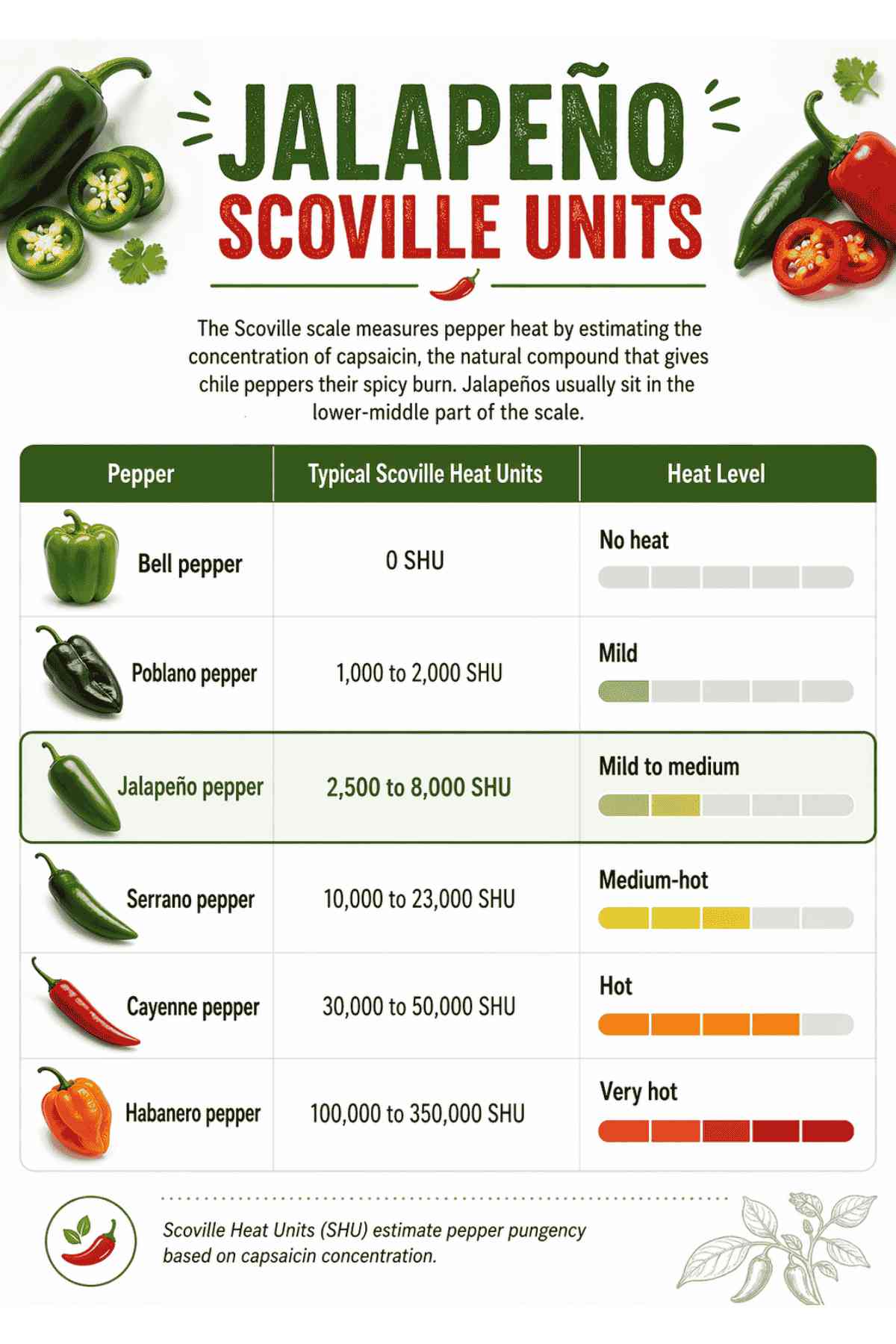
| Pepper | Typical Scoville Heat Units | Heat Level |
|---|---|---|
| Bell pepper | 0 SHU | No heat |
| Poblano pepper | 1,000 to 2,000 SHU | Mild |
| Jalapeño pepper | 2,500 to 8,000 SHU | Mild to medium |
| Serrano pepper | 10,000 to 23,000 SHU | Medium-hot |
| Cayenne pepper | 30,000 to 50,000 SHU | Hot |
| Habanero pepper | 100,000 to 350,000 SHU | Very hot |
If you are comparing jalapeños with other types of peppers, they sit above mild peppers like poblanos and bell peppers, but below hotter chile peppers like serranos, cayennes, habaneros, and ghost peppers. This makes jalapeños one of the most useful everyday peppers for adding noticeable heat without overwhelming a recipe.
For a full pepper-by-pepper heat comparison, visit the Scoville scale guide, then use the main types of peppers hub to compare flavor, color, shape, and best cooking uses.
Why Are Some Jalapeños Hotter Than Others?
Not every jalapeño tastes the same. Some are mild enough to eat raw in salsa, while others bring a stronger burn. The difference usually comes from ripeness, variety, growing stress, and how much of the inner pepper is used.
- Ripeness: Red jalapeños are more mature than green jalapeños and often taste sweeter with a deeper chile flavor.
- Variety: Some jalapeño cultivars are bred to be mild, while others are bred for stronger heat.
- Seeds and ribs: The seeds can taste spicy because they touch the inner membrane, but most heat is concentrated around the white ribs and placenta.
- Growing conditions: Heat, drought, soil, and plant stress can influence capsaicin levels.
- Cooking method: Roasting, smoking, grilling, or frying can mellow sharp heat and bring out sweetness.
Green vs Red Jalapeños
Green jalapeños are picked before fully ripening. They usually taste fresh, grassy, bright, and moderately spicy. Red jalapeños are left on the plant longer, giving them a sweeter, fruitier flavor and a deeper chile taste.
Red jalapeños are also the pepper used to make chipotle peppers when they are smoked and dried. To learn more about that transformation, read what chipotle peppers are.
| Type | Flavor | Best Uses |
|---|---|---|
| Green jalapeño | Fresh, grassy, bright, mildly spicy | Salsa, nachos, poppers, guacamole, chili |
| Red jalapeño | Sweeter, fruitier, deeper chile flavor | Hot sauce, smoked chipotles, roasted salsa, chili paste |
What Do Jalapeño Peppers Taste Like?
Jalapeño peppers taste fresh, green, earthy, slightly fruity, and spicy. When raw, they have a crisp bite and sharper heat. When cooked, roasted, or smoked, the flavor becomes softer, sweeter, and more rounded.
The spiciness can change from pepper to pepper. A mild jalapeño may only add a little warmth, while a hotter jalapeño can bring a clear chile burn. Removing the ribs and seeds gives you more control over the final heat level.
Jalapeños work especially well in recipes where their heat can balance fat, acid, and richness. Try them in bacon-wrapped jalapeño poppers, Texas chili, or use smoked ripe jalapeños to make sauces with chipotle peppers.
How To Make Jalapeños Less Spicy
If a jalapeño is hotter than expected, you can reduce the heat before adding it to a dish.
- Slice the pepper open lengthwise.
- Use a spoon or knife to remove the white ribs and seeds.
- Rinse the inside of the pepper if you want an even milder result.
- Cook or roast the jalapeño to mellow its sharp raw heat.
- Balance the finished dish with fat, dairy, acid, or sweetness.
For poppers, stuffed peppers, and dips, removing the ribs and seeds gives you the flavor of jalapeño without overwhelming the dish.
Types of Mild Jalapeños
Some jalapeño varieties are bred for a milder eating experience. These are useful when you want jalapeño flavor without too much heat.
Chilipeno Hybrids
Chilipeno hybrid jalapeños are generally mild to medium in heat. They are often grown for dependable size, flavor, and moderate spice. Most grow around 3 to 5 inches long and are useful for fresh salsas, stuffing, and everyday cooking.

Chichimeca Jalapeños
Chichimeca jalapeños are known for their larger size and mild to medium heat. Their thicker flesh makes them a good choice for stuffing, roasting, and slicing into cooked dishes.

Mammoth Jalapeños
Mammoth jalapeños are large peppers that can grow several inches long. Because of their size and thick walls, they are especially useful for stuffed jalapeños, grilled peppers, and jalapeño poppers.

Types of Medium Jalapeños
Medium jalapeño varieties bring a more noticeable kick while still staying useful in everyday recipes.
Fuego / Jalafuego Jalapeños
Jalafuego jalapeños are longer peppers that often bring stronger heat than a standard grocery store jalapeño. They are useful in hot salsa, chili, and cooked dishes where you want the pepper flavor to stand out.
Mucho Nacho Jalapeños

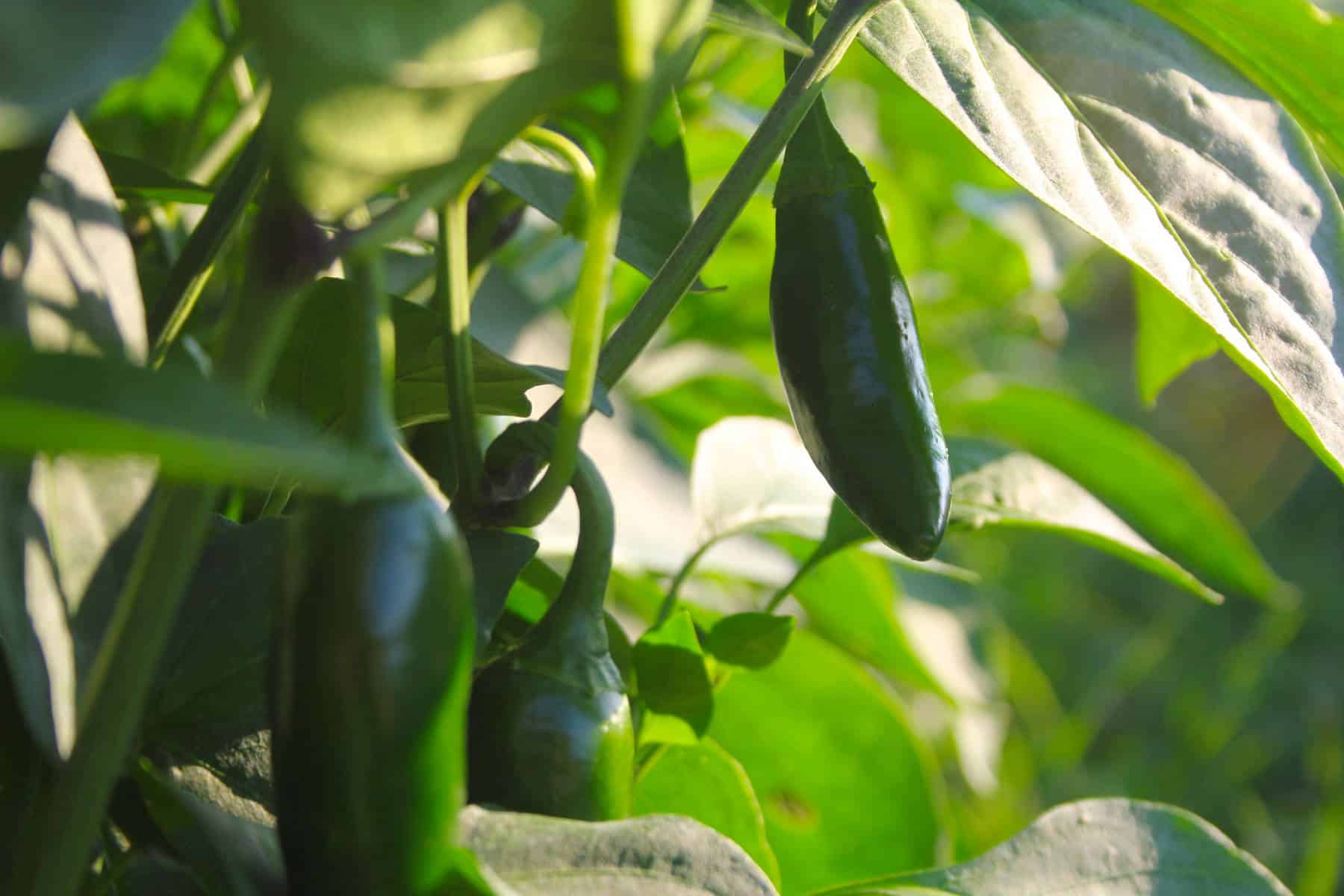
Mucho Nacho jalapeños are larger, thick-walled peppers with medium heat. Their size makes them a strong choice for nachos, stuffed peppers, grilling, and slicing into Tex-Mex dishes.
Jaloro Peppers
Jaloro peppers are a jalapeño-type pepper that can turn yellow, orange, and red as they mature. They have a mild to medium heat level and work well in fresh salsas, pickles, and colorful pepper dishes.

Types of Hot Jalapeños
Some jalapeño varieties can reach the higher end of the jalapeño heat range or go beyond what most people expect from a standard jalapeño.
Biker Billy Jalapeños
Biker Billy jalapeños are known as one of the hotter jalapeño varieties. They can taste much stronger than common grocery store jalapeños and are best for cooks who want a bolder chile burn.

Black Jalapeños
Black jalapeños are valued for their dark color and ornamental appearance. Their heat can vary, but they usually bring the familiar jalapeño flavor with a slightly deeper look on the plate or in the garden.

Purple Jalapeños
Purple jalapeños are colorful jalapeño-type peppers that mature from purple toward red. They are often grown for appearance as well as flavor and can bring mild to medium heat depending on growing conditions and ripeness.
How To Choose the Right Jalapeño Pepper
Choose jalapeños based on how much heat and texture you want in the final dish. For mild flavor, look for firm green jalapeños with smooth skin. For deeper flavor and more sweetness, choose red jalapeños when you can find them.
- For stuffing: Choose large, firm jalapeños with thick walls.
- For salsa: Use green jalapeños for bright flavor or red jalapeños for a sweeter chile taste.
- For chili: Use whole jalapeños for more heat or seeded jalapeños for a milder background spice.
- For pickling: Choose fresh, firm jalapeños without soft spots.
- For hot sauce: Use ripe red jalapeños for deeper flavor and color.
Need to buy by weight for a recipe or canning project? Use this jalapeño pound conversion chart to estimate whole, sliced, chopped, and seeded amounts.
How To Store and Freeze Jalapeños
Fresh jalapeños keep best when stored dry in the refrigerator. Place them in a produce bag or container and avoid washing them until you are ready to use them. Too much moisture can make peppers soften and spoil faster.
To freeze jalapeños, wash and dry them well, then freeze whole, sliced, or chopped. For best quality, spread them on a tray first, freeze until firm, and then transfer them to a freezer bag. Frozen jalapeños work best in cooked dishes like chili, soups, sauces, and casseroles.
Cooking With Jalapeños
Jalapeños are versatile because they add flavor, color, and heat without overpowering every dish. They can be used raw, roasted, fried, grilled, pickled, smoked, or stuffed.
- Raw: Use in salsa, guacamole, pico de gallo, and salads.
- Roasted: Add to sauces, dips, soups, and chili.
- Stuffed: Fill with cheese, meat, or vegetables for jalapeño poppers.
- Pickled: Use on tacos, nachos, burgers, and sandwiches.
- Smoked: Turn ripe red jalapeños into chipotle peppers.
For recipe ideas, start with stuffed jalapeño peppers with bacon, award-winning Texas chili, and homemade adobo sauce with chipotles.
FAQs
How hot are jalapeño peppers?
Jalapeño peppers usually range from 2,500 to 8,000 Scoville Heat Units. They are considered mild to medium-hot compared with hotter chile peppers like serranos, cayennes, habaneros, ghost peppers, and Carolina reapers.
Are red jalapeños hotter than green jalapeños?
Red jalapeños are more mature than green jalapeños. They often taste sweeter, fruitier, and sometimes hotter, but the exact heat still depends on the variety and growing conditions.
Are jalapeño seeds the hottest part?
The seeds can taste hot because they touch the inner membrane, but most of the capsaicin is concentrated around the white ribs and placenta inside the pepper. Removing the ribs and seeds makes jalapeños taste milder.
Are serrano peppers hotter than jalapeños?
Yes, serrano peppers are usually hotter than jalapeños. Jalapeños commonly range from 2,500 to 8,000 SHU, while serrano peppers often range from 10,000 to 23,000 SHU.
When should you pick jalapeño peppers?
Jalapeños can be picked when they are firm, glossy, and green, or left on the plant longer to ripen red. Green jalapeños taste brighter and grassier, while red jalapeños taste sweeter and more mature.
How do you make jalapeños less spicy?
Cut the jalapeño open and remove the white ribs and seeds. Cooking, roasting, or pairing jalapeños with dairy, fat, acid, or sweetness can also soften the heat in the finished dish.
For most home cooking, jalapeños are a flexible middle-ground pepper: spicy enough to add flavor, but not so hot that they overpower a dish. Use green jalapeños for fresh, bright heat, red jalapeños for a sweeter chile flavor, and remove the ribs and seeds when you want a milder result.



Leave a Reply