
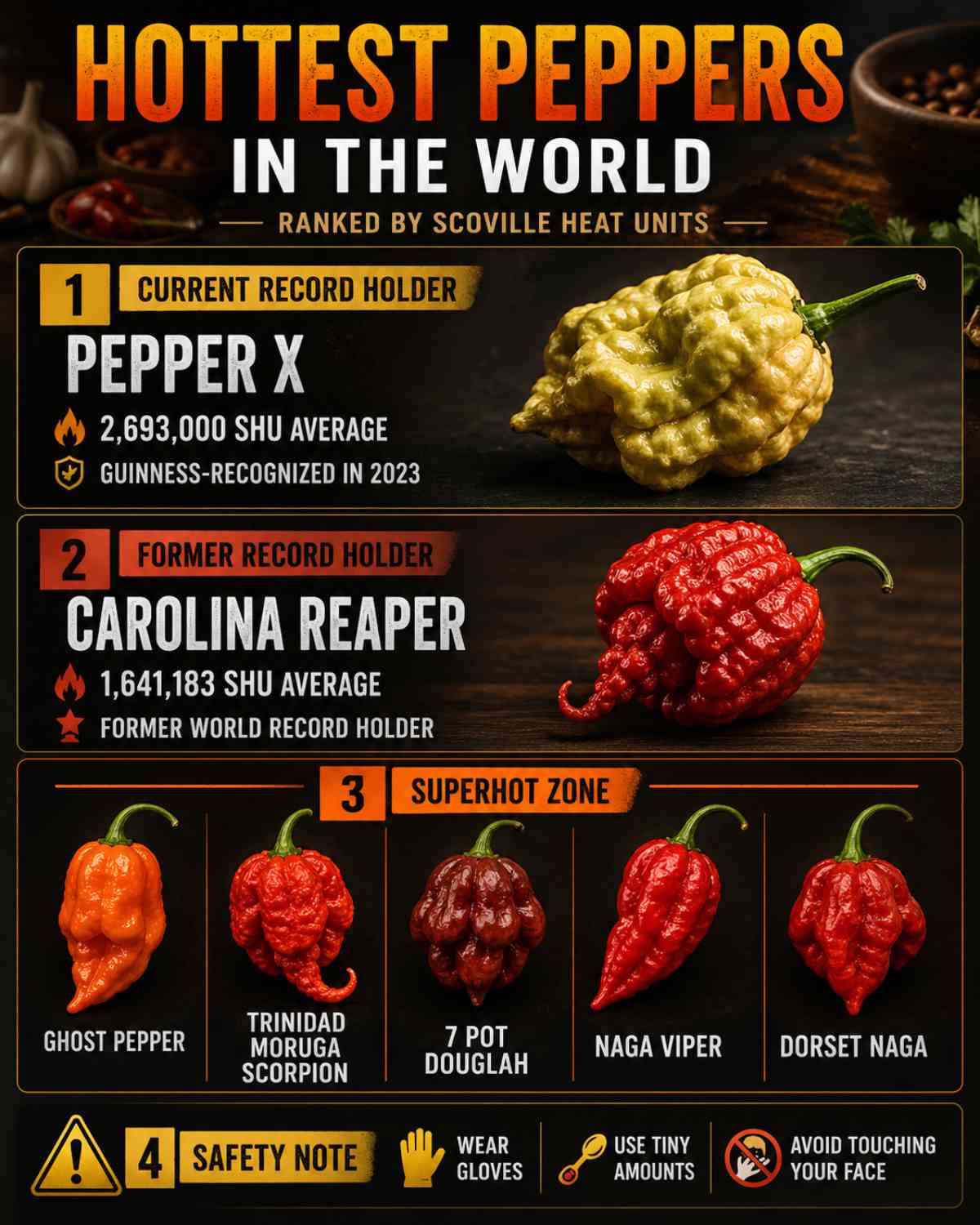
The hottest peppers in the world are ranked by Scoville Heat Units, or SHU, which estimate the concentration of heat-producing capsaicinoids in chile peppers. At the top of the current official list is Pepper X, recognized by Guinness World Records at an average of 2,693,000 SHU.
This guide ranks the world's hottest peppers by Scoville heat, explains how the Scoville scale works, and gives practical cooking and handling notes for superhot chiles. The goal is simple: help you understand extreme pepper heat without outdated claims, unsafe language, or confusing record-holder information.
⬇️ Table of Contents
- Quick Answer: What Is the Hottest Pepper in the World?
- Hottest Peppers in the World
- Pepper X
- Dragon's Breath
- Carolina Reaper
- Trinidad Moruga Scorpion
- 7 Pot Douglah
- Komodo Dragon
- Naga Viper
- 7 Pot Brain Strain
- Ghost Pepper
- Naga Morich
- Bhut Jolokia
- Madame Jeanette
- Best Hot Peppers for Cooking, Not Just Heat
- How to Handle Superhot Peppers Safely
- How to Use Superhot Peppers in Cooking
- Chart of the Hottest Peppers: Spiciest to Least Spicy
- How to Calm Pepper Heat
- Final Thoughts
Quick Answer: What Is the Hottest Pepper in the World?
Pepper X is currently the hottest pepper in the world according to Guinness World Records. Its official average heat rating is 2,693,000 Scoville Heat Units. The Carolina Reaper is now the former record holder, while Dragon's Breath is best treated as a claimed or disputed superhot pepper rather than the official current record holder.
| Pepper | Scoville Heat Units | Record Status |
|---|---|---|
| Pepper X | 2,693,000 SHU average | Current official Guinness World Records hottest chili pepper |
| Carolina Reaper | About 1,400,000 to 2,200,000 SHU | Former official Guinness record holder |
| Dragon’s Breath | Claimed around 2,480,000 SHU | Claimed/disputed; not the current official record holder |
Hottest Peppers in the World
The hottest peppers are usually Capsicum chinense varieties, including Pepper X, Carolina Reaper, Trinidad Scorpion types, 7 Pot peppers, Naga peppers, and ghost peppers. These peppers are much hotter than common kitchen chiles like jalapeños, serranos, poblanos, Anaheim peppers, and other everyday peppers.
For cooks, the most useful way to read this list is not just "which pepper is hottest," but how each pepper behaves in food. Some superhot peppers have fruity flavor, some taste earthy or smoky, and many are best used in sauces, marinades, spice blends, and small-batch chile pastes where a tiny amount can season a full recipe.
How the Scoville Scale Works
The original Scoville test, created by Wilbur Scoville in 1912, used human tasters and dilution. A chile extract was diluted until tasters could no longer detect heat. The more dilution required, the higher the Scoville Heat Unit rating.
Modern chile testing commonly uses lab methods such as high-performance liquid chromatography, often shortened to HPLC, to estimate capsaicinoid concentration more consistently. Guinness World Records reports Pepper X using Scoville Heat Units and ASTA pungency units, both tied to capsaicin concentration.
SHU numbers are best read as useful ranges rather than exact cooking guarantees. Heat can vary by seed line, growing conditions, ripeness, drying, storage, and testing method.
Pepper X

Pepper X is the current official Guinness World Records holder for the hottest chili pepper, with an average rating of 2,693,000 Scoville Heat Units. It was developed by Ed Currie, the same breeder behind the Carolina Reaper.
- Official average heat: 2,693,000 SHU
- Record status: Current Guinness World Records hottest chili pepper
- Breeder: Ed Currie of PuckerButt Pepper Company
- Cooking note: Most often used in specialty hot sauces and extreme-heat products
Older articles often described Pepper X as unofficial or unconfirmed. That is no longer accurate. Guinness announced Pepper X as the official record holder in 2023, replacing the Carolina Reaper at the top of the official list.
For cooking, Pepper X is not a casual substitute for habanero, jalapeño, or even ghost pepper. Treat it as an extreme-heat ingredient where a very small amount can change an entire sauce, marinade, or condiment.
Dragon's Breath

Dragon's Breath is often listed among the world's hottest peppers, but it should be treated as a claimed or disputed superhot pepper, not the current official record holder. Reports have placed it around 2,480,000 SHU, but Pepper X is the current Guinness-recognized hottest chili pepper.
- Claimed heat: around 2,480,000 SHU
- Status: claimed/disputed; not the current official Guinness record holder
- Origin: associated with breeder Mike Smith in the United Kingdom
- Cooking note: extreme heat; use only in very small amounts if used at all
Because Dragon's Breath has been surrounded by dramatic claims, it is better to describe it calmly and accurately. It is an extremely hot pepper, it can cause significant irritation, and it should be handled with the same care as other superhot chiles.
Carolina Reaper

Carolina Reaper was the official Guinness World Records hottest pepper before Pepper X. It is still one of the most famous superhot peppers in the world and remains widely used in hot sauces, dried powders, pepper flakes, and extreme-heat condiments.
- Estimated heat: about 1,400,000 to 2,200,000 SHU
- Former status: former Guinness World Records hottest chili pepper
- Breeder: Ed Currie
- Flavor: fruity, sweet, and intense before the heat builds
The Carolina Reaper is useful when a recipe needs fruit-forward chile flavor with extreme heat. In most home kitchens, it is best used in very small amounts in hot sauce, barbecue sauce, chili oil, fermented pepper mash, or spicy marinades.
Trinidad Moruga Scorpion

Trinidad Moruga Scorpion is a superhot chile from Trinidad and Tobago. It is known for a slow-building burn and a sweet, fruity flavor that can work well in sauces when used carefully.
- Estimated heat: about 1,200,000 to 2,009,231 SHU
- Origin: Moruga, Trinidad and Tobago
- Flavor: fruity, floral, and intense
- Best uses: hot sauce, pepper mash, marinades, and tiny amounts in stews
Its heat can seem delayed at first, then continue building. For cooking, start with less than you think you need, especially if using dried powder or pepper mash.
7 Pot Douglah

7 Pot Douglah, also called Chocolate 7 Pot, is one of the best-known 7 Pot peppers. It matures to a dark brown color and has an earthy, slightly fruity flavor beneath the heat.
- Estimated heat: about 923,889 to 1,853,986 SHU
- Origin: Trinidad and Tobago
- Also known as: Chocolate 7 Pot
- Best uses: hot sauces, dried powder, Caribbean-style spice blends, and pepper vinegar
The "7 Pot" name comes from the idea that one pepper can season several pots of food. In real cooking, that means use it sparingly and build heat gradually.
Komodo Dragon

Komodo Dragon is a superhot pepper developed in the United Kingdom. It is often described as having an initial sweetness followed by a delayed, powerful heat.
- Estimated heat: about 500,000 to 1,400,000 SHU
- Origin: United Kingdom
- Flavor: sweet and fruity at first, then very hot
- Best uses: hot sauces, chile pastes, and very small amounts in marinades
Naga Viper

Naga Viper is a British superhot hybrid associated with Naga Morich, Trinidad Scorpion, and Bhut Jolokia genetics. It was once one of the most talked-about record-level peppers.
- Estimated heat: about 900,000 to 1,382,118 SHU
- Created by: Gerald Fowler in England
- Flavor: fruity and sweet with slow-building heat
- Best uses: hot sauce, dried chile flakes, and small-batch pepper blends
7 Pot Brain Strain

7 Pot Brain Strain is a wrinkled superhot pepper with a shape that inspired its name. It is known for strong heat, fruity flavor, and a rough, folded surface.
- Estimated heat: about 1,000,000 to 1,350,000 SHU
- Type: 7 Pot-style superhot pepper
- Flavor: fruity, citrusy, and intense
- Best uses: hot sauces, spicy powders, and fermented pepper mash
Ghost Pepper
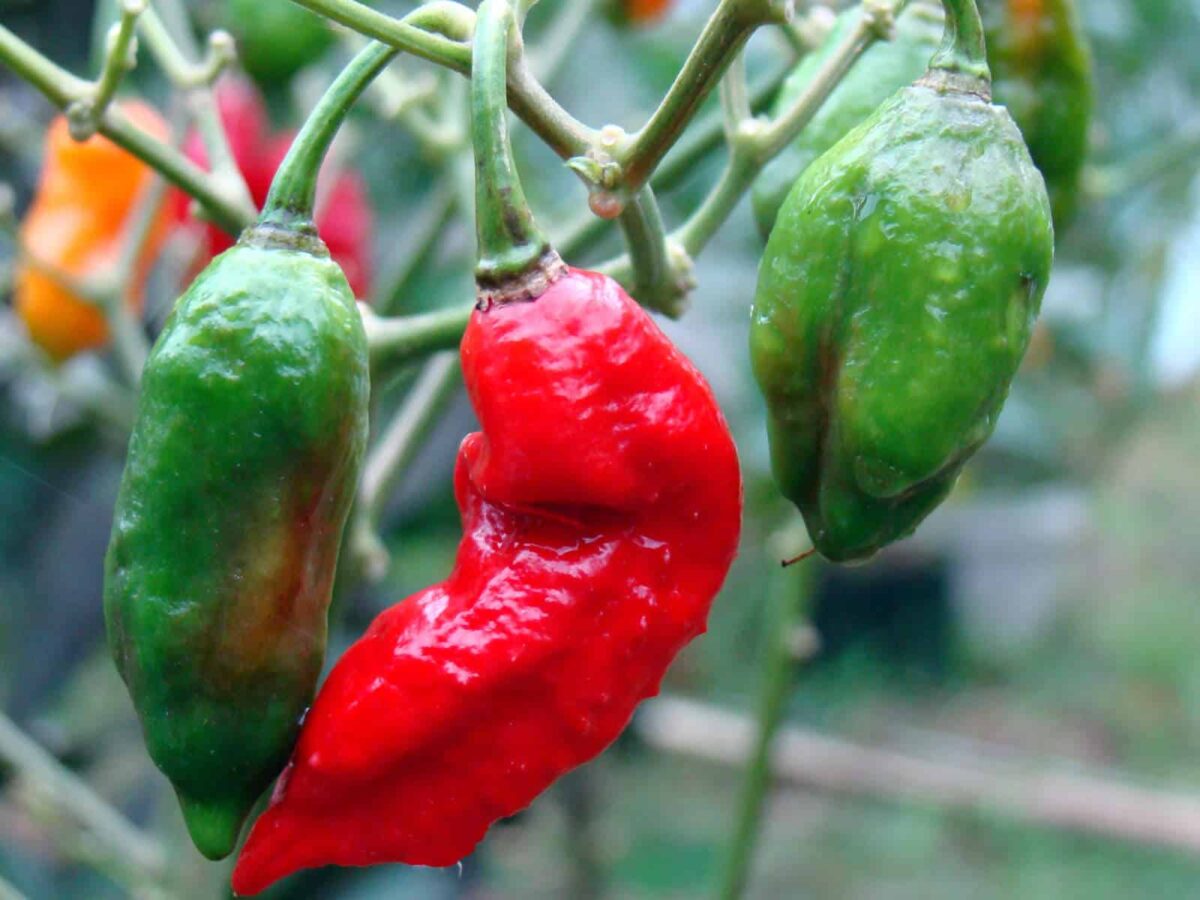
Ghost pepper, also called Bhut Jolokia, is one of the peppers that made superhot chiles famous worldwide. It has a smoky, fruity flavor and a heat that builds slowly.
- Estimated heat: about 800,000 to 1,041,427 SHU
- Origin: Northeast India
- Former status: former world record holder
- Best uses: hot sauce, chili, curry, spice blends, and dried pepper flakes
Ghost pepper is still extremely hot, but it is more available than many newer superhots. For cooks who enjoy intense spice, it offers a strong combination of heat and flavor.
Naga Morich

Naga Morich is a very hot chile associated with Bangladesh and Northeast India. It is closely related to other famous Naga-type peppers and is valued for its strong fruit aroma and lingering heat.
- Estimated heat: about 600,000 to 1,000,000+ SHU
- Origin: Bangladesh and Northeast India
- Flavor: fruity, sharp, and lingering
- Best uses: curries, sauces, pickles, and spicy condiments
Bhut Jolokia

Bhut Jolokia is another name commonly used for ghost pepper. It became famous for crossing the one-million-SHU mark and helped introduce many cooks to the world of superhot peppers.
In food, Bhut Jolokia works best when the heat is balanced with acid, fat, sweetness, or long cooking. It can be used in hot sauces, curries, pickles, dry rubs, and spicy stews, but only in small amounts.
Madame Jeanette

Madame Jeanette is a hot, fruity pepper from Suriname and is widely used in Caribbean and South American cooking. It is not as hot as the top superhot peppers, but it is still much hotter than jalapeños and serranos.
- Estimated heat: about 125,000 to 325,000 SHU
- Origin: Suriname
- Flavor: fruity, aromatic, and bright
- Best uses: hot sauces, marinades, stews, rice dishes, and Caribbean-style condiments
Best Hot Peppers for Cooking, Not Just Heat
The hottest pepper is not always the best pepper for a recipe. Superhot peppers are useful when you want extreme heat, but many everyday chiles give better flavor control in salsas, sauces, soups, stews, and grilled dishes.
| Cooking Goal | Good Pepper Choice | Why It Works |
|---|---|---|
| Fresh salsa | Jalapeño or serrano | Fresh green heat that is easier to control |
| Fruit-based hot sauce | Habanero or Scotch bonnet | Fruity heat pairs well with mango, pineapple, citrus, and vinegar |
| Smoky heat | Chipotle or ghost pepper | Adds smoke, depth, and slow-building warmth |
| Extreme hot sauce | Carolina Reaper, Trinidad Scorpion, or Pepper X products | Very small amounts create intense heat |
| Roasting and stuffing | Poblano or Anaheim | Milder heat with good structure and flavor |
For everyday kitchen conversions, see how many jalapeños are in a pound. It is a more practical guide when you are shopping for salsa, poppers, pickled peppers, or meal prep.
How to Handle Superhot Peppers Safely
Superhot peppers contain high levels of capsaicin, which can irritate the skin, eyes, mouth, stomach, and digestive tract. If pepper dust, smoke, or vapor is inhaled, it may also irritate the nose, throat, and breathing passages.
- Wear food-safe gloves when cutting or handling superhot peppers.
- Avoid touching your face, eyes, or contact lenses while working with chiles.
- Use good ventilation, especially when cooking, drying, or grinding hot peppers.
- Wash knives, cutting boards, gloves, and countertops carefully after use.
- Keep fresh, dried, powdered, and sauced superhot peppers away from children and pets.
- Start with a very small amount in recipes; you can always add more heat, but you cannot easily remove it.
If you are sensitive to spicy foods or have concerns about very hot peppers, use milder chiles instead. For most home cooking, habanero, Scotch bonnet, serrano, jalapeño, poblano, and Anaheim peppers are more practical choices than superhot varieties.
How to Use Superhot Peppers in Cooking
Superhot peppers are usually best when they are used as a background heat source, not the main ingredient. A small amount can add depth to sauces, marinades, soups, stews, chili, pepper vinegar, barbecue sauce, and fermented hot sauce.
- Hot sauce: Blend a small amount with vinegar, garlic, salt, fruit, or roasted vegetables.
- Marinades: Use a tiny amount with citrus, oil, herbs, and aromatics.
- Chili and stew: Add carefully, then simmer and taste before adding more.
- Dry rubs: Mix powdered superhot pepper with milder spices to control intensity.
- Fermented pepper mash: Combine with milder peppers for better flavor balance.
For a broader cooking reference, see our guide to types of peppers, which covers mild, medium, hot, and superhot varieties in a more everyday kitchen format.
Chart of the Hottest Peppers: Spiciest to Least Spicy
This chart ranks many of the best-known hot chile peppers by Scoville Heat Units. Use it as a practical cooking and comparison guide, not as a fixed scientific guarantee. Pepper heat can vary by plant, growing region, ripeness, and testing method.
Important update: Pepper X is now the official Guinness World Records hottest chili pepper at an average of 2,693,000 SHU. Dragon's Breath is included as a claimed/disputed superhot pepper, not the current official record holder.
| Chile Pepper | Estimated Scoville Heat Units | Status / Cooking Note |
|---|---|---|
| Pepper X | 2,693,000 SHU average | Current official Guinness World Records hottest chili pepper |
| Dragon's Breath | Claimed around 2,480,000 SHU | Claimed/disputed superhot; not the current official record holder |
| Carolina Reaper | 1,400,000 to 2,200,000 SHU | Former official record holder; fruity, extreme heat |
| Trinidad Moruga Scorpion | 1,200,000 to 2,009,231 SHU | Slow-building heat with sweet, fruity flavor |
| 7 Pot Douglah | 923,889 to 1,853,986 SHU | Chocolate-brown 7 Pot type with earthy flavor |
| Trinidad Scorpion Chocolate | 1,200,000 to 2,000,000 SHU | Earthy, dark, fruity superhot pepper |
| 7 Pot Primo | 1,100,000 to 1,469,000 SHU | Superhot 7 Pot variety; use sparingly |
| Trinidad Scorpion Butch T | 800,000 to 1,463,700 SHU | Former record-level superhot pepper |
| Komodo Dragon | 500,000 to 1,400,000 SHU | Sweet start with delayed heat |
| Naga Viper | 900,000 to 1,382,118 SHU | Hybrid of Naga Morich, Trinidad Scorpion, and ghost pepper |
| 7 Pot Brain Strain | 1,000,000 to 1,350,000 SHU | Wrinkled superhot with fruity heat |
| 7 Pot Jonah | 800,000 to 1,200,000 SHU | Large 7 Pot type from Trinidad and Tobago |
| Spanish Naga | 1,086,844 to 1,200,000 SHU | Naga-type superhot pepper |
| Ghost Pepper / Bhut Jolokia | 800,000 to 1,041,427 SHU | Former record holder; smoky, fruity, slow-building heat |
| Naga Morich | 600,000 to 1,000,000+ SHU | Fruity, intense chile from Bangladesh and Northeast India |
| Red Savina Habanero | 350,000 to 577,000 SHU | Former record holder; very hot habanero type |
| Chocolate Habanero | 300,000 to 500,000 SHU | Earthy, smoky, fruit-forward habanero |
| Caribbean Red Habanero | 300,000 to 445,000 SHU | Very hot habanero with tropical fruit flavor |
| Scotch Bonnet | 100,000 to 350,000 SHU | Fruity Caribbean pepper; excellent for sauces and marinades |
| Habanero | 100,000 to 350,000 SHU | Common very hot pepper with citrusy fruit flavor |
| Madame Jeanette | 125,000 to 325,000 SHU | Fruity Suriname chile used in Caribbean cooking |
| Datil | 100,000 to 300,000 SHU | Fruity hot pepper associated with St. Augustine, Florida |
| Thai Bird’s Eye | 50,000 to 100,000 SHU | Small, sharp chile used in Southeast Asian cooking |
| Chiltepin | 50,000 to 100,000 SHU | Small wild chile with quick, sharp heat |
| Pequin | 30,000 to 60,000 SHU | Small dried chile often used in flakes and sauces |
| Cayenne | 30,000 to 50,000 SHU | Common dried, powdered, and fresh chile |
| Tabasco Pepper | 30,000 to 50,000 SHU | Best known for vinegar-based hot sauces |
| Serrano | 10,000 to 23,000 SHU | Fresh green heat for salsa and sauces |
| Jalapeño | 2,500 to 8,000 SHU | Everyday fresh chile for salsas, poppers, and pickling |
| Poblano | 1,000 to 2,000 SHU | Mild roasting pepper; dried form is ancho |
| Anaheim | 500 to 2,500 SHU | Mild chile for roasting, stuffing, and sauces |
| Bell Pepper | 0 SHU | No heat; sweet pepper |
How to Calm Pepper Heat
Water does not work well for chile heat because capsaicin is not water-soluble. Dairy, fat, starch, and sweetness are usually more helpful when a dish tastes too hot.
- Dairy: milk, yogurt, sour cream, or crema can soften the burn.
- Fat: avocado, oil, butter, or coconut milk can help spread and mellow heat.
- Starch: rice, bread, tortillas, potatoes, or pasta can make a spicy dish easier to eat.
- Sweetness: honey, sugar, fruit, or roasted vegetables can help balance sharp heat.
- Acid: vinegar, lime, or lemon can brighten a sauce, but it will not erase the heat.
Final Thoughts
The hottest pepper in the world is currently Pepper X, officially recognized at an average of 2,693,000 SHU. Carolina Reaper remains one of the most famous superhot peppers, while Dragon's Breath is better described as a claimed or disputed superhot rather than the current official record holder.
For cooking, the best pepper is not always the hottest one. Flavor, freshness, balance, and the amount used matter more than chasing the highest SHU number. Superhot peppers can be exciting ingredients, but they work best when handled carefully and used with purpose.
Pepper X is the current official Guinness World Records hottest chili pepper, with an average rating of 2,693,000 Scoville Heat Units.
Yes. Pepper X is officially rated at an average of 2,693,000 SHU, while the Carolina Reaper is commonly listed around 1,400,000 to 2,200,000 SHU.
No. Dragon's Breath is often described as a claimed superhot pepper, but it is not the current official Guinness World Records hottest chili pepper. Pepper X holds that title.
SHU stands for Scoville Heat Units. It is a way to describe chile pepper heat based on capsaicinoid concentration, especially capsaicin.
Superhot peppers can be cooked with, but they should be handled carefully. Wear gloves, avoid touching your face or eyes, use ventilation, wash tools well, and keep the peppers away from children and pets.
Scoville ratings can vary because pepper heat changes with seed line, growing conditions, ripeness, drying, storage, and testing method. Treat SHU numbers as useful ranges rather than exact cooking guarantees.



Leave a Reply