
Lychee varieties differ by fruit size, rind color, seed size, sweetness, texture, aroma, and harvest season. This guide compares 9 types of lychee fruit, including Bengal, Emperor, Groff, Fei Zi Xiao, Hak Ip, Kwai Mi, Mauritius, No Mai Tsz, and Sweetheart.
Fresh lychee, also spelled litchi, is a tropical and subtropical fruit from Litchi chinensis. It has a rough red to pink rind, juicy translucent white flesh, and a glossy brown seed that is not eaten. Most lychees taste sweet, floral, lightly tart, and a little grape-like, but the best variety for you depends on whether you want large fruit, small seeds, firm flesh, or the most fragrance.
Fresh vs. canned lychee: Many people in the United States first encounter lychee from a can. Canned lychee has a noticeably milder flavor because the floral aroma fades during processing, and added sugar syrup changes the natural sweetness profile. The variety comparisons in this guide refer to fresh lychee. If you have only tried canned lychee, fresh lychee will taste more aromatic, juicy, and complex.

⬇️ Table of Contents
- Quick Comparison of Lychee Varieties
- What Is Lychee Fruit?
- What Does Lychee Taste Like?
- Types of Lychee
- 1. Bengal Lychee
- 2. Emperor Lychee
- 3. Groff Lychee
- 4. Fei Zi Xiao Lychee
- 5. Hak Ip Lychee
- 6. Kwai Mi Lychee
- 7. Mauritius (Tai So) Lychee
- 8. No Mai Tsz Lychee
- 9. Sweetheart Lychee
- When Is Lychee in Season?
- How To Use Fresh Lychee
- Lychee vs. Rambutan and Longan
- Sources
Quick Comparison of Lychee Varieties
| Lychee type | Best known for | Season note |
|---|---|---|
| Bengal | Large fruit, sweet flavor, good flesh recovery | Early to midseason |
| Emperor | Very large fruit and a smaller seed | Mid to late season |
| Groff | Smaller fruit and late-season usefulness | Late season in some regions |
| Fei Zi Xiao | Fragrant Chinese cultivar with cultural history | Early season in South China |
| Hak Ip | Dark rind, aromatic flesh, premium reputation | Midseason |
| Kwai Mi | Sweet, aromatic flesh and small seed | Midseason |
| Mauritius (Tai So) | Commercially important, firm, reliable fruit | Early to midseason |
| No Mai Tsz | Prized fragrance and very small seed | Late season |
| Sweetheart | Sweet flavor, heart-shaped fruit, small seed | Midseason |
What Is Lychee Fruit?
Lychee is a member of the soapberry family, the same plant family as longan and rambutan. Lychee is native to southern China and has been cultivated there for centuries, especially in warm, humid areas with a cooler dry period that helps the trees flower.
The fruit is picked ripe because lychees do not continue to ripen after harvest the way bananas or mangoes do. For shopping, choose lychees that feel heavy for their size, smell fresh and floral, and have white juicy flesh inside. Avoid cracked fruit, sour or fermented aromas, and flesh that has turned brown or dry. Brown skin alone does not mean the fruit is bad because lychee rind darkens quickly after harvest, but dry, leaking, or off-smelling fruit is past its best. For broader produce-shopping cues, see our guide to picking fruit.
For botany and growing context, UF/IFAS Extension notes that lychee grows best in subtropical to tropical climates and that production varies by cultivar, weather, and winter chill. Purdue's Fruits of Warm Climates also traces lychee's long history in southern China.
What Does Lychee Taste Like?
Fresh lychee tastes sweet, juicy, floral, and lightly tart, with a texture somewhere between a peeled grape and a very tender pear. Some cultivars are crisp and bright; others are softer, sweeter, and more perfumed. In the kitchen, good fresh lychees need very little help: peel, remove the seed, chill briefly, and serve.
Types of Lychee
These are the 9 lychee varieties covered in this guide. Mauritius and Tai So are combined because UF/IFAS lists Tai So and Tai Tsao as aliases for Mauritius, so they should not be counted as separate types.
1. Bengal Lychee
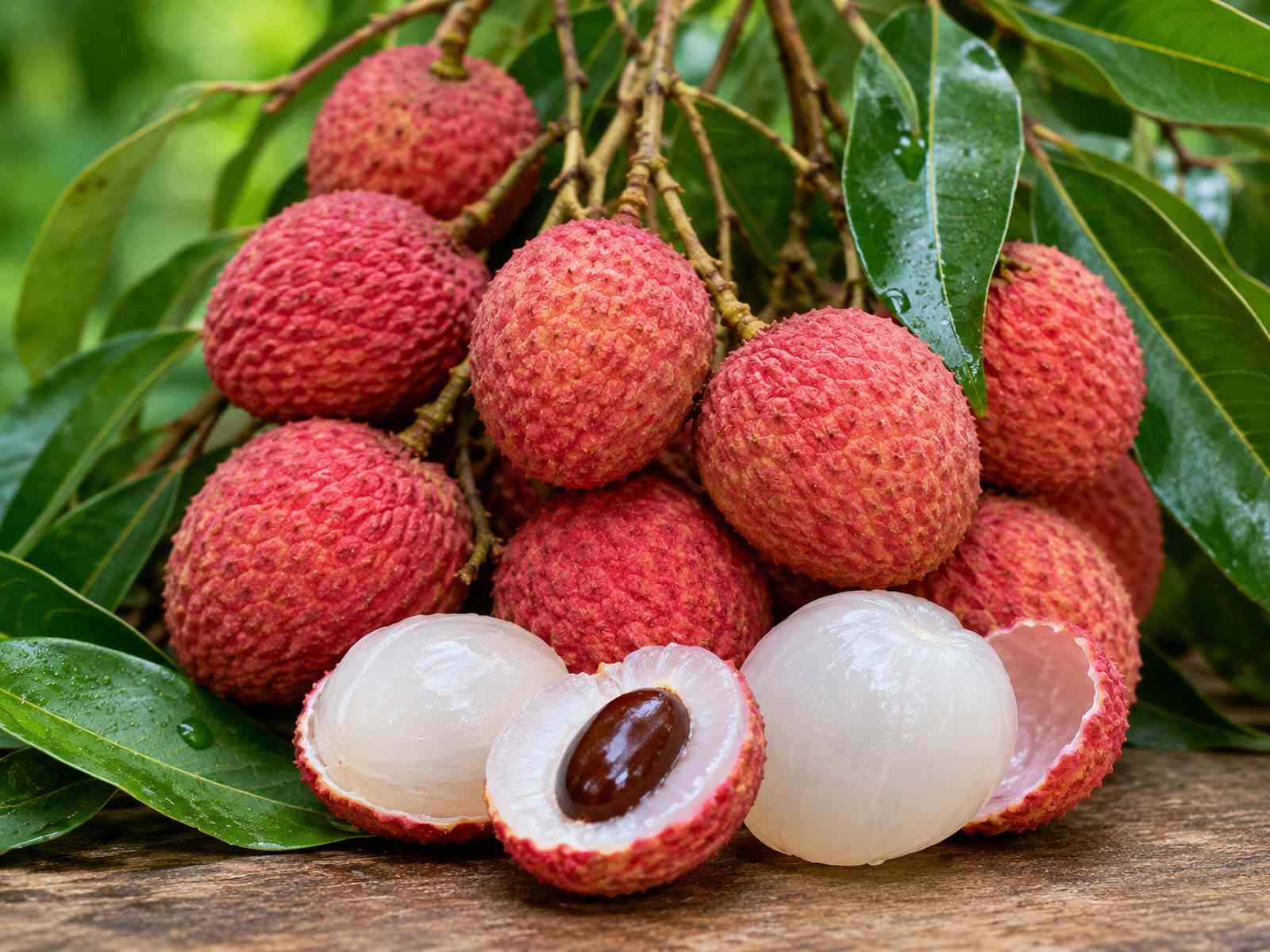
Bengal is a larger lychee cultivar valued for sweet flavor, juicy flesh, and a good edible flesh-to-seed ratio. It is commercially important in Australia and is also connected to Indian lychee production, which makes it useful for understanding how regional cultivar names and market use can overlap.
- Origin: Bengal is closely associated with Australian commercial lychee production and is widely connected with Indian lychee growing as well. Australian cultivar references describe Bengal as a Florida seedling selection with a likely parent from West Bengal, India.
- Appearance: Rounded to heart-shaped fruit with bumpy red skin and translucent white flesh around a central seed.
- Taste: Sweet, juicy, and lightly floral, with tender flesh that works well for fresh eating.
- Season: Usually early to midseason, depending on the growing region.
- Best uses: Fresh eating, fruit salads, chilled dessert plates, and simple lychee syrup.
- Kitchen note: Chill Bengal lychees before peeling; larger fruit is easier to peel cleanly when cold.
- Points of interest: Bengal helps illustrate how much lychees vary by cultivar. Some are noticeably larger and meatier than the small, seed-heavy lychees sold in mixed tropical fruit displays.
2. Emperor Lychee
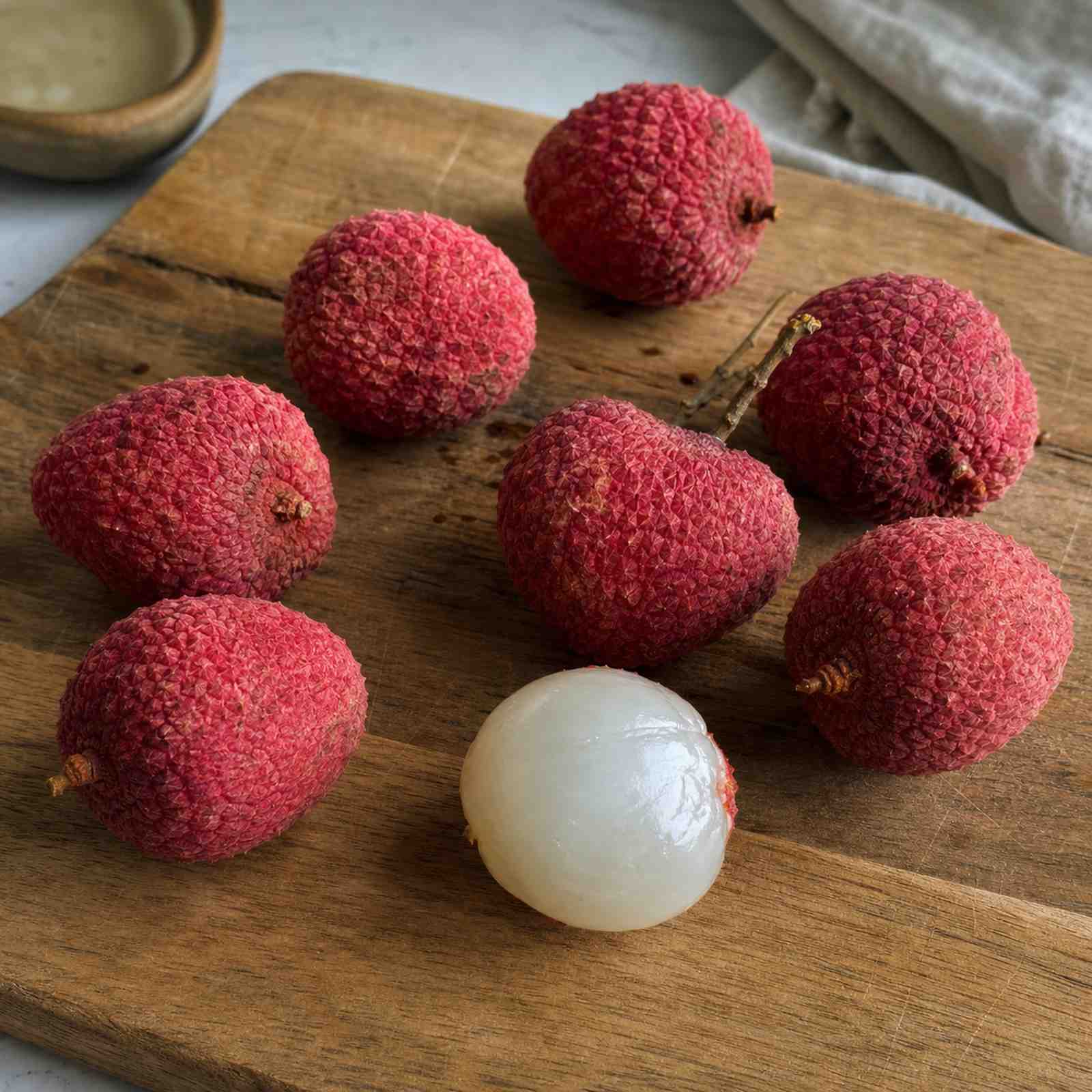
Emperor is famous for size. When grown well, it produces very large lychees with a relatively small seed, giving it one of the most impressive flesh-to-seed ratios among commonly discussed cultivars.
- Origin: Emperor is commonly grown in subtropical regions including Florida. Some grower references describe it as Australian-developed or Australian-selected, though cultivar-origin references are not as consistent as they are for older Chinese cultivars.
- Appearance: Large, rough-skinned red fruit with thick rind and plenty of translucent white flesh.
- Taste: Sweet and mild with juicy, tender flesh.
- Season: Often considered mid to late season, though local harvest timing varies.
- Best uses: Fresh eating, dessert platters, chilled fruit boards, and presentations where fruit appearance matters.
- Kitchen note: Use Emperor when presentation matters. The large peeled fruit looks clean on a fruit board and is easier for guests to handle.
- Points of interest: Emperor is a good example of why seed size matters. A smaller seed means more edible flesh, which is one reason this cultivar gets attention from home growers and collectors.
3. Groff Lychee
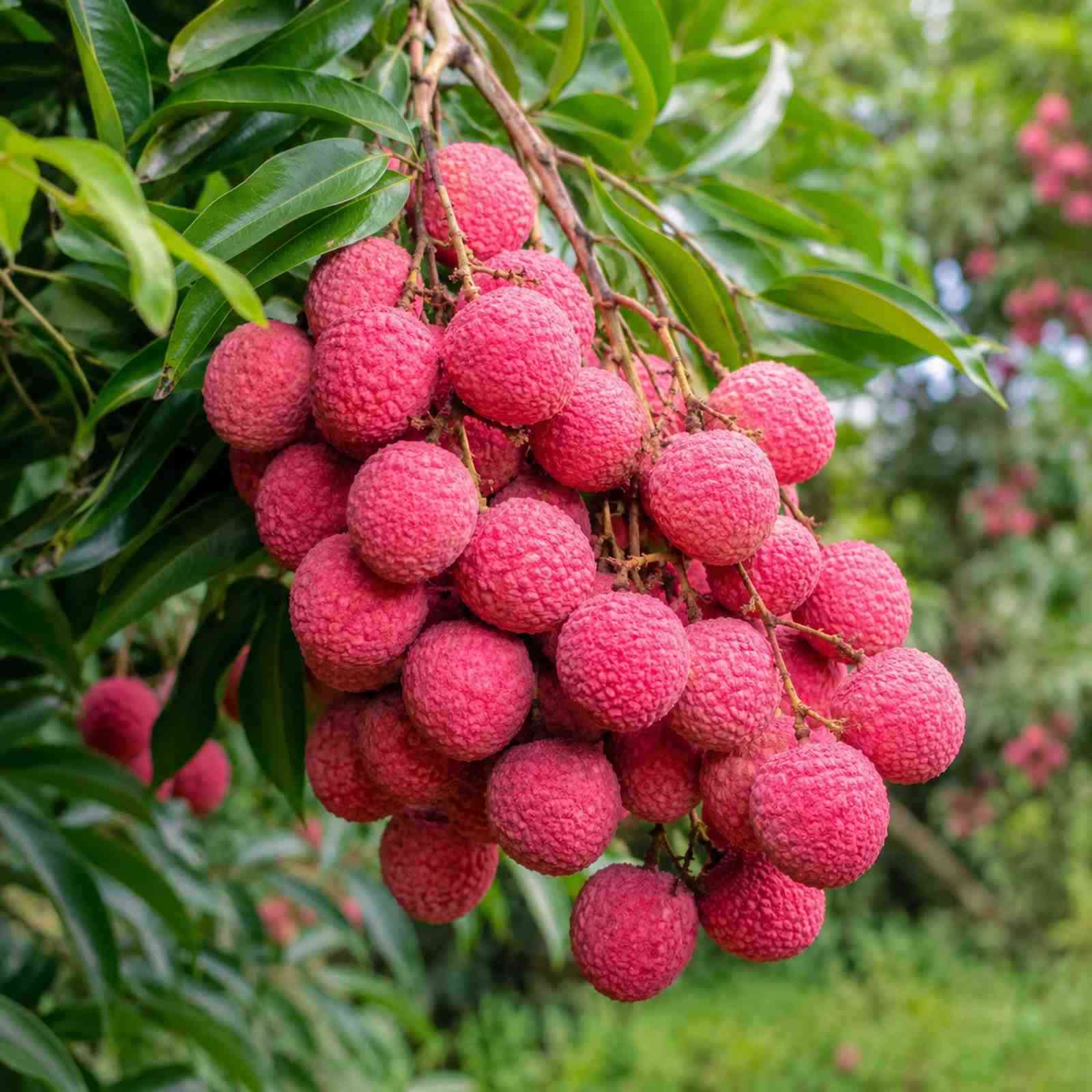
Groff is a smaller-fruited lychee cultivar with an important place in Hawaii lychee history. It is not the showiest fruit in size, but it is valued for its late-season usefulness and tendency toward small, shriveled seeds.
- Origin: Groff was developed in Hawaii from a Hak Ip seedling and named for George Weidman Groff, an agricultural researcher who contributed significantly to lychee study in the early twentieth century.
- Appearance: Smaller dull-red fruit with rough skin, white flesh, and fruit clusters that may carry many small fruits.
- Taste: Firm, sweet, and pleasantly aromatic when fully ripe, though it can taste acidic before full maturity.
- Season: Often described as a later cultivar in Hawaii and comparable climates.
- Best uses: Fresh eating, sauces, syrups, preserves, and cooked preparations where perfect fruit size matters less.
- Kitchen note: Smaller lychees are easiest to use in batches: peel, seed, and chill the flesh before adding it to fruit salads or syrup.
- Points of interest: Hawaii cultivar records note Groff's small shriveled seeds and later ripening habit. Knowing its namesake also adds useful historical context for readers who see the cultivar in Hawaii-focused references.
4. Fei Zi Xiao Lychee
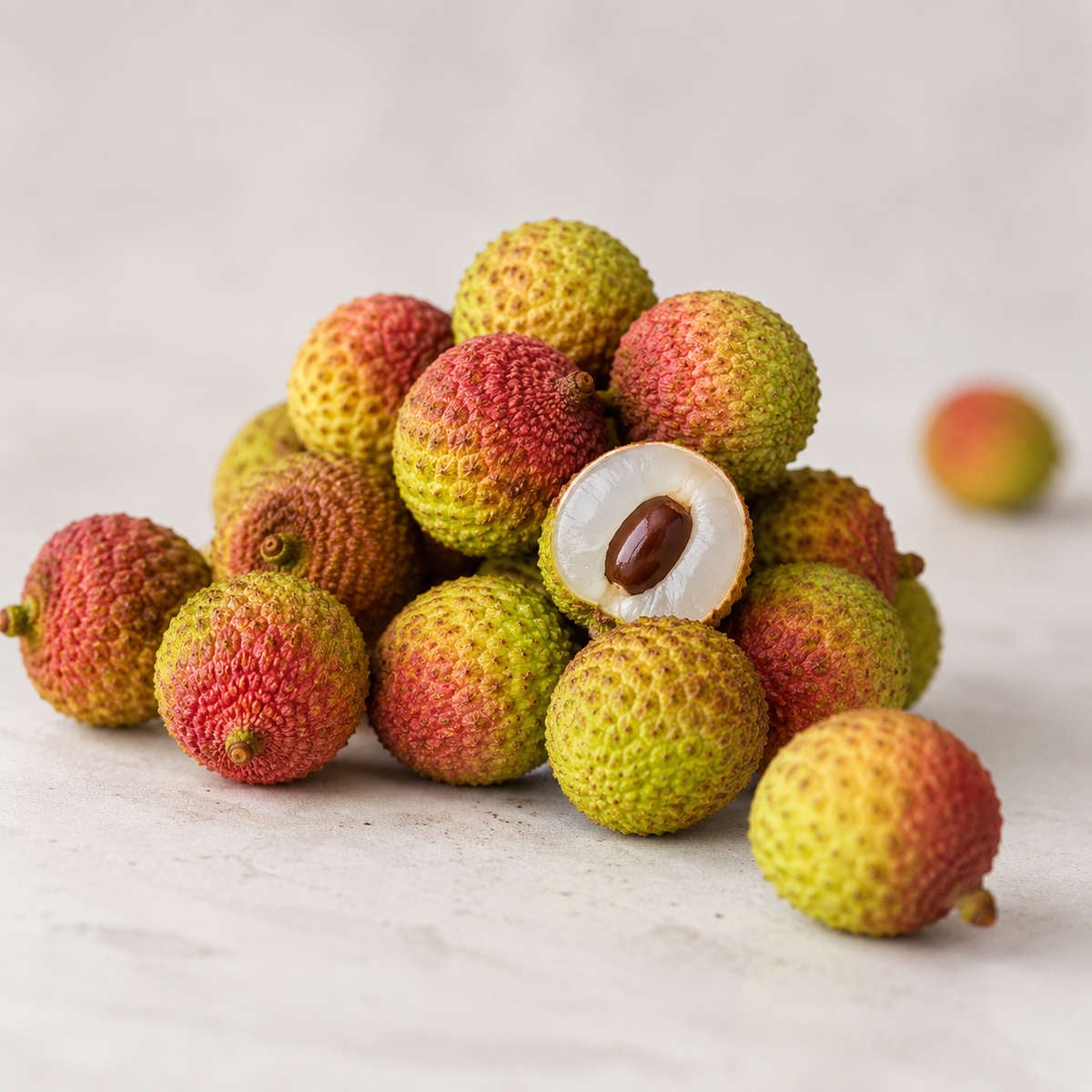
Fei Zi Xiao is a famous Chinese cultivar whose name translates as "Concubine's Smile." It is prized for fragrance, sweetness, and cultural history as much as for its eating quality.
- Origin: Fei Zi Xiao is associated with South China lychee production and appears in modern lychee research and cultivar discussions.
- Appearance: Red to pink-red rind with rounded fruit and white translucent flesh.
- Taste: Sweet, fragrant, floral, and juicy, with a clean finish when fully ripe.
- Season: Generally early season in South China, though harvest dates shift by province and weather.
- Best uses: Fresh eating, chilled lychee desserts, sorbet, granita, and fruit plates where aroma matters.
- Kitchen note: Pair fragrant lychees like Fei Zi Xiao with lime, mint, coconut, or lightly sweet cream. Heavy spices will overpower the delicate floral aroma.
- Points of interest: The name is tied to a well-known Tang dynasty story about imperial lychees and Yang Guifei, a consort of Emperor Xuanzong. According to the legend, fresh lychees were rushed by horse relay from Guangdong to the capital so she could enjoy them, a story that reflects how prized the fruit was in classical Chinese culture.
5. Hak Ip Lychee
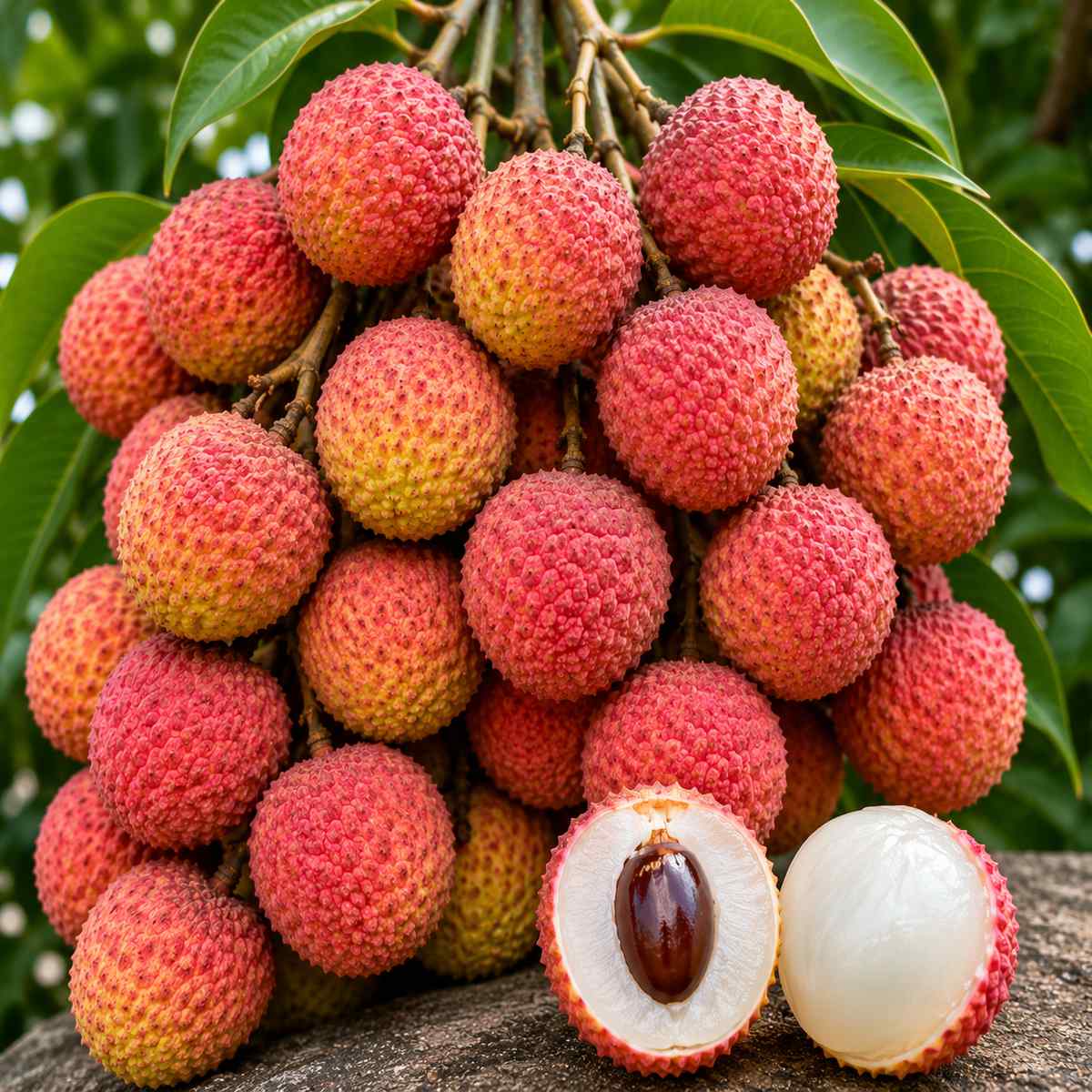
Hak Ip, also written Haak Yip or Black Leaf, is a premium lychee type known for darker foliage, deep-colored rind, and sweet flesh. It is one of the cultivar names shoppers may see from specialty growers.
- Origin: Hak Ip is a Chinese cultivar name commonly translated or described as Black Leaf. It appears in Florida and international lychee cultivar lists.
- Appearance: Red to dark red rind, often with a rounded or slightly flattened fruit shape. The flesh is translucent white.
- Taste: Sweet, aromatic, and crisp-tender, with a clean floral lychee flavor.
- Season: Usually midseason, but harvest depends on region and bloom timing.
- Best uses: Fresh eating, premium fruit plates, lychee drinks, and desserts where a sweeter aromatic lychee is preferred.
- Kitchen note: If serving Hak Ip fresh, keep the fruit cold and peel close to serving time so the flesh stays glossy and fragrant.
- Points of interest: Hak Ip is often treated as a desirable market cultivar, but names and spellings vary by grower, region, and transliteration, so the same fruit may appear under slightly different names at different markets.
6. Kwai Mi Lychee
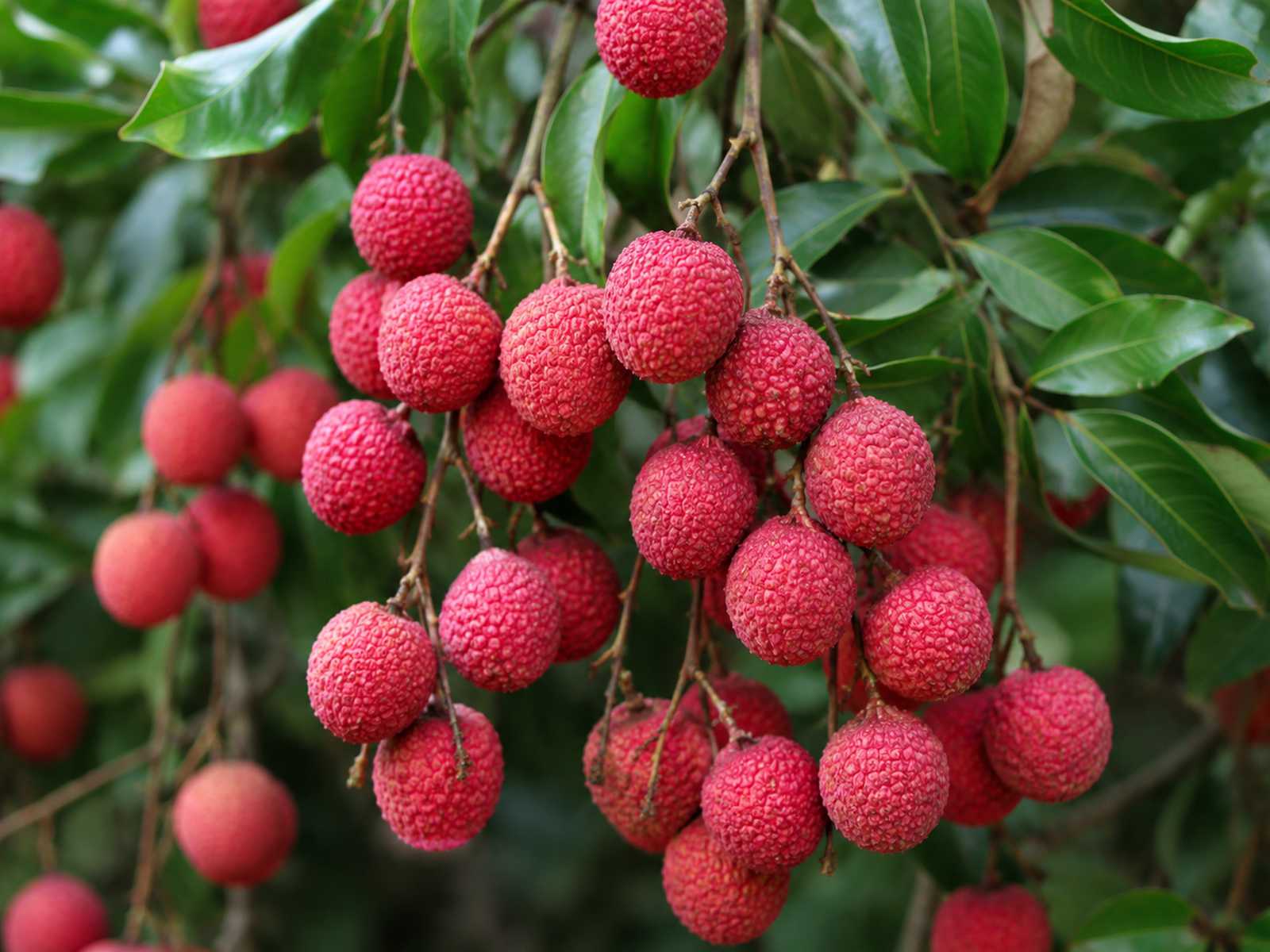
Kwai Mi, also written Kwai Mei or Kwai May in some references, is known for sweet aromatic flesh and a smaller seed. Kwai May Pink is a related Australian selection that is increasingly treated as a distinct named variety rather than simply an alternate spelling, so growers and shoppers may encounter it listed separately.
- Origin: Kwai Mi is a Chinese cultivar name, with related spellings and selections appearing in international lychee references, including Australian grower lists.
- Appearance: Pink to red bumpy rind with medium-sized fruit and white translucent flesh.
- Taste: Sweet, fragrant, and juicy, with a pleasing balance of crispness and tenderness.
- Season: Often midseason, with timing varying by region and climate.
- Best uses: Fresh eating, fruit platters, lychee juice, granita, and light desserts.
- Kitchen note: A small-seeded lychee is best used where the fruit is served whole or halved, because the flesh looks fuller and cleaner on the plate.
- Points of interest: The spelling variation is worth noting for shoppers: Kwai Mi, Kwai Mei, Kwai May, and Kwai May Pink appear in different cultivar references. Kwai May Pink in particular has enough documentation as a distinct Australian selection that it should not always be assumed to be the same as the original Kwai Mi.
7. Mauritius (Tai So) Lychee
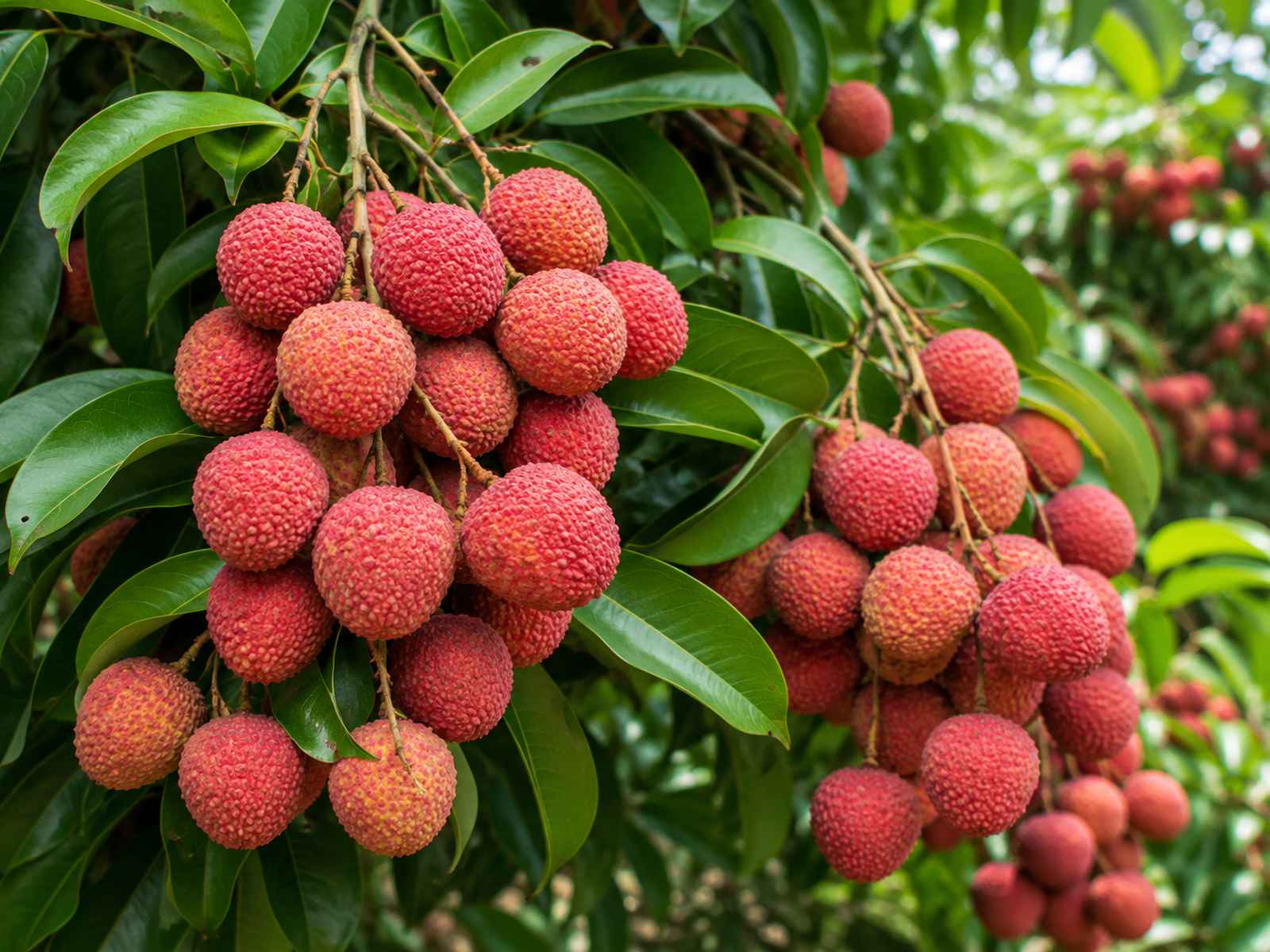
Mauritius is one of the most important commercial lychee cultivars in the world. UF/IFAS lists Tai So and Tai Tsao as aliases for Mauritius, so these names refer to the same cultivar group and should not be counted separately.
- Origin: Mauritius is a major commercial lychee cultivar grown in Florida, South Africa, Australia, and other subtropical regions. Tai So and Tai Tsao are alternate names used in some extension cultivar tables.
- Appearance: Medium-sized fruit with rough red skin and translucent white flesh. Fruit shape can be rounded to slightly heart-shaped.
- Taste: Sweet, juicy, and mildly aromatic, with firmer flesh than some softer, more perfumed cultivars.
- Season: Early to midseason in Florida and many subtropical growing areas.
- Best uses: Fresh eating, salads, chilled fruit bowls, sauces, and drinks.
- Kitchen note: Mauritius is a practical all-purpose lychee. Use it anywhere you want recognizable lychee flavor without needing the largest fruit or smallest seed.
- Points of interest: Because Mauritius is so widely grown commercially, it may be the lychee behind fresh or canned lychee sold without a cultivar name. Its firm flesh also gives it better shelf life than some more delicate varieties, which contributes to its commercial importance.
8. No Mai Tsz Lychee
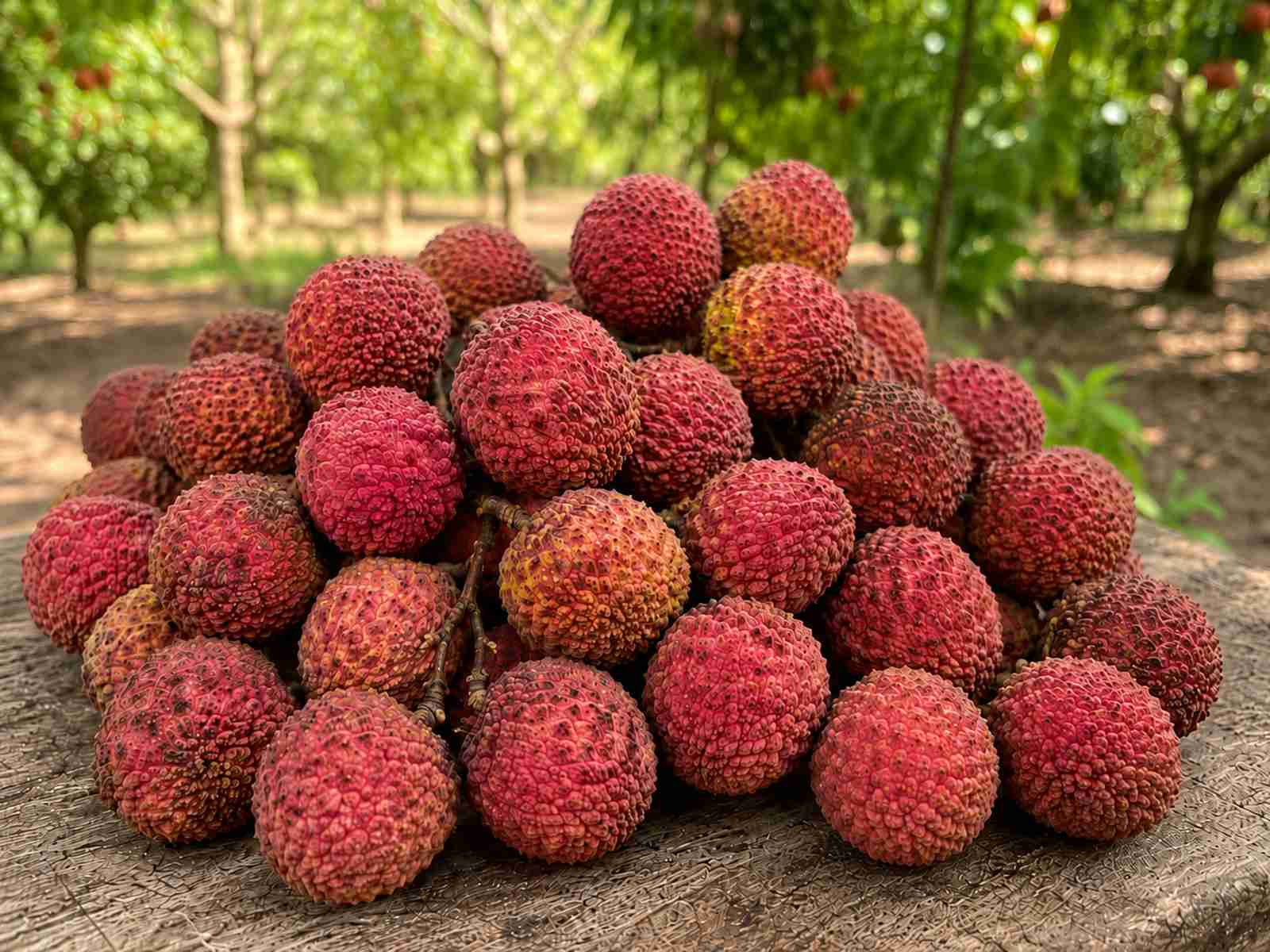
No Mai Tsz, also written No Mai Chee or Nuomici, is one of the most prized lychee cultivars because it is strongly fragrant and often has a very small, shriveled seed, leaving more edible flesh and a fuller fresh-eating texture.
- Origin: No Mai Tsz is a famous South China cultivar. The name Nuomici references glutinous rice, specifically the sticky, chewy quality of the flesh rather than any rice-like flavor.
- Appearance: Red rind, plump fruit, translucent white flesh, and a seed that may be small or "chicken tongue" shaped when conditions are right.
- Taste: Very sweet, floral, fragrant, and juicy, with tender flesh and a rich fresh lychee aroma.
- Season: Often late season in South China and other production references.
- Best uses: Fresh eating, premium fruit plates, simple chilled desserts, and recipes where the lychee itself should be the main flavor.
- Kitchen note: Serve No Mai Tsz simply. When a lychee has excellent aroma and a small seed, heavy sauces or baked preparations waste what makes it special.
- Points of interest: No Mai Tsz is a useful variety for understanding "chicken tongue" seeds, a term for small, aborted lychee seeds that can develop when pollination is incomplete. The result is a shriveled seed that takes up far less room inside the fruit, leaving significantly more edible flesh. This is a biological condition, not just a cultivar trait, and it does not occur every season or on every fruit.
9. Sweetheart Lychee
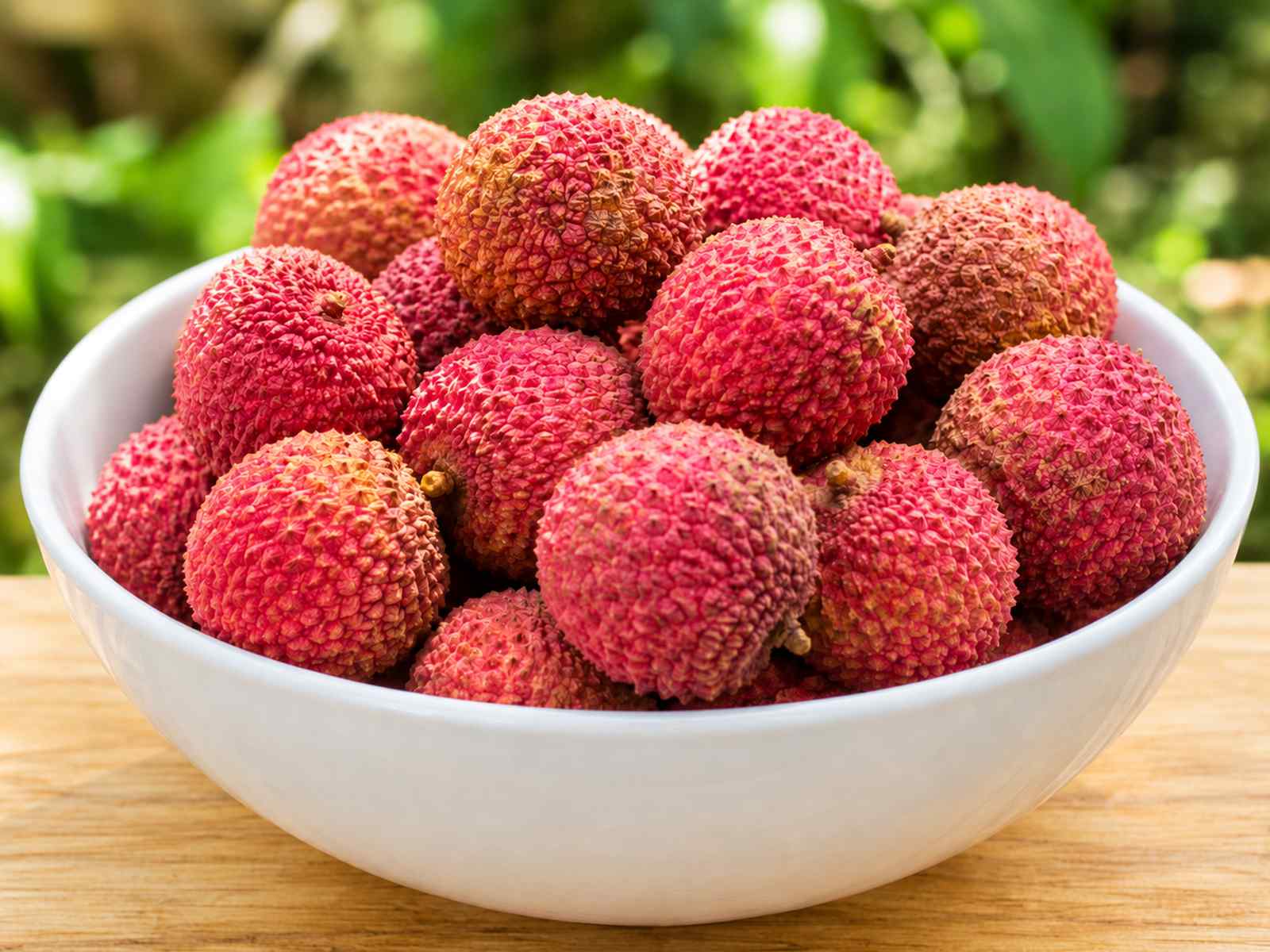
Sweetheart is a popular named lychee cultivar valued for sweet flavor, attractive fruit, and a smaller seed. The name fits the fruit's rounded heart-like shape, but the real reason cooks appreciate it is the juicy flesh.
- Origin: Sweetheart is commonly sold by tropical fruit growers and nurseries in Florida and other warm regions. It is frequently discussed in home-garden and specialty-market contexts. Sweetheart functions primarily as a market and nursery name in the United States; its formal breeding documentation is less consistent than older Chinese cultivars, so confirm the source if provenance matters to you.
- Appearance: Round to heart-shaped red fruit with bumpy skin, white translucent flesh, and a smaller seed when grown under good conditions.
- Taste: Sweet, juicy, and floral, with a tender texture and clean lychee finish.
- Season: Usually midseason, though timing varies by local climate.
- Best uses: Fresh eating, fruit salad, chilled dessert bowls, lychee drinks, and simple sauces.
- Kitchen note: Peel and seed Sweetheart just before serving so the flesh stays juicy and clean-looking.
- Points of interest: Sweetheart keeps this list practical for U.S. readers because it is one of the cultivar names most commonly encountered in tropical fruit nurseries and home-growing discussions in Florida and Hawaii.
When Is Lychee in Season?
Lychee season depends on where the fruit is grown. In many Northern Hemisphere subtropical areas, fresh lychees appear from late spring into summer. Florida lychees are often harvested around May through July. In Australia, where lychees are a significant commercial crop, peak season runs roughly November through February, opposite the Northern Hemisphere window. Imported or Southern Hemisphere lychees can reach markets at other times of year, so availability is less limited than it once was.
For the best flavor, choose fresh lychees with bright red to pink-red skin, a little give under the rind, and a fragrant smell. Brown skin does not always mean the fruit is bad, but dry, cracked, leaking, or fermented-smelling lychees are past their best.
How To Use Fresh Lychee
Peel lychees by cracking the rind near the stem end, then slide out the white flesh and remove the seed. Fresh lychee is excellent chilled and served plain, but it also works well with citrus, coconut, mint, ginger, vanilla, berries, and light creams.
- Fresh: Serve peeled lychees cold on a fruit platter or alongside mango, pineapple, and citrus.
- Desserts: Add to sorbet, granita, panna cotta, fruit salad, or coconut rice pudding.
- Drinks: Use peeled and seeded lychees in cocktails, mocktails, iced tea, or lemonade.
- Sauces: Simmer peeled lychee with lime juice and a little sugar for a quick syrup or fruit sauce.
If you enjoy comparing fruit types by flavor, season, and cooking use, you may also like this broader guide to types of fruit. For another fruit that should be handled differently after harvest, see how to ripen mangoes.
Lychee vs. Rambutan and Longan
Lychee, rambutan, and longan are related fruits in the soapberry family, but they are distinct and not interchangeable. Lychee has a rough red rind and floral white flesh. Rambutan has soft hair-like spines covering the rind and a creamier, less acidic texture. Longan is smaller, usually tan to brown on the outside, and typically tastes more musky and honeyed than lychee. All three are eaten by peeling away the outer rind and removing the central seed.
Sources
- UF/IFAS Extension: Lychee Growing in the Florida Home Landscape
- UF/IFAS Extension: Lychee Cultivars
- Purdue University: Fruits of Warm Climates, Lychee
- Australian Lychee Growers Association: Lychee Varieties
- Rare Fruit Council Australia Archives: Lychee Cultivar Names
- California Avocado Society Yearbook: Lychee Cultivars in Hawaii
```


Leave a Reply