
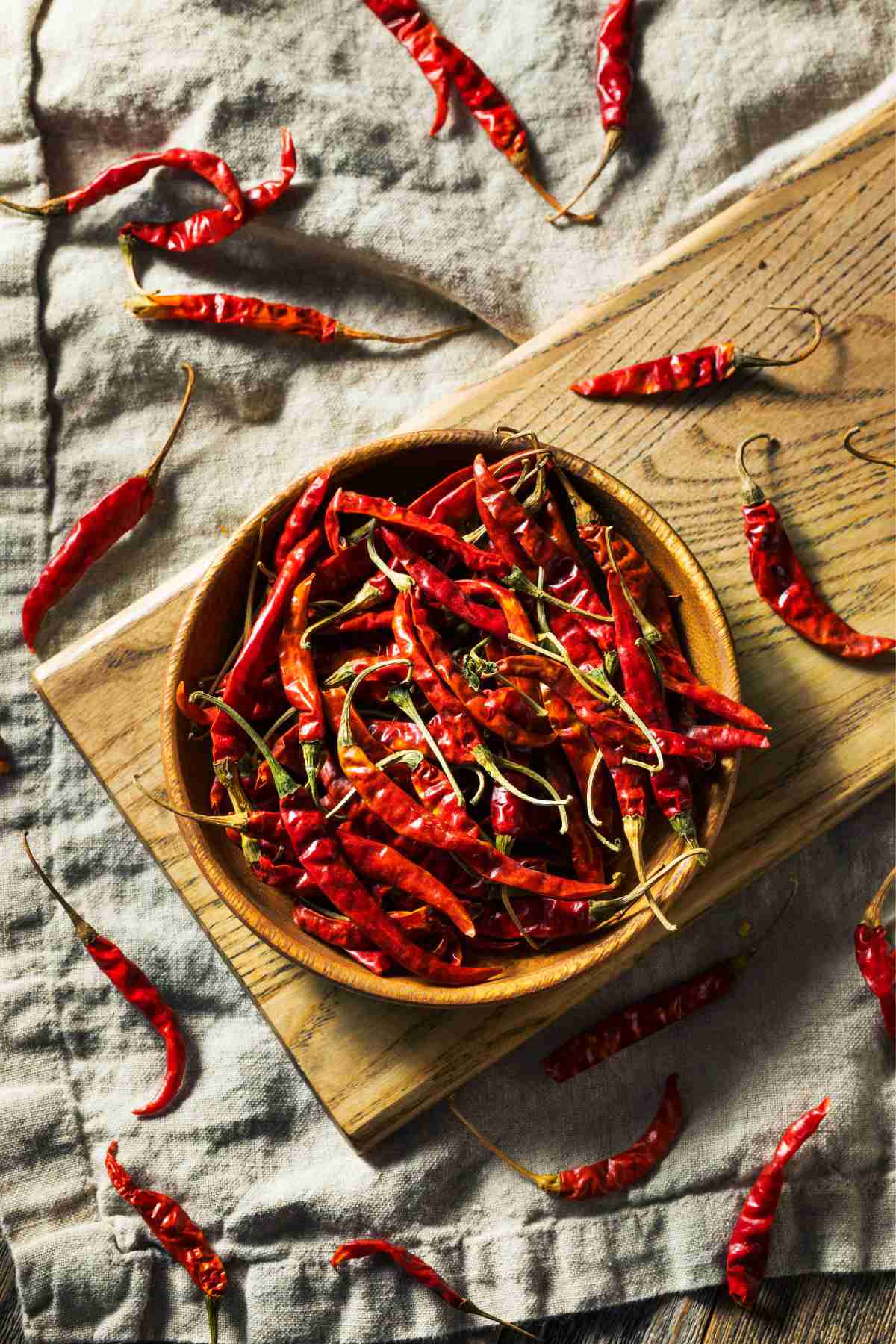
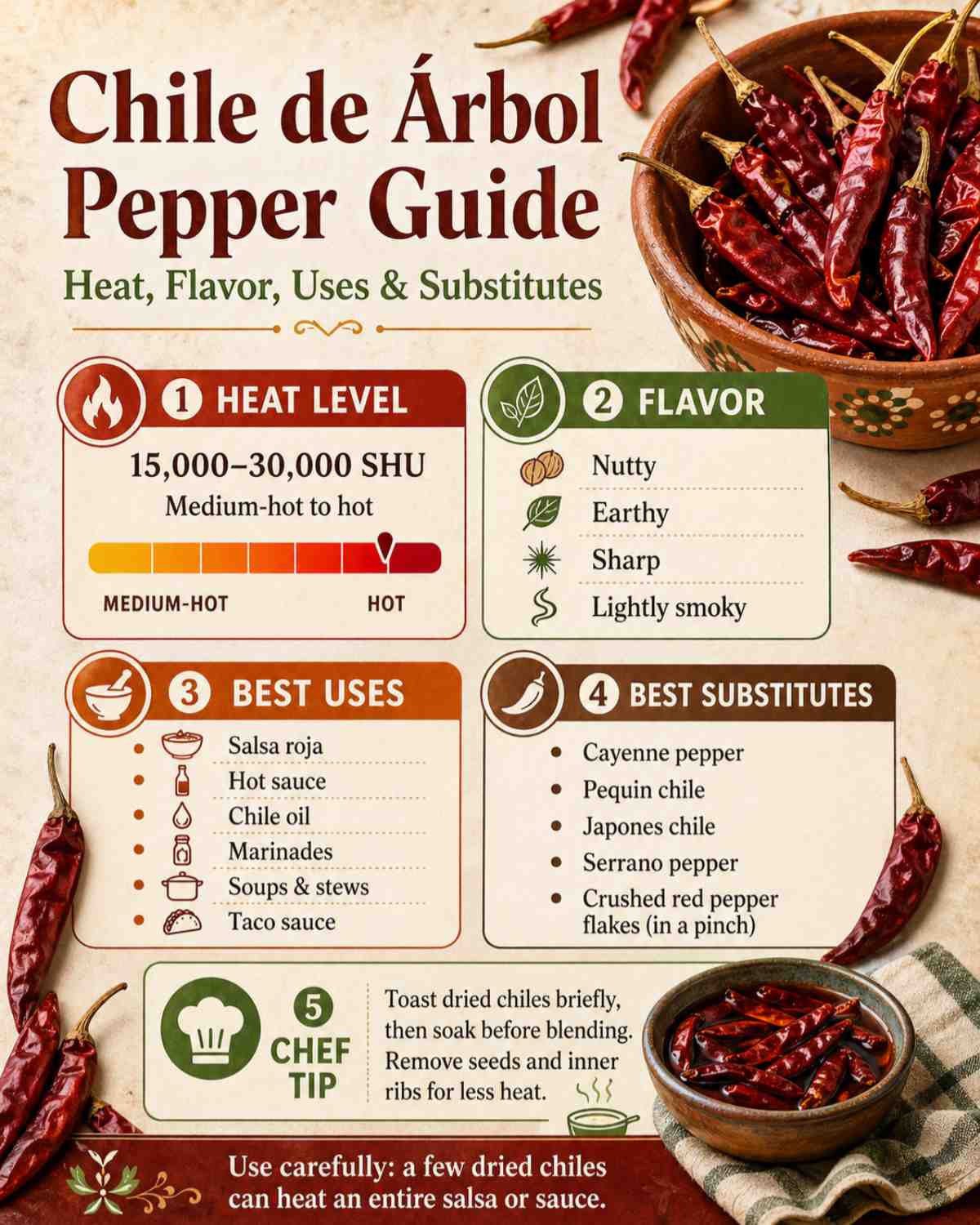
Chile de árbol peppers are small, slender Mexican chiles known for sharp heat, bright red color, and a nutty, earthy flavor. They are most often used dried in salsa roja, hot sauce, chile oil, marinades, soups, and stews.
On the Scoville scale, chile de árbol usually ranges from 15,000 to 30,000 SHU, making it hotter than many jalapeños but not as intense as habanero or ghost pepper varieties.
⬇️ Table of Contents
- Quick Answer: What Are Chile de Árbol Peppers?
- What Do Chile de Árbol Peppers Taste Like?
- How Hot Are Chile de Árbol Peppers?
- Fresh vs Dried Chile de Árbol
- How To Cook With Chile de Árbol
- Best Uses for Chile de Árbol
- Best Chile de Árbol Substitutes
- How To Reduce the Heat
- How To Store Chile de Árbol Peppers
- Where To Buy Chile de Árbol Peppers
- Related Pepper Guides
Quick Answer: What Are Chile de Árbol Peppers?
Chile de árbol peppers are thin red Mexican chiles used fresh, dried, whole, crushed, or ground into powder. The dried form is the most common in home kitchens and is especially useful for Mexican salsa, chile oil, hot sauce, adobo-style marinades, and spicy broths.
The name means "tree chile," a reference often connected to the pepper's woody stem and plant growth habit. In cooking, chile de árbol is prized because a few dried chiles can add noticeable heat and a clean chile flavor without needing a large amount of pepper.
| Common name | Chile de árbol |
| Also called | Arbol chile, tree chile, bird’s beak chile |
| Heat level | Medium-hot to hot |
| Scoville range | About 15,000 to 30,000 SHU |
| Flavor | Nutty, earthy, sharp, lightly smoky |
| Best form | Dried whole chiles, crushed flakes, or powder |
| Best uses | Salsa roja, hot sauce, chile oil, marinades, soups, stews, taco sauce |
What Do Chile de Árbol Peppers Taste Like?

Chile de árbol peppers taste sharp, nutty, earthy, and lightly smoky, with a clean heat that builds quickly. Dried chile de árbol has a more concentrated flavor than fresh because the moisture has been removed.
The flavor is more direct and spicy than a mild dried chile like guajillo. It is not as fruity as habanero and not as smoky as chipotle. That makes chile de árbol a strong choice when you want heat without changing the entire flavor of a sauce or salsa.
Chef tip: To taste a pepper with less heat, take a very small bite from the pointed tip, away from the stem, seeds, and inner ribs. The hottest parts are usually closer to the interior membrane and seed area.
How Hot Are Chile de Árbol Peppers?
Chile de árbol peppers usually range from 15,000 to 30,000 Scoville Heat Units. Some sources and crops may list higher ranges, but 15,000 to 30,000 SHU is the most practical range to use when cooking.
That puts chile de árbol above jalapeños and many serranos, but below most habaneros. For a broader comparison, see the full Scoville scale guide.
| Pepper | Typical Heat Range | How It Compares |
|---|---|---|
| Jalapeño | 2,500–8,000 SHU | Milder |
| Serrano | 10,000–23,000 SHU | Similar lower range |
| Chile de árbol | 15,000–30,000 SHU | Medium-hot to hot |
| Cayenne | 30,000–50,000 SHU | Often hotter |
| Habanero | 100,000–350,000 SHU | Much hotter |
Cooking note: A few dried chile de árbol peppers can heat an entire salsa or sauce. Start with less, blend, taste, and add more only if needed.
Fresh vs Dried Chile de Árbol
Fresh chile de árbol peppers are small, bright, and crisp, but dried chile de árbol is the form most cooks find in stores. Dried chiles are deep red, narrow, wrinkled, and easy to toast, soak, blend, grind, or crumble.
| Form | Flavor and Texture | Best Uses |
|---|---|---|
| Fresh chile de árbol | Sharp, grassy, crisp, and hot | Fresh salsa, pickling, quick sauces, stir-ins |
| Dried whole chile de árbol | Nutty, earthy, concentrated, and hot | Salsa roja, hot sauce, broths, marinades |
| Crushed chile de árbol | Dry, spicy, and easy to sprinkle | Pizza, tacos, eggs, soups, roasted vegetables |
| Ground chile de árbol powder | Fine, hot, and concentrated | Dry rubs, spice blends, marinades, sauces |
Dried peppers can taste hotter because the flavor and heat feel more concentrated after moisture is removed. The pepper's true heat range does not magically change, but the eating experience can feel stronger.
How To Cook With Chile de Árbol
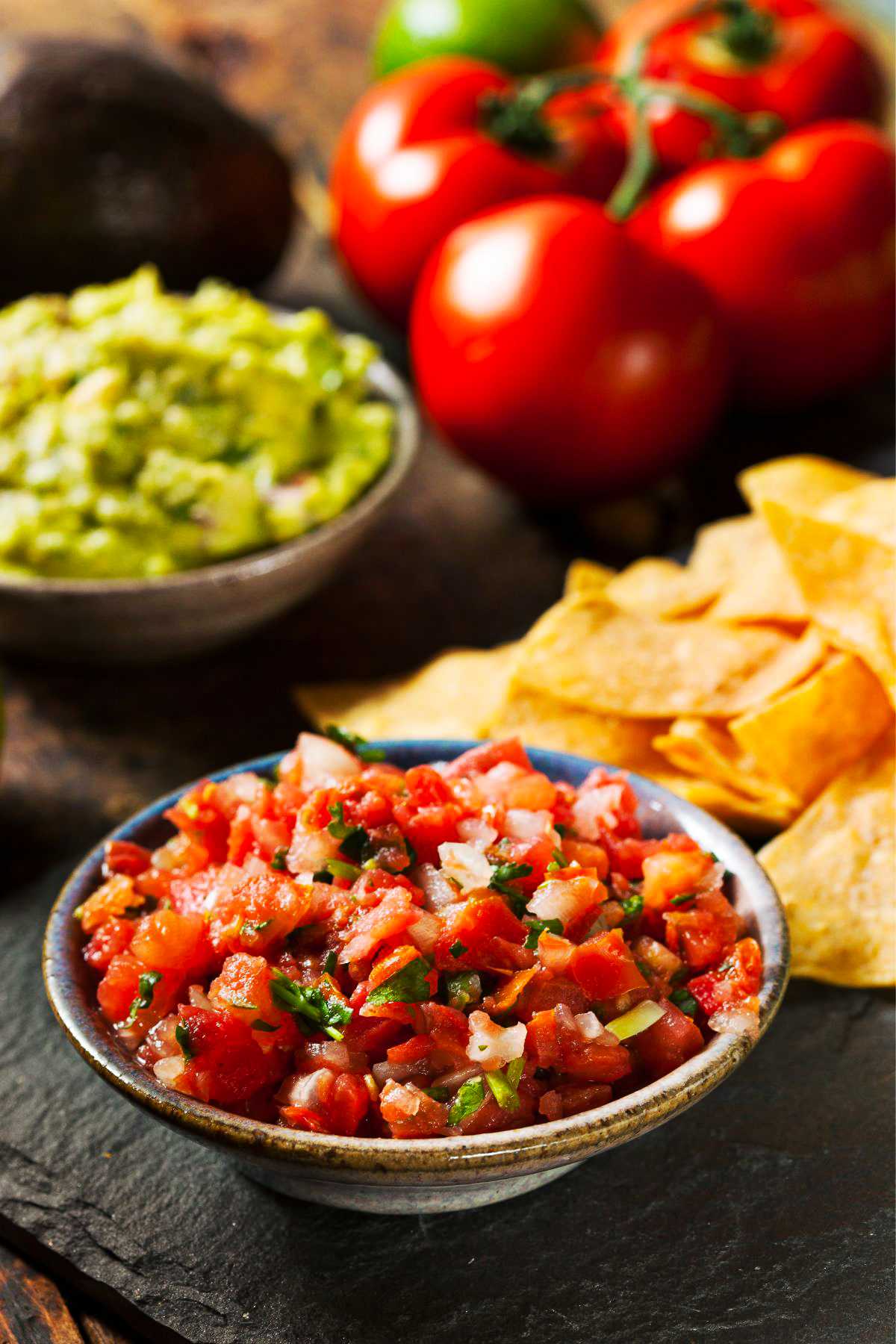
Chile de árbol is easiest to use when dried. The best method is to toast the dried chiles briefly, soak them until softened, then blend them into salsa, sauce, or marinade.
1. Toast the Dried Chiles
Toast dried chile de árbol peppers in a dry skillet over medium heat for a few seconds per side, just until fragrant. Do not let them burn. Burnt dried chiles can turn bitter quickly.
2. Soak Until Soft
Place the toasted chiles in hot water for 15 to 30 minutes, or until pliable. This makes them easier to blend into smooth salsa and sauces.
3. Blend With Sauce Ingredients
Blend the softened chiles with tomatoes, tomatillos, garlic, onion, vinegar, citrus, salt, broth, or cooking liquid depending on the recipe. Strain if you want a smoother sauce.
4. Control the Heat
For less heat, remove the stems, seeds, and inner ribs before soaking or blending. For more heat, blend the peppers whole after removing only the stems.
For more pepper cooking technique, see how to cook with peppers.
Best Uses for Chile de Árbol
Chile de árbol works best when you want clean heat and a deep red chile color. It is especially useful in Mexican-style sauces, oils, and marinades where the pepper flavor should be bold but not overly smoky.
| Use | How To Use It | Chef Note |
|---|---|---|
| Salsa roja | Toast, soak, and blend with tomatoes, garlic, onion, and salt | Start with a small number of chiles |
| Hot sauce | Blend soaked chiles with vinegar, garlic, and salt | Strain for a smoother texture |
| Chile oil | Infuse dried chiles in warm oil | Keep the heat low so the peppers do not burn |
| Marinades | Blend with citrus, garlic, spices, and oil | Great for chicken, pork, beef, and shrimp |
| Soups and stews | Add whole dried chiles, then remove or blend | Adds heat and red chile depth |
| Taco sauce | Blend with roasted tomatoes or tomatillos | Use with tacos, eggs, rice bowls, and grilled meats |
Best Chile de Árbol Substitutes
The best chile de árbol substitute depends on whether you need heat, flavor, color, or a dried chile form. Cayenne is the easiest heat substitute, while pequin and japones chiles are closer in dried pepper style.
| Substitute | Best For | How To Use It |
|---|---|---|
| Cayenne pepper | Heat and red chile flavor | Use less at first; cayenne can be hotter |
| Pequin chile | Small dried chile heat | Use carefully because it can be very hot |
| Japones chile | Salsa, sauces, and chile oil | One of the better dried chile swaps |
| Serrano pepper | Fresh salsa or cooked sauces | Use when fresh chile de árbol is unavailable |
| Crushed red pepper flakes | Quick seasoning | Use in a pinch, but flavor will be less specific |
| Guajillo pepper | Color and mild dried chile flavor | Add cayenne if you also need heat |
Avoid using poblano as a direct substitute when heat matters. Poblanos are much milder and have a very different flavor and texture. Habanero can replace heat, but it brings a fruitier flavor and much stronger burn.
For broader pepper comparisons, visit the complete types of peppers guide.
How To Reduce the Heat
Chile de árbol is small, but it can be surprisingly hot. The easiest way to reduce heat is to use fewer chiles and remove the seeds and inner ribs before blending.
- Use fewer peppers: Start with 2 to 4 dried chiles in a salsa, then add more if needed.
- Remove stems: Always remove the woody stems before blending.
- Remove seeds and ribs: This lowers the perceived heat and creates a smoother sauce.
- Add tomatoes or tomatillos: More base ingredients help spread out the heat.
- Add acid carefully: Vinegar or lime can brighten the sauce but will not remove the heat.
- Add fat or dairy when serving: Sour cream, cheese, avocado, or crema can soften the burn in the finished dish.
How To Store Chile de Árbol Peppers
Dried chile de árbol should be stored in an airtight container in a cool, dark pantry. Keep it away from heat, sunlight, and moisture so the peppers keep their color, aroma, and flavor.
- Dried whole chiles: Store in a glass jar, sealed bag, or airtight spice container.
- Ground chile powder: Keep tightly sealed and use sooner than whole dried chiles for best flavor.
- Fresh peppers: Refrigerate in a paper towel-lined bag and use within about a week.
- Freezing: Fresh peppers can be frozen whole or chopped for cooked dishes.
- Rehydrating: Soak dried chiles in hot water for 15 to 30 minutes before blending.
Where To Buy Chile de Árbol Peppers

Chile de árbol peppers are commonly sold at Mexican grocery stores, Latin markets, spice shops, some larger supermarkets, and online spice retailers. Dried whole peppers are usually the easiest form to find.
When buying dried chile de árbol, look for peppers that are deep red, flexible, fragrant, and free from moisture or mold. Avoid peppers that look dusty, faded, brittle, or smell flat.
Related Pepper Guides
- Types of Peppers
- Scoville Scale
- How To Cook With Peppers
- Chipotle Peppers in Adobo Sauce
- Hybrid and Heirloom Pepper Varieties
- Are Peppers Fruits?
Chile de árbol peppers usually range from 15,000 to 30,000 Scoville Heat Units, making them medium-hot to hot. They are generally hotter than jalapeños and similar to or hotter than many serrano peppers.
Chile de árbol peppers taste nutty, earthy, sharp, and lightly smoky. Their heat is clean and direct, which makes them useful in salsa, hot sauce, chile oil, marinades, soups, and stews.
Cayenne pepper, japones chile, pequin chile, serrano pepper, and crushed red pepper flakes can all work as substitutes. Cayenne is best for heat, japones chile is a good dried chile swap, and crushed red pepper flakes work in a pinch.
Dried chile de árbol peppers can taste hotter because the flavor and heat feel more concentrated after moisture is removed. The pepper's general Scoville range does not truly change, but dried peppers often taste more intense in sauces and salsas.
No. Chile de árbol is a specific pepper, while crushed red pepper flakes are usually a blend of dried chile peppers. Crushed red pepper can add heat in a pinch, but it will not have the same clean, nutty, earthy flavor as chile de árbol.
You do not have to remove the seeds, but removing the seeds and inner ribs can make the finished salsa or sauce less hot and smoother. Always remove the woody stems before blending.



Leave a Reply