
Types of Tomatoes: 45 Varieties, Origins, Flavor, and Best Uses
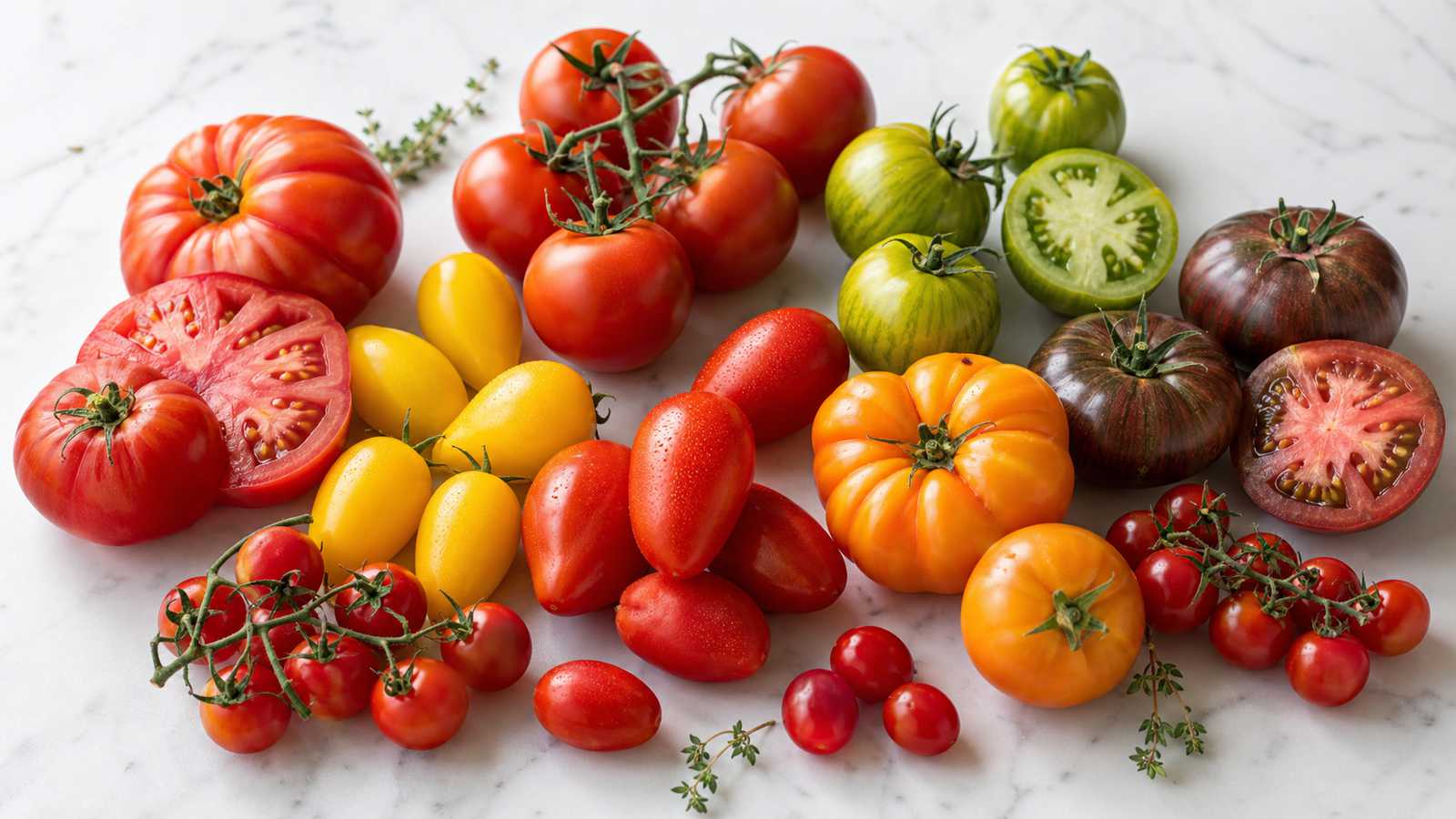
Tomatoes can be tiny currants, meaty paste tomatoes, heavy beefsteaks, striped green slicers, dark heirlooms, or sweet cherry types. This guide compares 45 tomato varieties by origin, appearance, taste, best uses, kitchen notes, and points of interest so you can identify each tomato and know where it works best in the kitchen.
Common Tomato Categories
Most tomato varieties fall into a few kitchen groups. Cherry and currant tomatoes are small enough to use whole or halved. Globe and slicer tomatoes cover everyday salads and sandwiches. Beefsteak tomatoes bring broad, juicy slices. Plum and paste tomatoes, including Roma and San Marzano types, have firmer flesh and fewer loose seeds, which makes them stronger choices for sauce, canning, roasting, and cooking.
| Cooking Need | Best Tomato Types | Helpful Guide |
|---|---|---|
| Tomato sauce | Roma, plum, San Marzano, Giulietta, Granadero, Pantano Romanesco | Best tomatoes for sauce |
| Salsa | Roma, plum, Green Zebra, cherry, grape, firm ripe tomatoes | Best tomatoes for salsa |
| Shopping by weight | Medium tomatoes, Roma tomatoes, cherry tomatoes | How many tomatoes are in a pound |
| Peak-season tomatoes | Fresh local tomatoes, heirlooms, ripe slicers | When tomatoes are in season |
| Underripe tomatoes | Firm tomatoes that need more time | How to ripen tomatoes |
For a classic sauce tomato, start with Roma, plum, or San Marzano tomatoes. For a balanced old-fashioned garden tomato, Marglobe tomatoes are also worth knowing. Links in the variety notes point to deeper guides only when they help with the next kitchen decision.
⬇️ Table of Contents
- Types of Tomatoes: 45 Varieties, Origins, Flavor, and Best Uses
- Common Tomato Categories
- 1. Adoration Tomatoes
- 2. Alicante Tomatoes
- 3. Azoychka Tomatoes
- 4. Beefsteak Tomatoes
- 5. Better Boy Tomatoes
- 6. Black Krim Tomatoes
- 7. Brandywine Tomatoes
- 8. Campari Tomatoes
- 9. Celebrity Tomatoes
- 10. Cherokee Purple Tomatoes
- 11. Early Girl Tomatoes
- 12. Fourth of July Tomatoes
- 13. Garden Peach Tomatoes
- 14. Gardeners Delight Tomatoes
- 15. German Johnson Tomatoes
- 16. Giulietta Tomatoes
- 17. Granadero Tomatoes
- 18. Great White Tomatoes
- 19. Green Zebra Tomatoes
- 20. Hanover Tomatoes
- 21. Hillbilly Tomatoes
- 22. Japanese Black Trifele Tomatoes
- 23. Jersey Boy Tomatoes
- 24. Jubilee Tomatoes
- 25. Juliet Tomatoes
- 26. Lillian's Yellow Heirloom Tomatoes
- 27. Matt's Wild Cherry Tomatoes
- 28. Micro Tom Tomatoes
- 29. Moneymaker Tomatoes
- 30. Monterosa Tomatoes
- 31. Montserrat Tomatoes
- 32. Mortgage Lifter Heirloom Tomatoes
- 33. Mr. Stripey Tomatoes
- 34. Pantano Romanesco Tomatoes
- 35. Plum Tomatoes
- 36. Raf Tomatoes
- 37. Rebellion Tomatoes
- 38. Currant Tomatoes
- 39. Roma Tomatoes
- 40. Rutgers Tomatoes
- 41. San Marzano Tomatoes
- 42. Santorini Tomatoes
- 43. Super Sweet 100 Tomatoes
- 44. Tomaccio Tomatoes
- 45. Yellow Pear Tomatoes
- Tomato Variety FAQs
1. Adoration Tomatoes

Adoration tomatoes sit in the cocktail tomato lane: small, round, red hybrid fruit that is bigger than a cherry tomato but still easy to serve whole or halved.
- Origin: Hybrid cocktail tomato.
- Appearance: Small, round, red tomatoes, usually larger than cherry tomatoes but smaller than standard slicers.
- Taste: Mild, sweet-tart tomato flavor suited to fresh eating.
- Best uses: Snacking, salads, appetizer trays, and fresh tomato platters.
- Kitchen note: Serve Adoration tomatoes whole or halved. They are small enough for appetizer trays but large enough to feel more substantial than cherry tomatoes.
- Points of interest: Adoration is listed as self-fertile. The fruit is usually listed around 50-55 grams. Seed-starting guidance: start indoors, not by direct sowing; sow ⅛ to ¼ inch deep about 6-8 weeks before the last expected frost; keep the seed-starting mix evenly moist; germination is usually listed at 7-14 days with warm soil around 75-90F.
2. Alicante Tomatoes

Alicante is the steady red slicer in the lineup: medium-sized, round, familiar in flavor, and known for reliable early cropping plus resistance to greenback.
- Origin: Alicante is a traditional red tomato variety often found in British and European seed catalogs.
- Appearance: Medium-sized, round, and red, with the familiar slicer shape most cooks expect from an everyday garden tomato.
- Taste: Balanced red tomato flavor with mild acidity, enough sweetness, and a clean fresh finish.
- Best uses: Slicing, salads, sandwiches, breakfast plates, and everyday cooked tomato dishes.
- Kitchen note: Alicante is a good default tomato when a recipe calls for a medium red tomato but does not need a paste tomato or a giant beefsteak. Salt slices shortly before serving to keep the texture fresh.
- Points of interest: Alicante is known for resistance to greenback, a ripening issue where fruit fails to color evenly, and is commonly described as a reliable, heavy, early cropper.
3. Azoychka Tomatoes

Azoychka brings beefsteak size in a yellow tomato. It is a Russian heirloom with a regular multi-locular structure that helps separate it from Brandywine-style beefsteaks.
- Origin: Commonly described as a Russian yellow beefsteak heirloom tomato.
- Appearance: Yellow Russian beefsteak-style tomato with a regular multi-locular structure that helps distinguish it from Brandywine-type tomatoes.
- Taste: Bright, mild, and fresh yellow tomato flavor.
- Best uses: Fresh slicing, salads, sandwiches, and colorful tomato plates.
- Kitchen note: Use Azoychka in thick slices or wedges so its yellow color shows on salads, sandwiches, and tomato plates.
- Points of interest: The regular multi-locular structure is the key physical detail that separates Azoychka from Brandywine-type beefsteak tomatoes.
4. Beefsteak Tomatoes

Beefsteak tomatoes are the big slicers: broad, juicy, heavy tomatoes built for sandwiches, burgers, BLTs, and thick slabs on a tomato plate.
- Origin: Beefsteak is a tomato type, not one single cultivar.
- Appearance: Large, heavy tomatoes with broad slices, many seed pockets, and sometimes ribbed shoulders.
- Taste: Juicy, full-flavored, and classic when fully ripe.
- Best uses: Sandwiches, burgers, BLTs, tomato plates, and thick fresh slices.
- Kitchen note: Slice beefsteaks thick and season lightly. Their high juice content is a strength on sandwiches but can make salads watery if cut too far ahead.
- Points of interest: Beefsteaks can weigh 1 pound or more, often have many small seed compartments, and are popular with home growers but less suited to mechanized commercial handling than smaller tomatoes. Common beefsteak varieties include Beefmaster VFN, Beefsteak VFN, Big Beef, Brandywine, Bucking Bronco, Cherokee Purple, Marmande, Mortgage Lifter, and Pink Beefsteak.
5. Better Boy Tomatoes

Better Boy is a famous hybrid red slicer with more than 50 years of garden history and a Guinness record tied to tomato yield.
- Origin: Better Boy is a hybrid tomato developed by John Peto at Petoseed and introduced in 1964. It was bred from Teddy Jones and a red hybrid parent, and it became one of the classic home-garden hybrid slicers. See Home for the Harvest and Burpee background on Petoseed.
- Appearance: Large, round, red slicer from an indeterminate plant; fruit often reaches about 12 ounces and can approach 1 pound under good growing conditions.
- Taste: Classic red tomato flavor with a balance of sweetness and acidity.
- Best uses: Sandwiches, burgers, salads, slicing, fresh tomato plates, and general cooked tomato dishes.
- Kitchen note: Treat Better Boy like a classic red slicer: use it fresh when ripe, and choose firmer fruit if you need clean slices for burgers or platters.
- Points of interest: Better Boy has been in existence for more than 50 years and is a Guinness record holder for the amount of fruit produced from a single plant. It is commonly listed at about 72 days to maturity and should be sturdily staked or caged because of its high yield. Charles H. Wilber of Alabama grew Better Boy plants averaging 342 pounds of tomatoes per plant in 1987. Seed catalogs still repeat the 342-pound record claim; see Gurney's Better Boy listing.
6. Black Krim Tomatoes

Black Krim is a dark heirloom tomato with deep reddish-purple to black fruit, green-brown shoulders, and the kind of rich flavor that made black tomatoes popular with home growers.
- Origin: Black Krim, also called Black Crimea or Noire de Crimée, is an heirloom tomato associated with the Crimean peninsula near the Black Sea.
- Appearance: Open-pollinated, indeterminate tomato with flattened globe fruit, dark reddish-purple to black skin, and green-brown shoulders. Fruit is often around 8 ounces.
- Taste: Rich, savory, balanced, and full-flavored when fully ripe.
- Best uses: BLTs, sandwiches, fresh slicing, tomato salads, and heirloom tomato plates.
- Kitchen note: Black Krim is best served simply. Slice it for salads or tomato plates where its dark color and savory flavor can stand out.
- Points of interest: Black Krim became the first "black" tomato commercially available in the United States in 1990, making it an important variety in the rise of dark heirloom tomatoes.
7. Brandywine Tomatoes
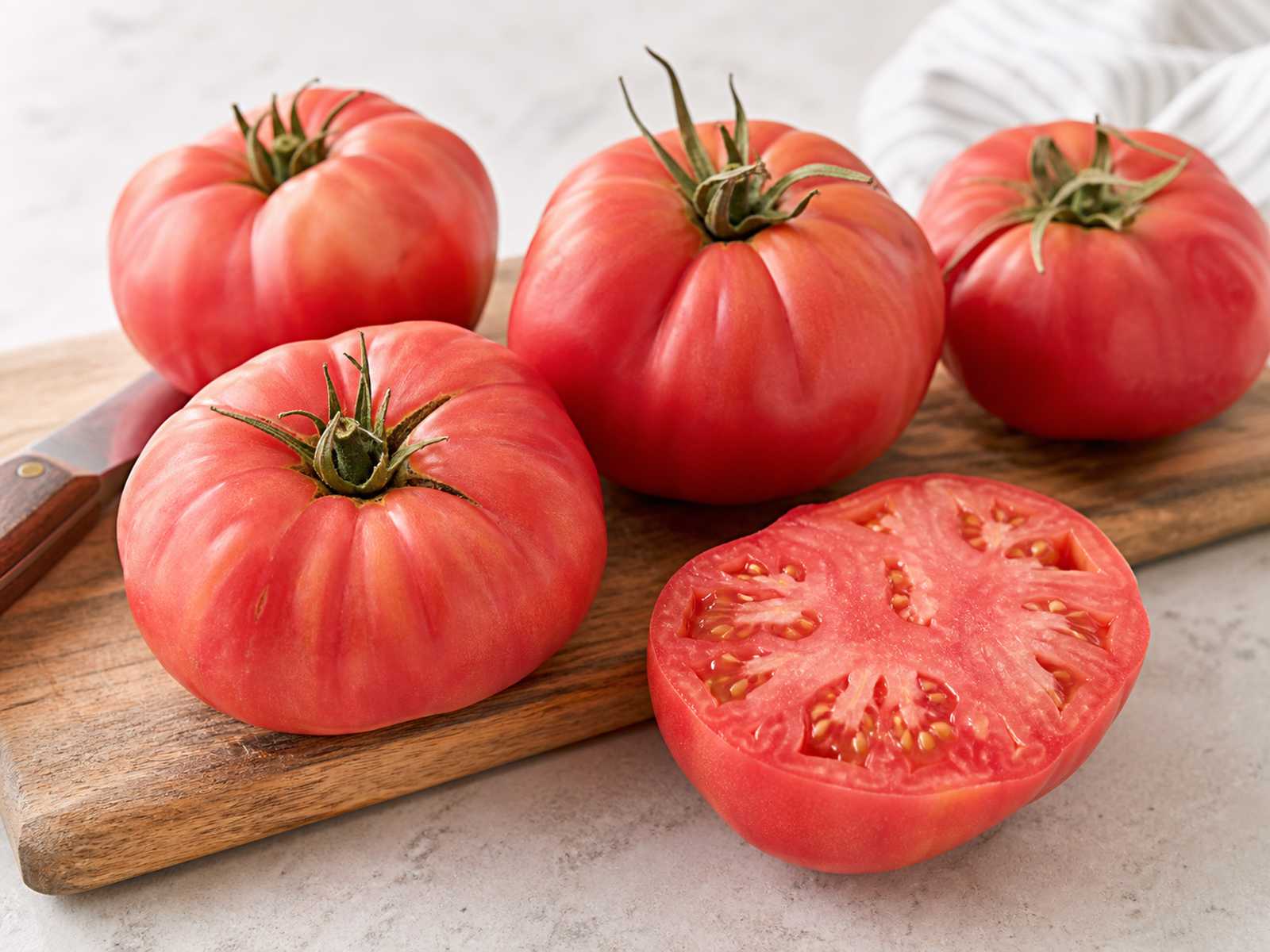
These special tomaters are some of the best-known heirloom tomatoes, prized for large pink beefsteak fruit, potato-leaf plants, slow maturity, and old-fashioned tomato flavor.
- Origin: Heirloom tomato with a debated history; often connected with older American seed-saving traditions. Read more about Brandywine tomatoes.
- Appearance: Large beefsteak-style tomato, often pink to red, with broad slices and potato-leaf plants in classic strains.
- Taste: Full, rich tomato flavor with the softness expected from a ripe heirloom slicer.
- Best uses: Sandwiches, BLTs, tomato salads, and fresh slicing.
- Kitchen note: Give Brandywine enough salt and a few minutes at room temperature before serving. Its texture and acidity are best appreciated fresh, not hidden in long-cooked sauce.
- Points of interest: Brandywine can bear fruit up to about 1.5 pounds and often needs 80 to 100 days to reach maturity, which helps explain its reputation as a slow but beloved heirloom slicer.

8. Campari Tomatoes

Campari tomatoes are sweet cocktail tomatoes often sold on the vine. They are larger than cherry tomatoes, smaller and rounder than many plum tomatoes, and known for juicy texture with low mealiness.
- Origin: Commercial cocktail tomato type associated with modern greenhouse and supermarket tomato production. Campari is often sold as a tomato-on-the-vine type and can be produced from different varieties, such as Mountain Magic.
- Appearance: Deep red, round tomato, larger than cherry tomatoes but smaller than many plum tomatoes.
- Taste: Juicy, sweet, and lower in harsh acidity than some standard red tomatoes.
- Best uses: Salads, snacking, roasting, appetizer trays, and fresh tomato dishes.
- Kitchen note: Halve Campari tomatoes for fast salads or appetizer plates. They hold their shape better than very ripe large slicers and taste sweeter than many supermarket tomatoes.
- Points of interest: Campari tomatoes sit between cherry tomatoes and larger slicing tomatoes in size. The name Campari was registered as a U.S. trademark in 2003 and later challenged over whether it referred to a general variety name.
9. Celebrity Tomatoes

Celebrity is a dependable hybrid globe tomato with medium-large red fruit, long fruit-bearing stems, and the flexibility to move from fresh slices to salsa, pizza topping, and light cooking.
- Origin: Hybrid tomato cultivar grown as a dependable all-purpose garden tomato.
- Appearance: Medium-large red tomato, about 8 ounces and roughly 4 inches across, with fruit carried on long stems that can hold 20 or more tomatoes.
- Taste: Balanced red tomato flavor with enough firmness for fresh slices and everyday cooking.
- Best uses: Slicing, salads, sandwiches, and everyday cooking.
- Kitchen note: Use Celebrity when you need a sturdy, familiar red tomato for repeated harvests. It works well sliced fresh or chopped into everyday salads.
- Points of interest: Celebrity is a dependable general-purpose garden tomato and is commonly listed as a 1984 All-America Selections winner. See the Texas Superstar Celebrity tomato profile.
10. Cherokee Purple Tomatoes

Cherokee Purple is a dusky rose-purple beefsteak with greenish shoulders, crimson flesh, and dense juicy texture. It is one of the classic darker tomatoes for fresh slicing.
- Origin: Cherokee Purple entered modern seed circulation through Craig LeHoullier, who received unnamed purple tomato seed from John D. Green of Sevierville, Tennessee in 1990. Southern Exposure Seed Exchange first listed it in 1993. See Southern Exposure Seed Exchange.
- Appearance: Beefsteak-style tomato with dusky rose-purple skin, greenish shoulders, deep crimson flesh, dense juicy texture, and small seed locules scattered through the flesh.
- Taste: Rich, sweet, earthy, and strongly tomato-forward.
- Best uses: BLTs, sandwiches, tomato salads, fresh slicing, pizza topping, and pasta when used fresh or lightly cooked.
- Kitchen note: Use Cherokee Purple fresh, especially in BLTs, tomato sandwiches, and salads. Its color can turn muted when cooked, so raw preparations show it best.
- Points of interest: Cherokee Chocolate arose as a skin-color mutation in LeHoullier's North Carolina garden in 1995, and Cherokee Green followed in 1997 from Cherokee Chocolate.
11. Early Girl Tomatoes

Early Girl is an early-ripening F1 hybrid globe tomato, grown for red fruit before many larger slicers are ready and valued for reliable, prolific production.
- Origin: F1 hybrid tomato bred for early maturity and grown widely by home gardeners.
- Appearance: Medium-sized round red tomato.
- Taste: Familiar fresh tomato flavor, especially welcome early in the season.
- Best uses: Early-season slicing, salads, sandwiches, and fresh cooking.
- Kitchen note: Early Girl earns its place at the start of tomato season, before many larger varieties are ready. Use it anywhere you want a reliable early slicer.
- Points of interest: Early Girl is reliable and prolific, with maturity often listed around 50-62 days after transplanting. Early Girl can tolerate cool early-season conditions down to about 40F and is well suited to hot, dry climates.
12. Fourth of July Tomatoes

Fourth of July tomatoes are early red garden tomatoes grown for timing. In a typical climate, they are among the non-cherry tomatoes that may ripen around the Fourth of July.
- Origin: Early-ripening garden tomato variety named for its harvest timing.
- Appearance: Red, medium-sized tomato grown for early harvest.
- Taste: Fresh red tomato flavor, especially welcome at the beginning of tomato season.
- Best uses: Early summer salads, sandwiches, and fresh tomato plates.
- Kitchen note: Use Fourth of July tomatoes as early-season slicers. Pick fully colored fruit for the best flavor; the calendar name is only a harvest-timing clue.
- Points of interest: Fourth of July is known as one of the earliest non-cherry tomatoes, often timed to ripen around the Fourth of July in a typical climate.
13. Garden Peach Tomatoes

Garden Peach tomatoes earn their name from their yellow color, soft blush, and fuzzy skin. They are mild, sweet fresh-eating tomatoes that look unlike a standard glossy red slicer.
- Origin: Heirloom tomato associated with South American origin notes, including Peru, where similar fruit has been referred to as Coconas.
- Appearance: Yellow tomato with a soft blush and fuzzy skin that can resemble a peach.
- Taste: Mild and sweet, matching its soft yellow color and peach-like skin.
- Best uses: Salads, fresh eating, colorful tomato plates, and mild tomato pairings.
- Kitchen note: Do not peel Garden Peach unless the fuzzy skin bothers you. The peach-like skin is part of what makes the variety distinctive on fresh plates.
- Points of interest: Garden Peach is commonly listed with 2-4 ounce fruit, fuzzy peach-like skin, prolific vines, container suitability, and about 65 days to maturity.
14. Gardeners Delight Tomatoes

Gardeners Delight is a sweet red cherry tomato with clusters of 6 to 12 bite-size fruit, indeterminate growth, crack resistance, and strong garden production.
- Origin: German cherry tomato from the 1950s, also sold as Sugar Lump or Gartner Wonne. It is commonly called an heirloom, though some seed sources treat that label loosely because of its 1950-51 introduction. See Tomatofifou variety listing.
- Appearance: Bright red, bite-size cherry tomatoes borne in clusters of 6 to 12 fruit.
- Taste: Extra sweet, bright, and full-flavored for a cherry tomato.
- Best uses: Snacking, salads, roasting, lunch boxes, and garden-fresh tomato bowls.
- Kitchen note: Serve Gardeners Delight whole or halved. Its sweetness is best in fresh salads, lunch boxes, and quick garden snacking.
- Points of interest: Gardeners Delight is indeterminate, crack-resistant, prolific, and widely adaptable.
15. German Johnson Tomatoes

German Johnson is a large pink heirloom with lobed fruit, nearly seedless meaty flesh, mild flavor, and history as one parent line behind Mortgage Lifter.
- Origin: American heirloom tomato originally grown in West Virginia and known as a parent line behind Mortgage Lifter.
- Appearance: Large lobed fruit with pinkish-red skin, nearly seedless meaty flesh, and fruit often around ¾ to 1 ½ pounds.
- Taste: Mild, meaty, and fresh.
- Best uses: Slicing, sandwiches, salads, and cooked tomato dishes from a large harvest.
- Kitchen note: Use German Johnson for thick slices, canning, or mild tomato preparations. Its meaty texture makes it easier to handle than very watery slicers.
- Points of interest: German Johnson is commonly described as disease-resistant, indeterminate, and able to thrive in hot, humid areas.
16. Giulietta Tomatoes
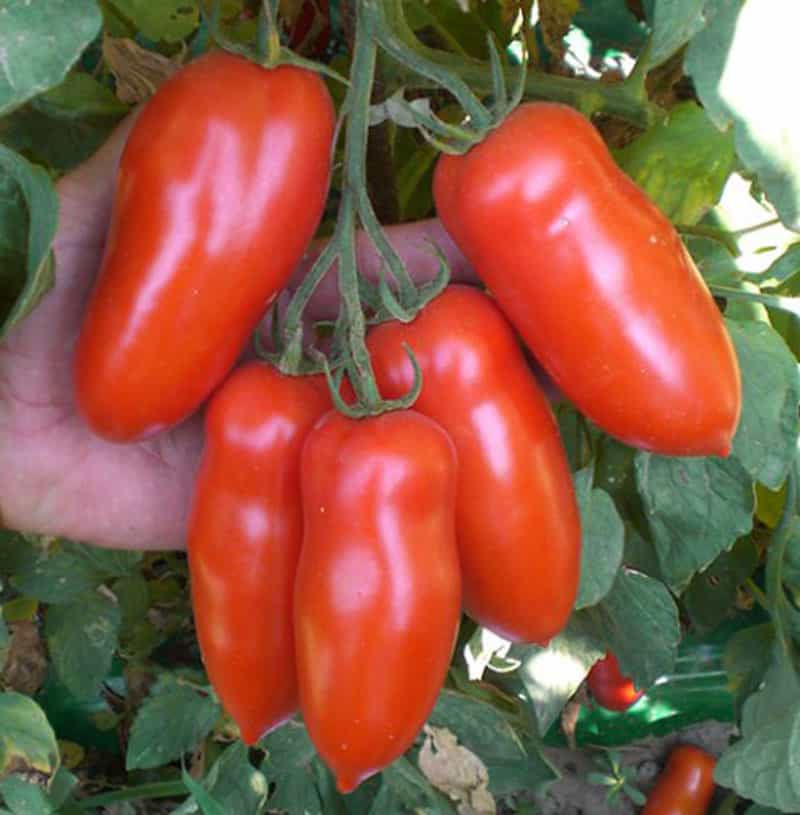
Giulietta is an elongated F1 plum-style tomato with long red fruit, high productivity, and sauce-friendly flesh that also works in salads.
- Origin: F1 elongated tomato variety associated with Italian-style paste tomatoes and San Marzano-style cooking use.
- Appearance: Long red plum-style fruit, the shape cooks expect from Italian-style sauce tomatoes.
- Taste: Red tomato flavor with enough firm flesh for sauce and enough freshness for salads.
- Best uses: Sauce, salads, roasting, and cooked tomato recipes.
- Kitchen note: Use Giulietta where you would use an elongated paste tomato. The long, meaty fruit is easy to prep for sauce and still works sliced into salads.
- Points of interest: Giulietta is described as highly productive, with long fruit suitable for sauces and salads.
17. Granadero Tomatoes

Granadero is a Roma-style F1 plum tomato with firm fruit, compact vigorous plants, cooler-condition tolerance, and good production for sauce or paste use.
- Origin: Plum/Roma-style tomato variety bred for productive paste-tomato performance.
- Appearance: Long red plum tomato with a San Marzano-like shape and firm sauce-tomato build.
- Taste: Mild tomato flavor with the firm texture cooks want from a plum tomato.
- Best uses: Sauce, cooking, preserving, and plum tomato uses.
- Kitchen note: Use Granadero for sauce, roasting, and cooking when you want a plum tomato with less loose juice than a slicer.
- Points of interest: Granadero F1 is an intermediate plum tomato with a compact vigorous plant for open field or unheated greenhouse, high yield, and tolerance to cooler conditions.
18. Great White Tomatoes

Great White tomatoes are pale cream to light yellow heirlooms, often large and mild-flavored, with fruit that can reach 2 pounds but often averages closer to 1 pound.
- Origin: Heirloom tomato with limited documented introduction details.
- Appearance: Pale cream to light yellow globe tomato that can reach 2 pounds, though it often averages closer to 1 pound.
- Taste: Mild and sweet when fully ripe.
- Best uses: Fresh slicing, tomato plates, salads, and color contrast.
- Kitchen note: Pair Great White with sharper red or green tomatoes on a plate. Its pale color and mild sweetness show best when served fresh.
- Points of interest: Great White is an heirloom variety with an uncertain introduction date and a strong backyard-grower reputation.
19. Green Zebra Tomatoes

Green Zebra is one of the most recognizable modern tomato varieties: green with dark green and yellow striping, tart flavor, and a ripe-green identity that separates it from unripe green tomatoes.
- Origin: Green Zebra was bred by Tom Wagner of Everett, Washington and released in the Tater-Mater Seed Catalog in 1983. Wagner's own account explains the breeding work behind the variety. See Tom Wagner's Green Zebra notes.
- Appearance: Green tomato with dark green and yellow striping; some newer lines blush as they ripen. It is usually globe-shaped and smaller than a large beefsteak.
- Taste: Tart, bright, tangy, and sometimes described as spicy or zingy. Texture can turn mealy if growing conditions are poor.
- Best uses: Salsa, salads, tomato plates, and fresh dishes that need acidity.
- Kitchen note: Use Green Zebra when a dish needs brightness and color contrast. Its tart flavor works especially well in salsa and mixed tomato salads.
- Points of interest: There is debate over whether Green Zebra is an heirloom, modern heirloom, or created heirloom. Tom Wagner first became interested in the idea of a ripe green tomato in the 1950s, when green tomatoes were usually treated as unripe and discarded or fried. Related striped tomatoes include Black Zebra, Big Zebra, and Red Zebra.
20. Hanover Tomatoes
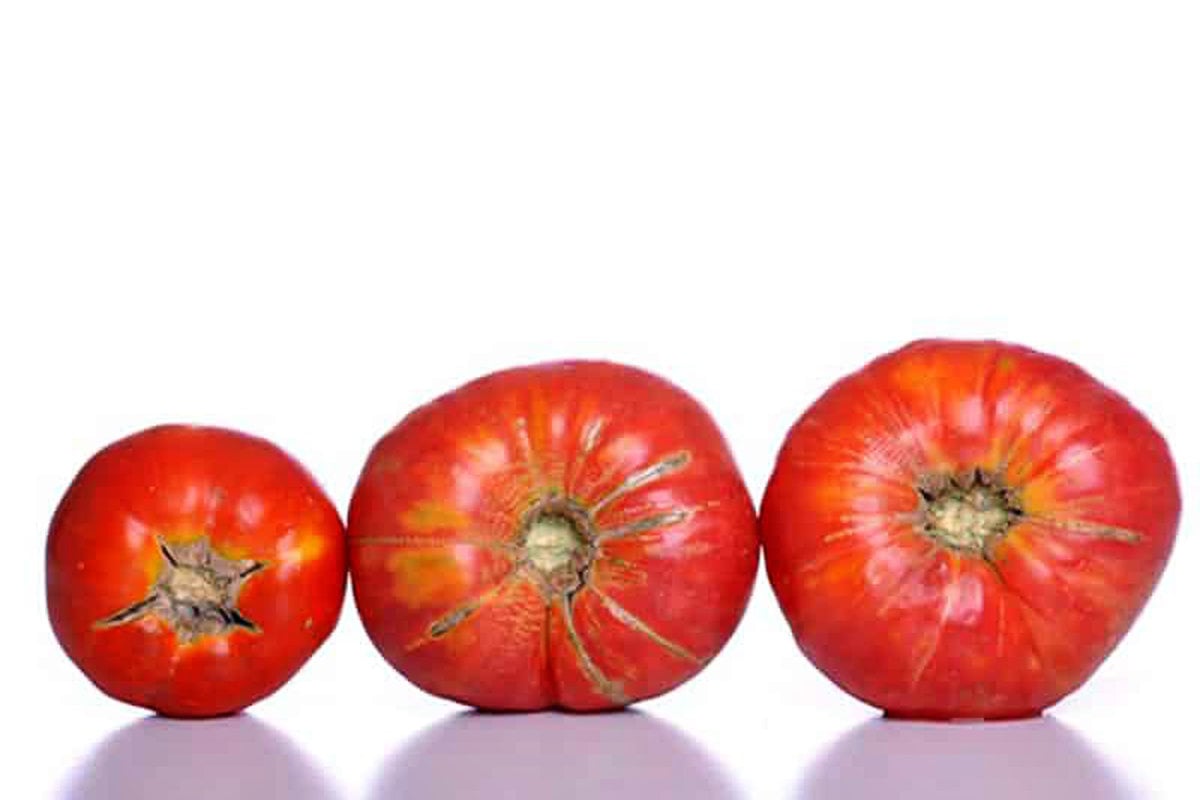
Hanover tomatoes are regional Virginia tomatoes associated with Hanover County, where sandy coastal soil is part of the tomato's reputation.
- Origin: Regional tomato associated with Hanover County, Virginia.
- Appearance: Usually a large red slicing tomato, with size varying by grower and harvest.
- Taste: Fresh local tomato flavor, with the best fruit depending on ripeness and growing conditions.
- Best uses: Fresh slicing, sandwiches, tomato plates, and local tomato dishes.
- Kitchen note: Use Hanover tomatoes like large regional slicers. They are best fresh, especially when fully ripe and served simply with salt.
- Points of interest: Hanover is a regional tomato identity as much as a tomato style; the Hanover County connection is central to the name.
21. Hillbilly Tomatoes

Hillbilly tomatoes are large West Virginia heirlooms with orange-yellow flesh, red streaks, heavy ribbing, and sweet, fruity, low-acid flavor.
- Origin: American heirloom tomato commonly associated with West Virginia.
- Appearance: Large beefsteak tomato with orange-yellow flesh and red streaks.
- Taste: Sweet, fruity, and mild compared with sharper red tomatoes.
- Best uses: Fresh slicing, sandwiches, tomato salads, and colorful tomato plates.
- Kitchen note: Slice Hillbilly crosswise to show the yellow-orange flesh and red streaks. Its low-acid sweetness works well on tomato plates.
- Points of interest: Hillbilly's orange-yellow flesh with red streaks is most visible when the tomato is served raw or sliced.
22. Japanese Black Trifele Tomatoes
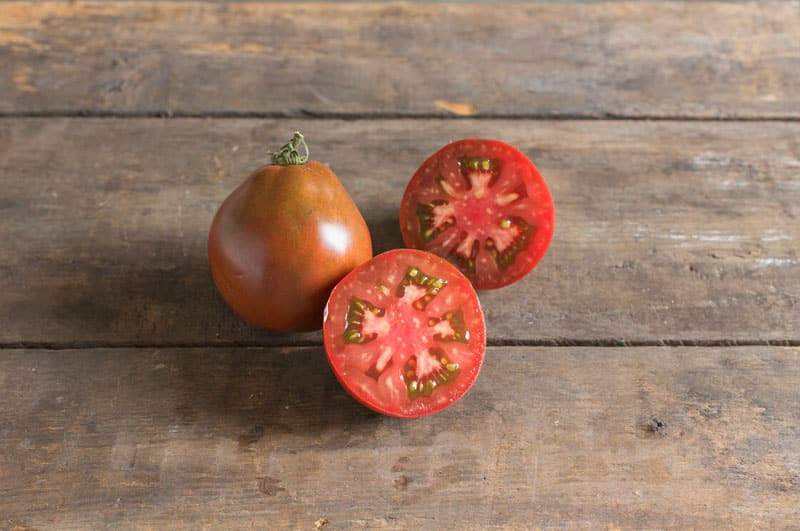
Japanese Black Trifele is an heirloom with pear-shaped fruit, dark burgundy color, potato-leaf plants, and rich flavor in a smaller 4 to 6 ounce tomato.
- Origin: Heirloom tomato with pear-shaped fruit; exact naming history varies by seed source.
- Appearance: Pear-shaped 4 to 6 ounce tomato with dark burgundy to mahogany color.
- Taste: Rich, deep tomato flavor, especially when harvested with green shoulders still showing.
- Best uses: Salads, fresh eating, roasting, and cooked tomato dishes.
- Kitchen note: Harvest Japanese Black Trifele while the shoulders still show some green for best flavor. Slice lengthwise to show the pear shape.
- Points of interest: Japanese Black Trifele has potato-leaf plants and dark pear-shaped fruit, a combination that makes it easy to identify beside standard red slicers.
23. Jersey Boy Tomatoes

Jersey Boy is a modern Burpee hybrid from Brandywine and Rutgers parentage, marketed as a beefsteak-style "Supertomato" with 8 to 10 ounce fruit.
- Origin: Jersey Boy is a Burpee hybrid crossing Brandywine with Rutgers. It was registered commercially in 2014 and released around 2015. See Burpee Jersey Boy listing.
- Appearance: Red beefsteak-style tomato, usually about 8 to 10 ounces, with a flattened globe shape.
- Taste: Designed to combine Brandywine's sweet-tart flavor with Rutgers color, shape, yield, and performance.
- Best uses: Slicing, sandwiches, salads, and fresh tomato dishes.
- Kitchen note: Use Jersey Boy as a hybrid slicer when you want Brandywine-style flavor with a firmer Rutgers influence.
- Points of interest: Burpee marketed Jersey Boy as a "Supertomato" because it drew from two famous tomato lines: Brandywine and Rutgers.
24. Jubilee Tomatoes

Jubilee tomatoes are golden-orange, round, smooth tomatoes with mild sweetness, meaty flesh, and an AAS award history dating to 1943.
- Origin: Older golden-orange garden tomato variety recognized with an AAS award in 1943.
- Appearance: Golden-orange, smooth, round tomato.
- Taste: Mild, sweet, and gentle enough to balance sharper red or green tomatoes.
- Best uses: Salads, fresh slicing, tomato plates, and mild tomato dishes.
- Kitchen note: Use Jubilee fresh when you want a mild golden tomato in salads. Its lower acidity can balance sharper red or green tomatoes.
- Points of interest: Jubilee won the AAS Award in 1943 and is commonly described as smooth, blemish-free, meaty, and 6 to 7 ounces.
25. Juliet Tomatoes

Juliet tomatoes bridge cherry tomatoes and mini Roma tomatoes: small enough for salads and snacking, but elongated, crack-resistant, and firm enough for roasting or quick cooking.
- Origin: Hybrid grape/plum-style tomato commonly grown for crack resistance and heavy production.
- Appearance: Small elongated red tomato, often described like a mini Roma.
- Taste: Sweet and fresh with enough structure to hold up better than very juicy cherry tomatoes.
- Best uses: Salads, roasting, snacking, quick sauces, and cooked tomato dishes.
- Kitchen note: Halve Juliet tomatoes for salads or roast them whole. Their crack resistance and small Roma shape make them easy to keep on hand.
- Points of interest: Juliet is a small tomato with grape/plum shape, crack resistance, and better cooking structure than many cherry tomatoes.
26. Lillian's Yellow Heirloom Tomatoes

Lillian's Yellow is a late-season yellow heirloom slicer with potato-leaf plants, meaty full-flavored flesh, and few seeds.
- Origin: Late-season heirloom tomato collected by Lillian Bruce of Tennessee and later shared into seed-saving circles.
- Appearance: Bright yellow, meaty heirloom tomato from potato-leaf plants.
- Taste: Full-flavored, mild-sweet, and meaty, with few seeds.
- Best uses: Fresh slicing, salads, sandwiches, and colorful tomato plates.
- Kitchen note: Use Lillian's Yellow fresh in slices or wedges. Its few seeds and meaty texture are best noticed when the tomato is not overmixed with stronger varieties.
- Points of interest: Lillian's Yellow is listed as indeterminate, potato-leaved, late season, and often around 90 days to maturity.
27. Matt's Wild Cherry Tomatoes

Matt's Wild Cherry is a tiny red cherry tomato tied to wild tomato genetics from Hidalgo, Mexico, with bright flavor in fruit small enough for salads, salsa, garnish, and snacking.
- Origin: Associated with wild cherry tomato genetics from Hidalgo, Mexico, and later grown and shared by Matt Liebman in Maine.
- Appearance: Very small red cherry tomato, tiny enough to use whole in salads and salsa.
- Taste: Concentrated, bright tomato flavor.
- Best uses: Snacking, salads, garnishes, fresh salsa, and small tomato dishes.
- Kitchen note: Use Matt's Wild Cherry whole in salads or as a garnish. The tiny fruit can disappear into cooked dishes, so keep it fresh when possible.
- Points of interest: Matt Liebman raised and shared this cultivar in Maine after seed was traced to wild tomato plants from Hidalgo, Mexico.
28. Micro Tom Tomatoes

Micro Tom is a miniature determinate tomato developed by the University of Florida, known for plants around 8 inches tall and tiny pea-size red fruit.
- Origin: Micro-Tom was developed by J.W. Scott and B.K. Harbaugh at the University of Florida and released in 1989. See AGRIS bibliographic record and University of Florida references to Scott and Harbaugh.
- Appearance: Very small determinate dwarf plant, about 8 inches tall, with tiny pea-size red tomatoes.
- Taste: Mild small-tomato flavor from tiny pea-size fruit.
- Best uses: Windowsills, patios, container growing, garnish, and small fresh uses.
- Kitchen note: Use Micro Tom as a windowsill, patio, or container tomato. The tiny fruit is best for snacking and garnish, not sauce volume.
- Points of interest: Micro-Tom is commonly listed at about 88 days and is grown as a tiny houseplant, window, or patio tomato. It is also widely used as a compact model cultivar in tomato research.
29. Moneymaker Tomatoes

Moneymaker is a classic all-purpose red tomato with greenhouse history, heat tolerance, 4 to 6 ounce fruit, and steady crops for fresh eating or everyday cooking.
- Origin: Classic greenhouse and garden tomato with long seed-catalog history.
- Appearance: Red, medium-sized fruit, commonly listed around 4 to 6 ounces.
- Taste: Classic red tomato flavor from a steady greenhouse and garden crop.
- Best uses: Fresh eating, salads, sandwiches, and everyday cooking.
- Kitchen note: Use Moneymaker as an everyday red tomato for salads, sandwiches, and quick cooking. Prune or stake the plant if growing it for easier picking.
- Points of interest: Moneymaker is heat tolerant, easy to grow, and can reach up to 8 feet if not pruned or staked.
30. Monterosa Tomatoes

Monterosa tomatoes are large Spanish ribbed tomatoes with a firm, glossy look and a presentation-friendly shape for slicing, stuffing, and tomato plates.
- Origin: Spanish tomato variety/brand associated with Monterosa tomato production.
- Appearance: Large ribbed tomato with a firm, glossy look.
- Taste: Fresh tomato flavor with firm texture, especially good when cut into clean, ribbed slices.
- Best uses: Slicing, salads, stuffing, tomato plates, and fresh presentations.
- Kitchen note: Use Monterosa in thick slices or stuffed preparations where its large size, ribbing, and firm flesh can show.
- Points of interest: Monterosa is listed with GG caliber sizing, about 82-102 mm and 200-500 grams, and is grown through selected producers in Catalonia, Murcia, and Andalusia.
31. Montserrat Tomatoes

Montserrat tomatoes are ribbed Catalan heritage tomatoes with an undulating, almost floral form, sweet juicy flesh, and a shape that suits stuffing or crosswise slices.
- Origin: Catalan heritage tomato, valued in local tomato traditions.
- Appearance: Ribbed tomato with a broad, decorative shape and pockets that can look hollow when sliced.
- Taste: Sweet, juicy, and fresh when ripe.
- Best uses: Stuffing, baking, salads, slicing, and fresh tomato plates.
- Kitchen note: Slice Montserrat crosswise to show the floral interior pockets. It is excellent with olive oil and salt or used as a stuffing tomato.
- Points of interest: Montserrat is a Catalan heritage tomato valued for its undulating form; crosswise slices can show delicate pockets of sweet, juicy flesh.
32. Mortgage Lifter Heirloom Tomatoes
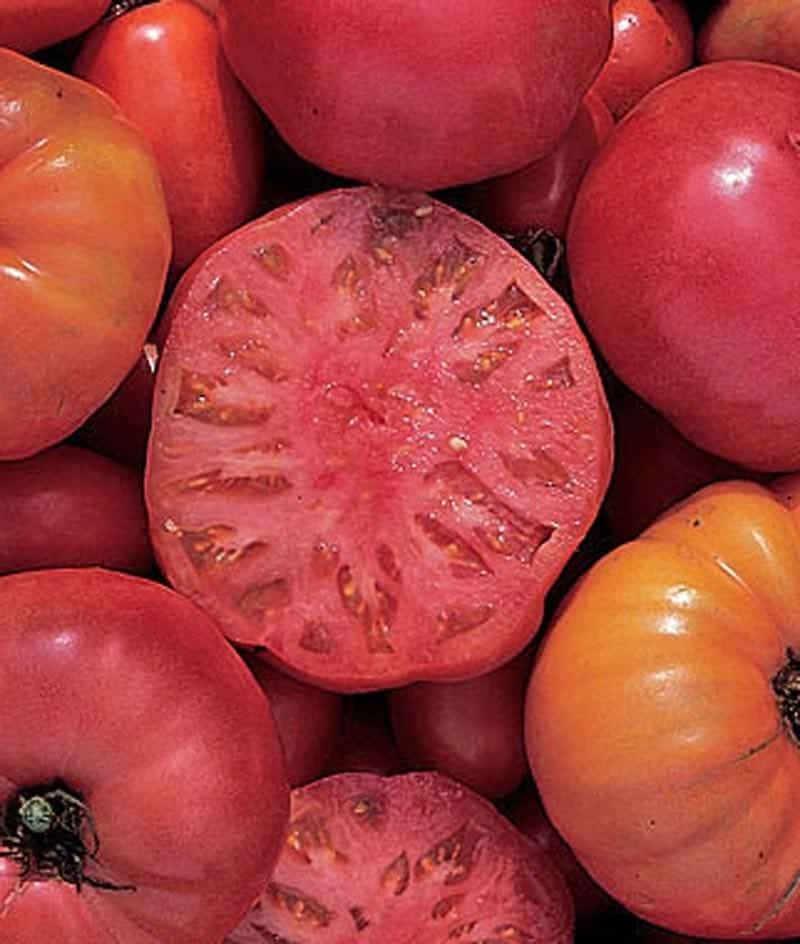
Mortgage Lifter is a giant pink-red beefsteak tied to the Radiator Charlie story, with fruit often listed at 1 to 3 pounds and some reports much larger.
- Origin: Mortgage Lifter is strongly associated with Marshall Cletis "Radiator Charlie" Byles of Logan, West Virginia, who selected large tomatoes and sold plants to help pay off his mortgage. See West Virginia University Extension.
- Appearance: Huge pink-red beefsteak tomato, often 1 to 3 pounds, with some fruit reported much larger.
- Taste: Rich, sweet, mild, and meaty.
- Best uses: Sandwiches, large tomato slices, salads, and tomato plates.
- Kitchen note: Use Mortgage Lifter for large sandwich slices and tomato plates. Let very large fruit rest on a board after slicing so extra juice does not flood the plate.
- Points of interest: The well-known Radiator Charlie story says he developed Mortgage Lifter by crossing large-fruited tomatoes over several seasons, then sold plants for $1 each and paid off his mortgage. It is one of the most memorable origin stories in heirloom tomatoes.
33. Mr. Stripey Tomatoes

Mr. Stripey is a yellow-red striped heirloom tomato with mild sweetness, soft juicy flesh, and a beefsteak-like form under good growing conditions.
- Origin: Heirloom tomato with yellow-red striping; the name is often confused with Tigerella, which is a different striped variety.
- Appearance: Yellow and red striped tomato, often beefsteak-like when large.
- Taste: Mild, sweet, and juicy when ripe.
- Best uses: Fresh slicing, tomato plates, salads, and mild tomato dishes.
- Kitchen note: Use Mr. Stripey fresh so the yellow-red coloring and sweet flavor stay noticeable. It is especially good sliced for platters and sandwiches.
- Points of interest: Mr. Stripey is sometimes confused with Tigerella, a smaller, more acidic striped tomato.
34. Pantano Romanesco Tomatoes

Pantano Romanesco is a ribbed Italian heirloom tomato with meaty flesh, regular leaves, brilliant red fruit, and strong use as both a slicer and sauce tomato.
- Origin: Italian heirloom tomato associated with Rome and Roman-style tomato growing.
- Appearance: Red ribbed tomato with a slightly flattened shape.
- Taste: Rich, meaty, and full-flavored when ripe.
- Best uses: Fresh slicing, sauce, cooking, and tomato salads.
- Kitchen note: Use Pantano Romanesco for sauce or fresh slicing. Its meaty, ribbed fruit gives sauce body but still looks beautiful raw.
- Points of interest: Pantano Romanesco is described as highly productive, regular-leaf, indeterminate, and similar to Genovese Costoluto, with large 12 ounce ribbed fruit.
35. Plum Tomatoes

Plum tomatoes are the sauce tomatoes cooks reach for first: oval or cylindrical, firm-fleshed, lower in loose moisture, and bred or selected for cooking, canning, paste, and sauce.
- Origin: Plum tomato is a tomato type bred or selected for processing, paste, and sauce.
- Appearance: Oval, egg-shaped, or cylindrical tomatoes with fewer seed pockets than many round tomatoes.
- Taste: Usually meaty and less watery, with tomato flavor that concentrates well when cooked.
- Best uses: Sauce, canning, tomato paste, cooking, and salsa.
- Kitchen note: Use plum tomatoes when you want less water and more flesh. They cook down faster than juicy slicers for sauce, paste, canning, and roasting.
- Points of interest: Common plum and paste tomatoes include Roma VF, San Marzano, Ropreco Paste, Amish Paste, and Big Mama; small plum tomatoes are often sold as grape tomatoes.
36. Raf Tomatoes

Raf tomatoes are Spanish tomatoes valued for irregular green-toned fruit, deep grooves, firm juicy pinkish pulp, and a sweet-acid balance shaped by salty growing conditions.
- Origin: Spain, especially Almeria and the Cabo de Gata-Nijar area.
- Appearance: Irregular, ribbed tomato with green-to-dark coloring.
- Taste: Sweet-acid balance with firm, juicy flesh.
- Best uses: Fresh salads, tomato plates, simple slicing, and raw preparations.
- Kitchen note: Serve Raf tomatoes simply with olive oil and salt. Their sweet-acid balance and firm flesh are the point, so avoid burying them in heavy sauces.
- Points of interest: Raf refers to fusarium resistance. The fruit has deep grooves and green-to-dark coloring, the pinkish pulp is firm and juicy, sweetness can reach about 9 degrees Brix, and salty growing conditions are part of its reputation.
37. Rebellion Tomatoes

Rebellion tomatoes are ribbed, chunky tomatoes with smooth skin and a shape that works for stuffing, baking, and crosswise slices that can look flower-like.
- Origin: Ribbed tomato variety with limited widely available origin documentation.
- Appearance: Ribbed, chunky tomato with a smooth skin.
- Taste: Fresh tomato flavor in a chunky ribbed fruit that suits stuffing and baked tomato dishes.
- Best uses: Stuffing, baking, slicing, salads, and Mediterranean-style tomato dishes.
- Kitchen note: Use Rebellion for stuffing, baking, or crosswise salad slices. The ribbed shape makes striking rounds on a plate.
- Points of interest: Crosswise Rebellion tomato slices can look flower-like, and the chunky ribbed shape suits Mediterranean or Middle Eastern fillings before baking.
38. Currant Tomatoes

Currant tomatoes are tiny wild-type tomatoes from Solanum pimpinellifolium, a tomato species native to Ecuador and Peru and important in tomato genetics and breeding history.
- Origin: Wild tomato species native to Ecuador and Peru, with naturalized populations reported elsewhere.
- Appearance: Very small red tomatoes, much smaller than standard cherry tomatoes, borne by a wild tomato species.
- Taste: Concentrated, bright, and fresh.
- Best uses: Salads, garnishes, snacking, fresh salsa, and tiny tomato accents.
- Kitchen note: Use currant tomatoes whole. They are tiny enough for salads, garnish, and snacking, and too small to bother peeling or saucing.
- Points of interest: Currant tomato can hybridize with domestic tomatoes and has been important for breeding disease resistance and studying fruit shape and size. Its genome was sequenced in 2012.
39. Roma Tomatoes

Roma tomatoes are firm, meaty plum tomatoes with few seeds and low loose juice, widely used for sauce, canning, paste, salsa, and roasting.
- Origin: Roma is a plum tomato type developed for processing and sauce use; Roma VF is connected to USDA breeding work.
- Appearance: Red egg-shaped or pear-shaped plum tomato with firm flesh, few seeds, and single fruit often around 60 grams or 2 ounces.
- Taste: Mild tomato flavor with meaty texture and less loose juice than many slicers.
- Best uses: Sauce, canning, tomato paste, salsa, roasting, and cooked tomato recipes.
- Kitchen note: Use Roma when you want tomato flavor without too much juice. Seed lightly if making salsa, or cook down for paste and sauce.
- Points of interest: Roma VF is a common catalog strain, with verticillium and fusarium resistance behind the VF naming. Windowbox Roma is a smaller relative, and heavy vines make Roma popular with gardeners who do home canning.
40. Rutgers Tomatoes

Rutgers tomatoes are historically important American tomatoes with fresh-market and processing value, tied to Rutgers, Campbell Soup Company, New Jersey agriculture, and the later Rutgers 250 revival.
- Origin: Rutgers tomato was released in 1934 by Rutgers' New Jersey Agricultural Experiment Station through work by Lyman Schermerhorn with Campbell Soup Company material. It came from JTD crossed with Marglobe. See Rutgers NJAES and Smithsonian.
- Appearance: Classic red tomato with thin skin, uniform shape, and all-purpose market-tomato size.
- Taste: Balanced sweetness and acidity; Rutgers is described as a true New Jersey tomato with both high acids and high sugars.
- Best uses: Fresh eating, slicing, cooking, processing, and all-purpose tomato use.
- Kitchen note: Use Rutgers as an all-purpose red tomato with enough acidity for fresh eating and enough body for cooking.
- Points of interest: Rutgers became a major processing tomato for Campbell's, Heinz, Hunt's, Ritter, and other companies, but it declined when commercial harvest and shipping needs shifted toward tougher tomatoes. Rutgers later worked to revive the old Jersey tomato character for the Rutgers 250 project.
41. San Marzano Tomatoes
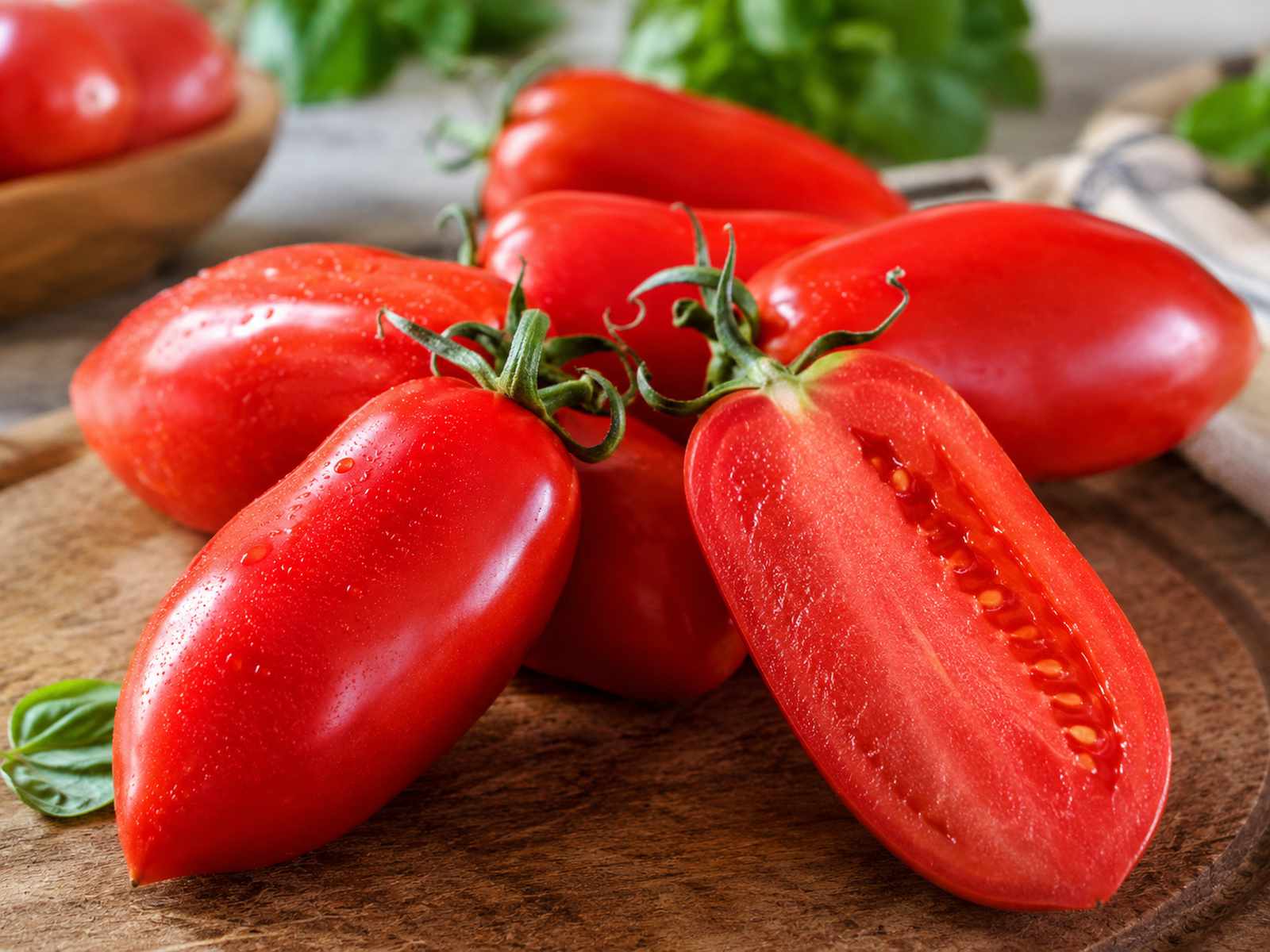
San Marzano tomatoes are famous Italian sauce tomatoes with thinner, pointed plum shape, thick flesh, fewer seeds, and a strong sweet tomato flavor.
- Origin: San Marzano tomatoes are traditionally associated with San Marzano sul Sarno near Naples, Italy. See the full San Marzano tomatoes guide for DOP and protected-origin details.
- Appearance: Long, narrow, pointed plum tomato with thick flesh and fewer seeds than many Roma tomatoes.
- Taste: Strong, sweet, and less acidic than many standard plum tomatoes.
- Best uses: Tomato sauce, pizza sauce, pasta sauce, roasting, and cooked tomato recipes.
- Kitchen note: Use San Marzano for sauce when you want dense flesh and fewer seeds. Crush by hand for rustic sauce or simmer gently for a smoother texture.
- Points of interest: Commercial San Marzano production is closely associated with Italy. DOP labeling applies only under specific legal conditions, and fraud has been an issue because of the variety's premium reputation.
42. Santorini Tomatoes

Santorini tomatoes are small Greek island tomatoes associated with volcanic soil, sparse rainfall, wind, heat, and concentrated flavor.
- Origin: Santorini, Greece, where the small tomataki tomato is associated with the island's volcanic growing conditions.
- Appearance: Small cherry-style tomato associated with Santorini, where dry conditions, wind, heat, and volcanic soil are part of its identity.
- Taste: Concentrated tomato flavor from small fruit grown in dry island conditions.
- Best uses: Fresh eating, drying, local-style tomato dishes, and concentrated tomato flavor.
- Kitchen note: Use Santorini tomatoes fresh or lightly cooked so their small size and concentrated sweetness remain noticeable.
- Points of interest: Santorini tomato history is often tied to a story that cherry tomatoes reached Greece in 1818, regular cultivation began in 1875, production reached about 20,000 acres by the 1900s, and production later declined. See the Santorini cherry tomato history.
43. Super Sweet 100 Tomatoes

Super Sweet 100 tomatoes are hybrid cherry tomatoes with long fruit-bearing stems, heavy clusters, and very sweet one-ounce fruit about 1 inch across.
- Origin: Hybrid cherry tomato bred for heavy clusters of sweet fruit.
- Appearance: Small red cherry tomatoes, about 1 ounce and about 1 inch across, produced in long clusters of 100 or more fruit.
- Taste: Sweet, bright, and snackable.
- Best uses: Snacking, salads, lunch boxes, roasting, and fresh summer dishes.
- Kitchen note: Serve Super Sweet 100 tomatoes whole or halved. They are best fresh from the vine, in salads, or as a sweet snack tomato.
- Points of interest: Super Sweet 100 is known for sweetness, small cherry-size fruit, and heavy clusters.
44. Tomaccio Tomatoes

Tomaccio tomatoes are cherry tomatoes developed for drying, with small sweet fruit from a 12-year Hishtil breeding program using a wild Peruvian tomato species.
- Origin: Developed by Hishtil in Israel through a 12-year breeding program using a wild Peruvian tomato species. See Hishtil's Tomaccio catalog sheet.
- Appearance: Small cherry tomato from vigorous plants bred for drying.
- Taste: Sweet and concentrated, especially when dried or roasted.
- Best uses: Drying, roasting, snacking, salads, and concentrated tomato flavor.
- Kitchen note: Use Tomaccio fresh for sweetness, or dry and roast it when you want concentrated tomato flavor. The variety was bred with drying in mind.
- Points of interest: Tomaccio is vigorous, early, high-yielding, able to reach about 9 feet tall, and capable of producing 13-18 pounds of fruit per season.
45. Yellow Pear Tomatoes

Yellow Pear tomatoes are small yellow heirloom pear tomatoes, easy to recognize by their teardrop shape and better suited to snacking, salads, garnish, and platters than sauce.
- Origin: Heirloom pear tomato type with yellow, orange, and red forms; yellow is the most common.
- Appearance: Small yellow pear-shaped tomato.
- Taste: Sweet, mild, and fresh.
- Best uses: Salads, snacking, garnishes, fresh tomato bowls, and colorful platters.
- Kitchen note: Use Yellow Pear whole or halved for salads and garnish. Keep the pieces large enough that the pear shape remains visible.
- Points of interest: Pear tomatoes may be yellow, orange, or red, with yellow being the most common. They are indeterminate heirlooms with a pear or teardrop shape.
Tomato Variety FAQs
Roma, plum, and San Marzano tomatoes are usually best for sauce because they have meaty flesh, fewer seeds, and less loose juice than many slicing tomatoes.
Firm, ripe tomatoes are best for salsa. Roma and plum tomatoes are less watery, while cherry and grape tomatoes can add sweetness.
Large slicing tomatoes such as beefsteak, Brandywine, Cherokee Purple, Mortgage Lifter, and other slicer tomatoes are best for sandwiches because they make broad, flavorful slices.


Anonymous says
Thank you. Great photos and explanations.
D.S.Wayal says
Nice information against tomato segments.
jack burton says
I agree that the Cherokee Purple is one of the best tasting tomatoes ever. I tell people it is everything they ever wanted in the way a tomato should taste. The Black Krim is also one of our favorites to grow. incredibly good on a BLT. We tried the Japanese Black Triffle this year and had great results. Very delicious, and quite prolific.
Jonathan H. says
I just ate two* Cherokee Purple tomatoes from a plant I bought at Whole Foods this past spring. They were by far THE sweetest tomatoes I've ever encountered - absolutely delicious.
*Why only two, and why so late in the growing season? Because I grew the plant in a container, which probably didn't have enough soil in it. I mulched it well with grass clippings, but a couple of times I still let it go too long without watering, which killed off a bunch of the flowers at probably the worst possible time. Now that I've finally gotten a taste of the fruits, I'm really kicking myself. I won't let the same thing happen again.
Anne says
You have a typo in the heading for Hanover tomatoes. They are not "Hangover" tomatoes. LOL.
Jonnie says
I saw that too and at first was like....a tomato that helps with hangovers?! BRILLIANT!
Denise says
Have you ever heard of an Oxi Harp or Oxy Harp tomatoe? Not sure of the spelling
TimX says
Ox Heart. Because they look like a heart.
They are very large and there are several excellent varieties.
Robert grooms says
When I was child my mother planted Tomatoes that only grow to about 3’. They were a medium sized and produced most of the summers d had a sweet taste. I haven’t heard of them in many years and can’t remember the name of them more Just hoping might have any clue of a tomato plant like that.
Maureen taylor says
I have grown tomatoes for fifty years and find for dropping and taste Shirley are good feelings is even better me the first tomatoes ogres where aamoroso and arasta I also like piccolo all in a cold greenhouse
Kathy Flaherty says
Excellent, thank you so much for all the information!
Helen says
Last year I bought a tomato plant that did not need trussing. It grew prostrate and produced 5-7 fruit on each stem which were sweet and luscious. Slightly flat fruit that fitted in the palm of my hand. Does anyone know what variety it may be?? Thanks
Lee says
Once someone gave me a small tomato that had almost a fuzz on it. Best cherry-sized tomato I’ve ever eaten. What was it?! Grower has passed, so I don’t know anything else about it. Please help if you can. Thank you.
Steven Pennington says
Hi Lee, I can help out with another keyword that should help you with your journey, "Woolly". This means these types of tomato have a gene that causes the furriness or fuzz on the outside of the tomato. I hope this helps out. Would love to know what kind of tomato you're looking for once you find it. All the best, Chef Pennington...
Jeannie says
Possibly Wapsipiconicon Peach
Joan castagna says
I bought a tomato plant called country something. Can not remember the correct. Can you help me.
Steven Pennington says
I did a search using: "country" tomatoes, or "country" tomato. I found Country Taste Hybrid Tomato I suggest trying using the same search and see what you find. Make sure to use the quotations " " around the word country. Hope you're enjoying our website. Please join our newsletter and follow on YouTube and social media. The link is located on the menu. All the best, Chef Pennington.
Ivy Muthoni says
I was asking how you can avoid birds eating the tomatoes if you don't plant in a greenhouse and whether you know which company in Kenya has these kind of tomato seeds
Steven Pennington says
Which tomato seeds are you trying to source in Kenya?
As to keeping birds away from your tomatoes, I would suggest using raised netting surrounding the tomatoes.