
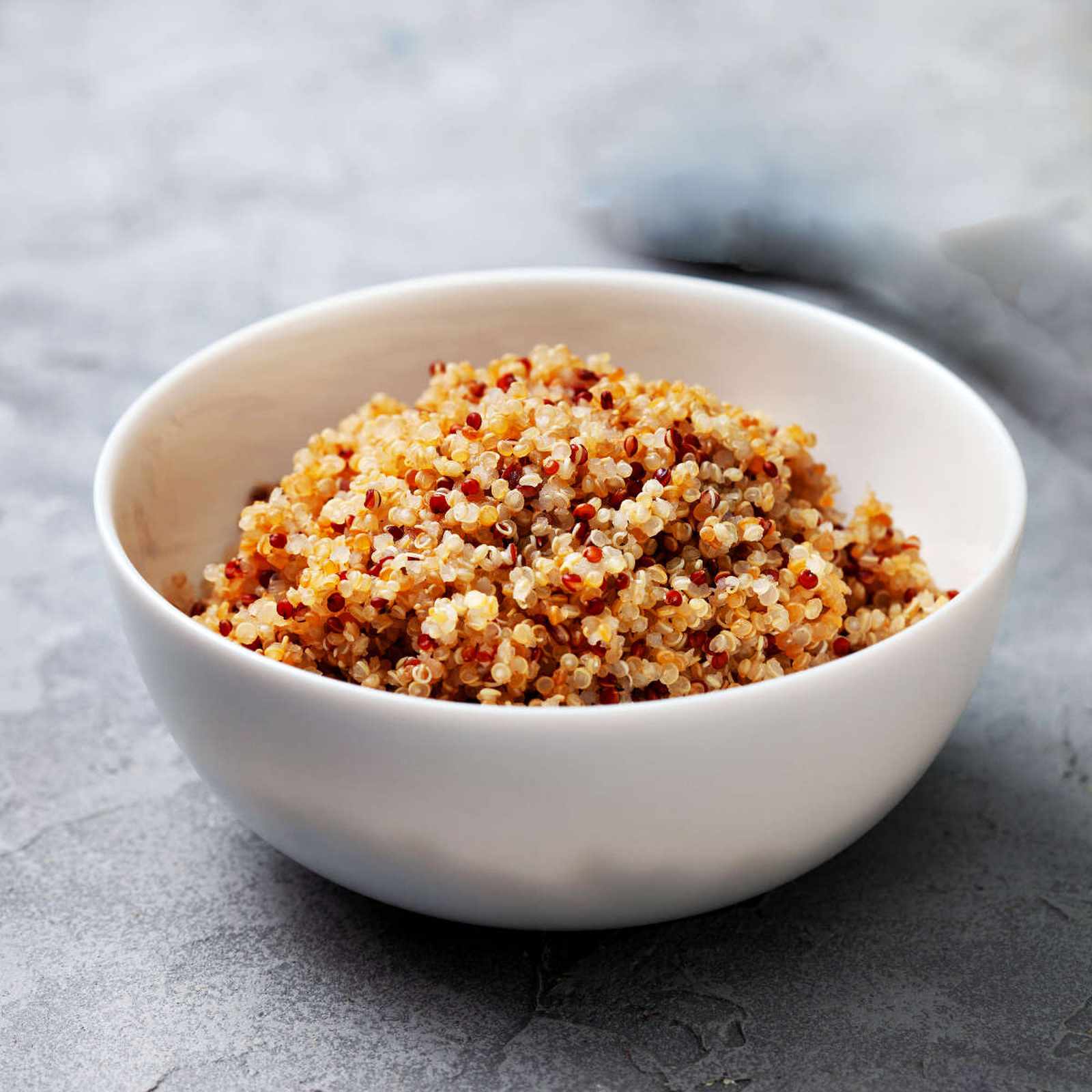
To cook fluffy quinoa, rinse 1 cup quinoa, combine it with 2 cups water or broth, simmer covered for about 15 minutes, then let it rest off the heat for 5 minutes before fluffing with a fork. That short rest matters because the steam finishes softening the grains and keeps the quinoa from turning wet or mushy.
This guide covers the four easiest ways to cook quinoa: stovetop, microwave, rice cooker, and Instant Pot. You will also get quinoa texture control tips, water ratios, doneness cues, and fixes for mushy, bitter, or crunchy quinoa.
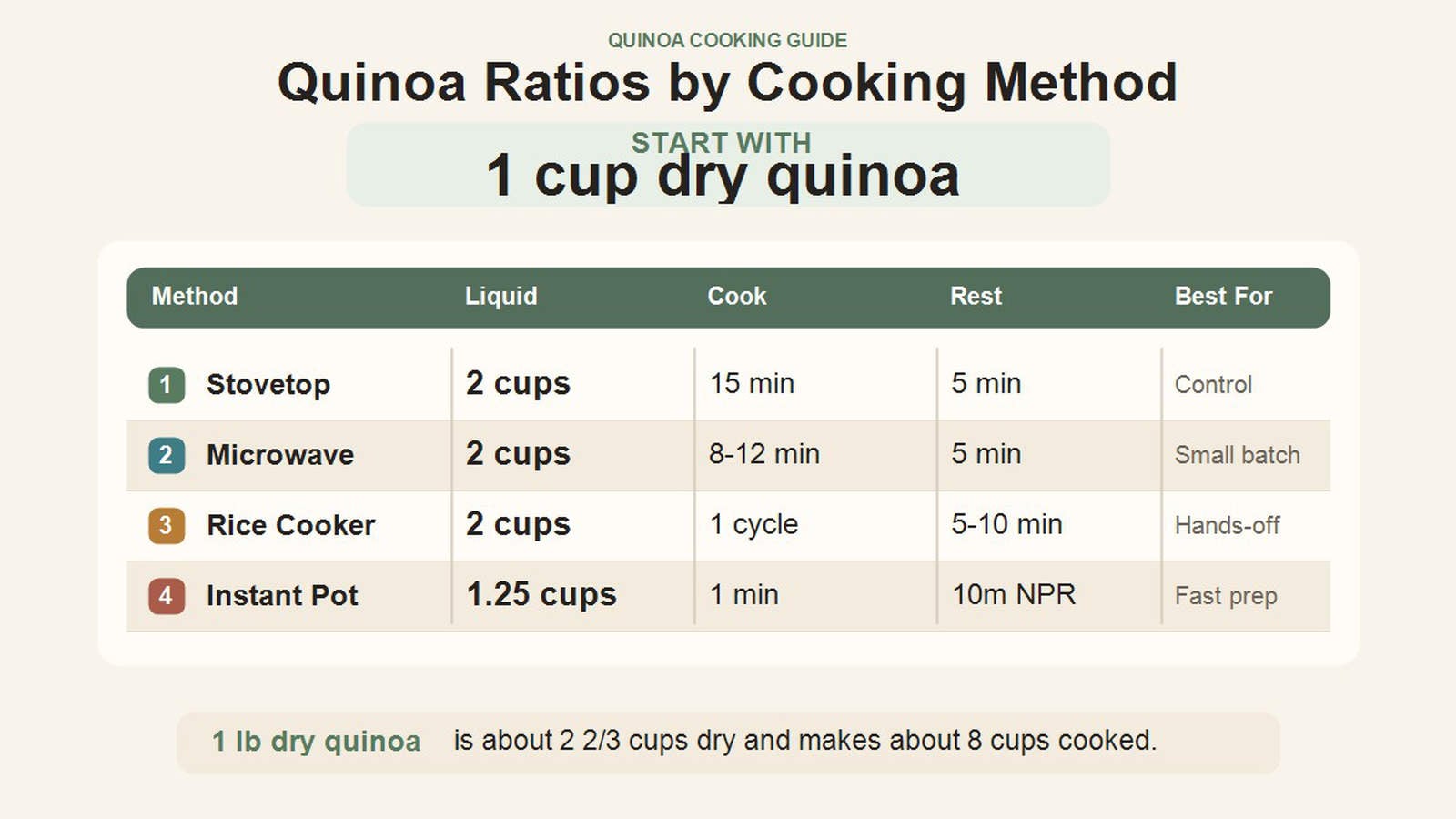
Quinoa Cooking Ratio Chart
| Method | Quinoa | Liquid | Cook Time | Rest Time |
|---|---|---|---|---|
| Stovetop | 1 cup | 2 cups | About 15 minutes | 5 minutes |
| Microwave | 1 cup | 2 cups | 8 to 12 minutes | 5 minutes |
| Rice cooker | 1 cup | 2 cups | One white rice cycle | 5 to 10 minutes |
| Instant Pot | 1 cup | 1¼ cups | 1 minute high pressure | 10 minutes natural release |
Chef note: Quinoa is done when the liquid is absorbed, the grains look slightly translucent, and the tiny white germ ring separates from each seed. If water is still sitting in the pan, cook uncovered for 1 to 2 minutes before resting.
Quinoa Texture Control
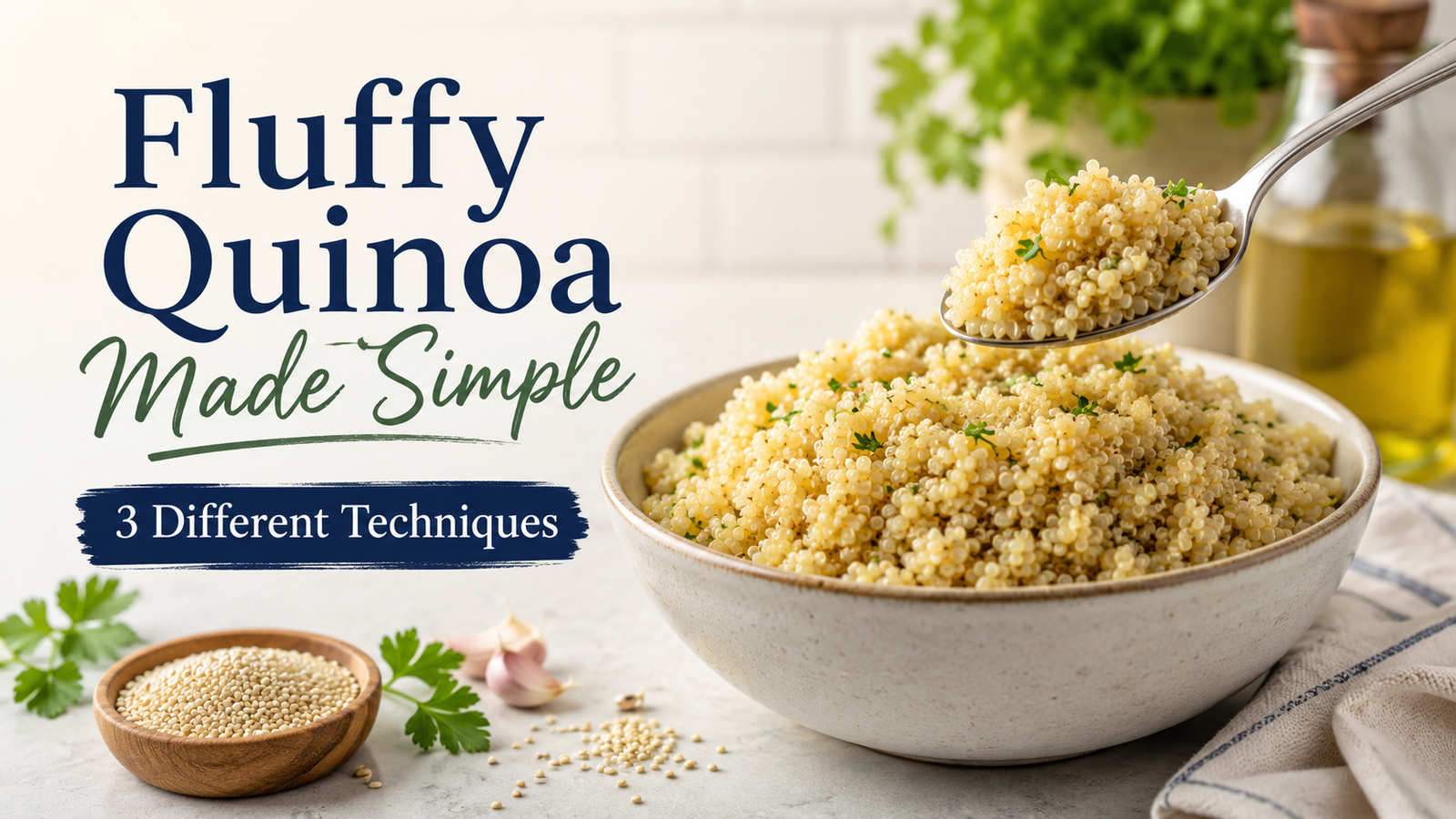
Good quinoa texture comes from the right liquid ratio, a gentle simmer, and a covered rest. Properly cooked quinoa should look light and fluffy, not wet or sticky. The grains should separate when you drag a fork through them, and each seed should have a small curved white ring around it.
If the quinoa looks soupy, it needs more time uncovered. If it tastes hard in the center, it needs a little more water and steam. If it looks clumped and heavy, it may have cooked with too much liquid or been stirred too often.
How Much Cooked Quinoa Does 1 Cup Dry Make?
One cup of dry quinoa usually makes about 3 cups cooked quinoa. That is enough for 4 small side-dish servings or 2 to 3 larger grain bowl servings, depending on what you add with it.
For larger batches, 1 pound of dry quinoa is about 2 ⅔ cups dry and makes roughly 8 cups cooked quinoa. Let cooked quinoa cool before storing so steam does not collect in the container and make the grains soggy.
What Is Quinoa?
Quinoa, pronounced "keen-wah," is a seed that cooks like a grain. It has a mild nutty flavor and a light texture when cooked correctly. Because it works well in salads, bowls, side dishes, and meal prep, it is a useful ingredient to keep on hand.
Quinoa is often called a pseudocereal because it is not a true cereal grain, but it is cooked and served in many of the same ways as rice, barley, or couscous.
Best Quinoa to Buy
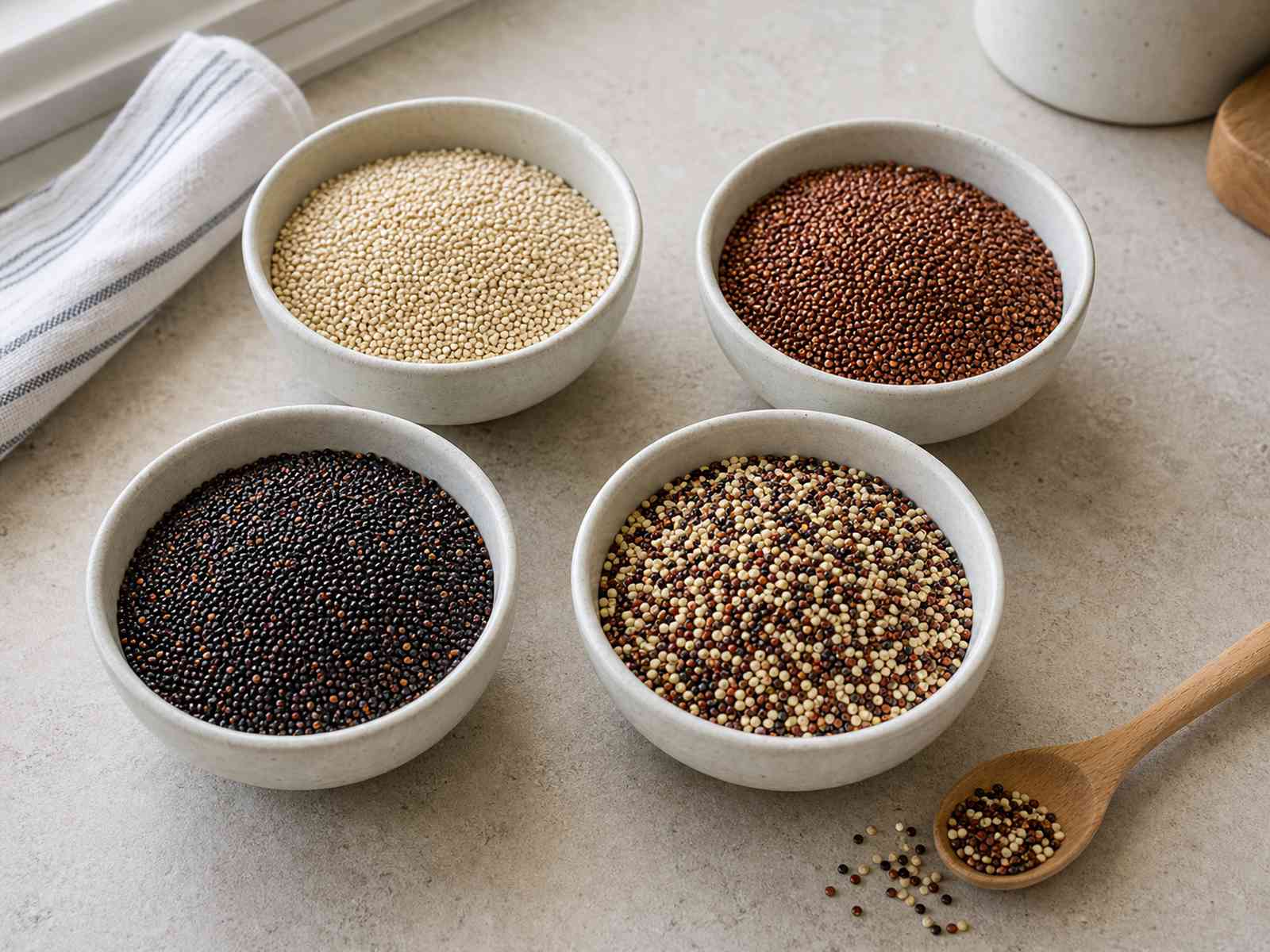
The best quinoa depends on how you plan to use it. White quinoa cooks up the softest and fluffiest, while red and black quinoa hold their shape better for salads and grain bowls.
- White quinoa: Mild, delicate, and fluffy. Best for everyday side dishes and softer textures.
- Red quinoa: Earthier and firmer. Good for salads because it holds its shape after cooking.
- Black quinoa: Slightly sweet, earthy, and a little more chewy.
- Tricolor quinoa: A mix of white, red, and black quinoa with a balanced texture and colorful appearance.
When shopping, look for quinoa that is clean, dry, and free of debris. Many packaged brands are pre-rinsed, but a quick rinse at home can still help remove any lingering bitterness.
Rinse Quinoa Before Cooking
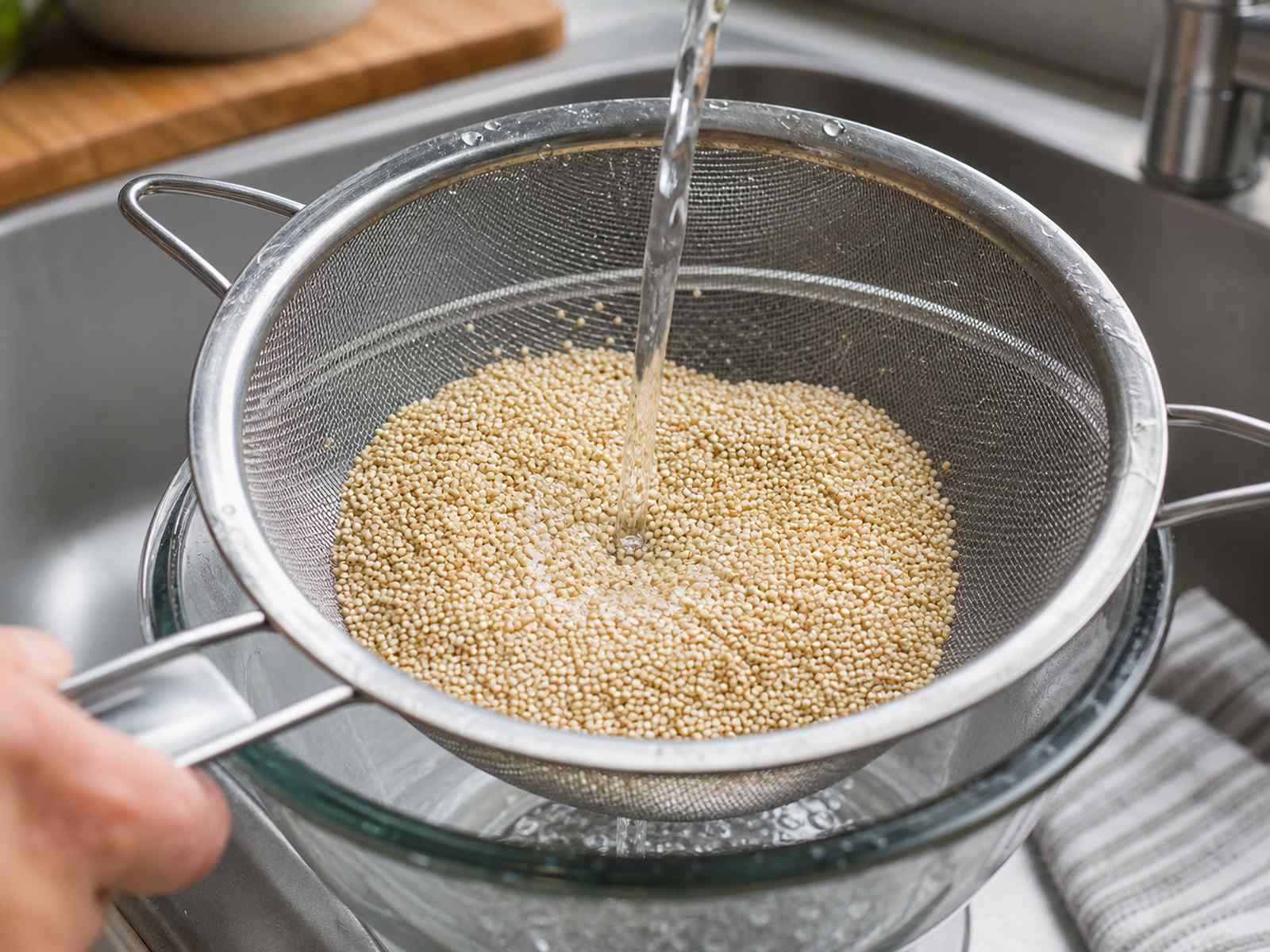
Place the quinoa in a fine mesh strainer and rinse it under cold running water for 20 to 30 seconds. Rub the grains gently with your fingers, then drain well before cooking.
Rinsing helps remove saponins, the naturally occurring coating that can make quinoa taste bitter or soapy. If your package says pre-rinsed, you can skip this step when needed, but rinsing still improves flavor for many brands.
Do not soak quinoa for this basic method. Soaking changes how much water the grains absorb, which can make the standard 1-to-2 ratio less reliable.
Stovetop Quinoa
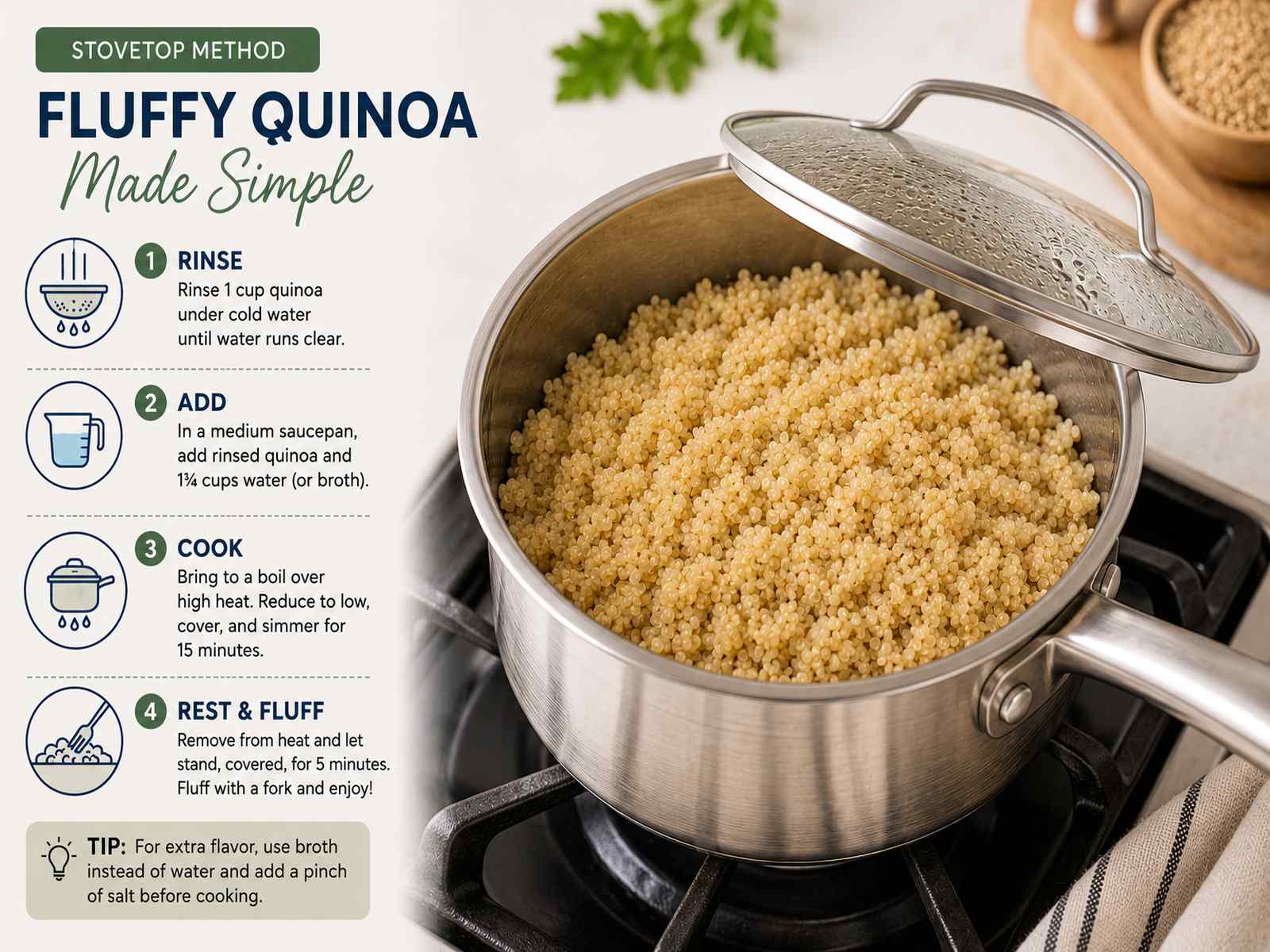
The stovetop method is the best place to start because it gives you control over the heat, moisture, and final texture.
Ingredients
- 1 cup quinoa
- 2 cups water or broth
- Pinch of salt
Instructions
- Rinse the quinoa under cold water in a fine mesh strainer, then drain well.
- Add the quinoa, water or broth, and salt to a medium saucepan.
- Bring to a boil over medium-high heat.
- Reduce the heat to low, cover the pan, and simmer for about 15 minutes, or until the liquid is absorbed.
- Remove the pan from the heat and let it stand, covered, for 5 minutes.
- Fluff gently with a fork before serving.
For a slightly firmer texture, reduce the liquid to 1¾ cups. For softer quinoa, use the full 2 cups and make sure it rests covered after cooking.
Microwave Quinoa

The microwave is useful for small batches. Use a larger bowl than you think you need because quinoa can bubble up as it cooks.
- Add 1 cup rinsed quinoa and 2 cups water or broth to a large microwave-safe bowl.
- Cover loosely with a microwave-safe plate or lid.
- Microwave on high for 6 minutes, then carefully stir.
- Continue microwaving in 2-minute intervals until most of the liquid is absorbed.
- Keep covered and let the quinoa rest for 5 minutes.
- Fluff with a fork before serving.
Microwave timing varies by wattage. If the quinoa still tastes firm after resting, add 1 to 2 tablespoons of water, cover, and microwave for another minute.
Rice Cooker Quinoa
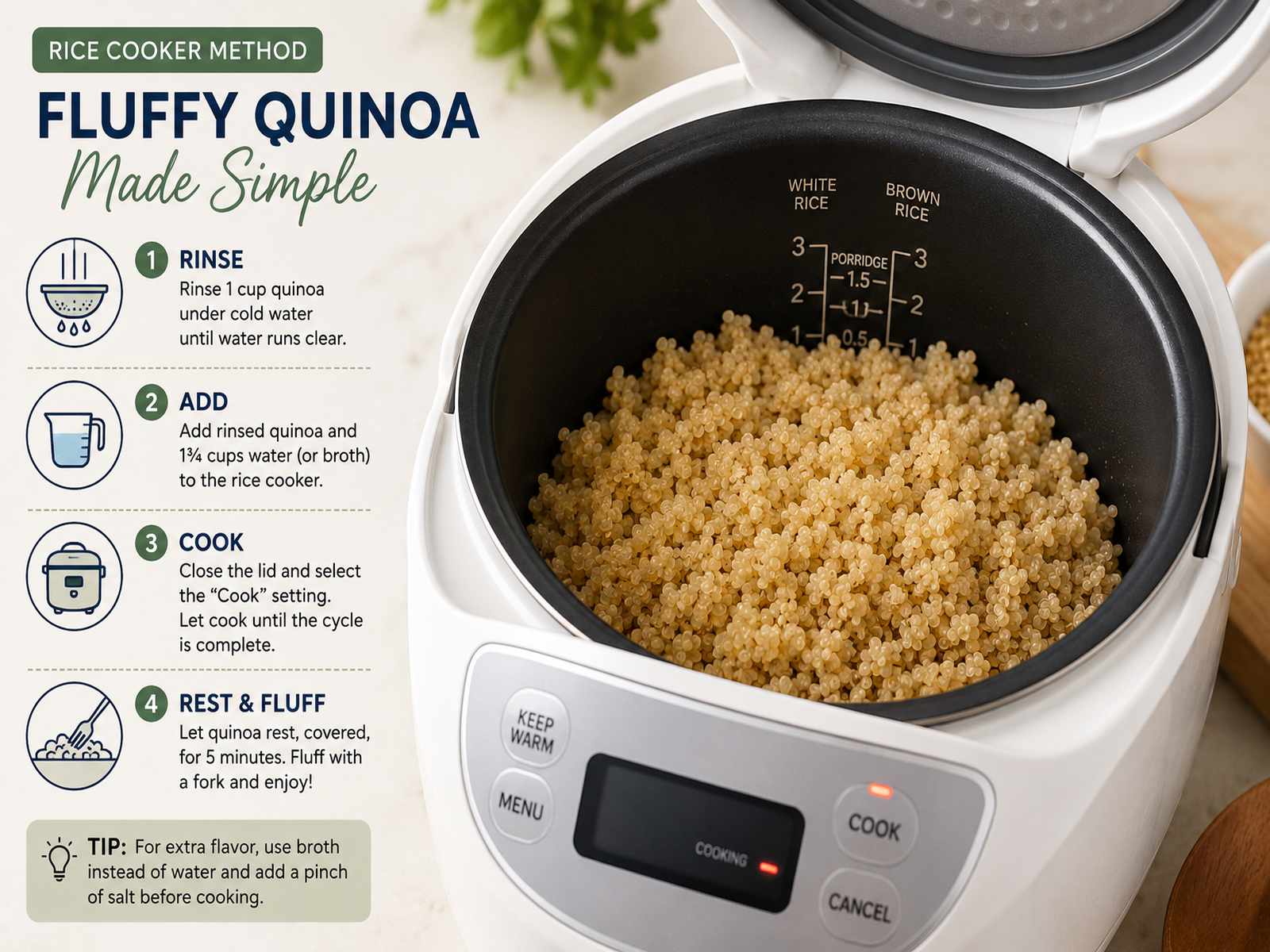
A rice cooker is the easiest hands-off method. It works especially well for meal prep because the cooker controls the simmering and steaming for you.
- Rinse 1 cup quinoa under cold water and drain well.
- Add the quinoa to the rice cooker with 2 cups water or broth and a pinch of salt.
- Close the lid and choose the white rice setting if your cooker has one.
- When the cooker switches off, let the quinoa steam for 5 to 10 minutes.
- Fluff gently with a fork before serving.
If your rice cooker tends to make softer rice, reduce the liquid slightly the next time you cook quinoa.
Instant Pot Quinoa
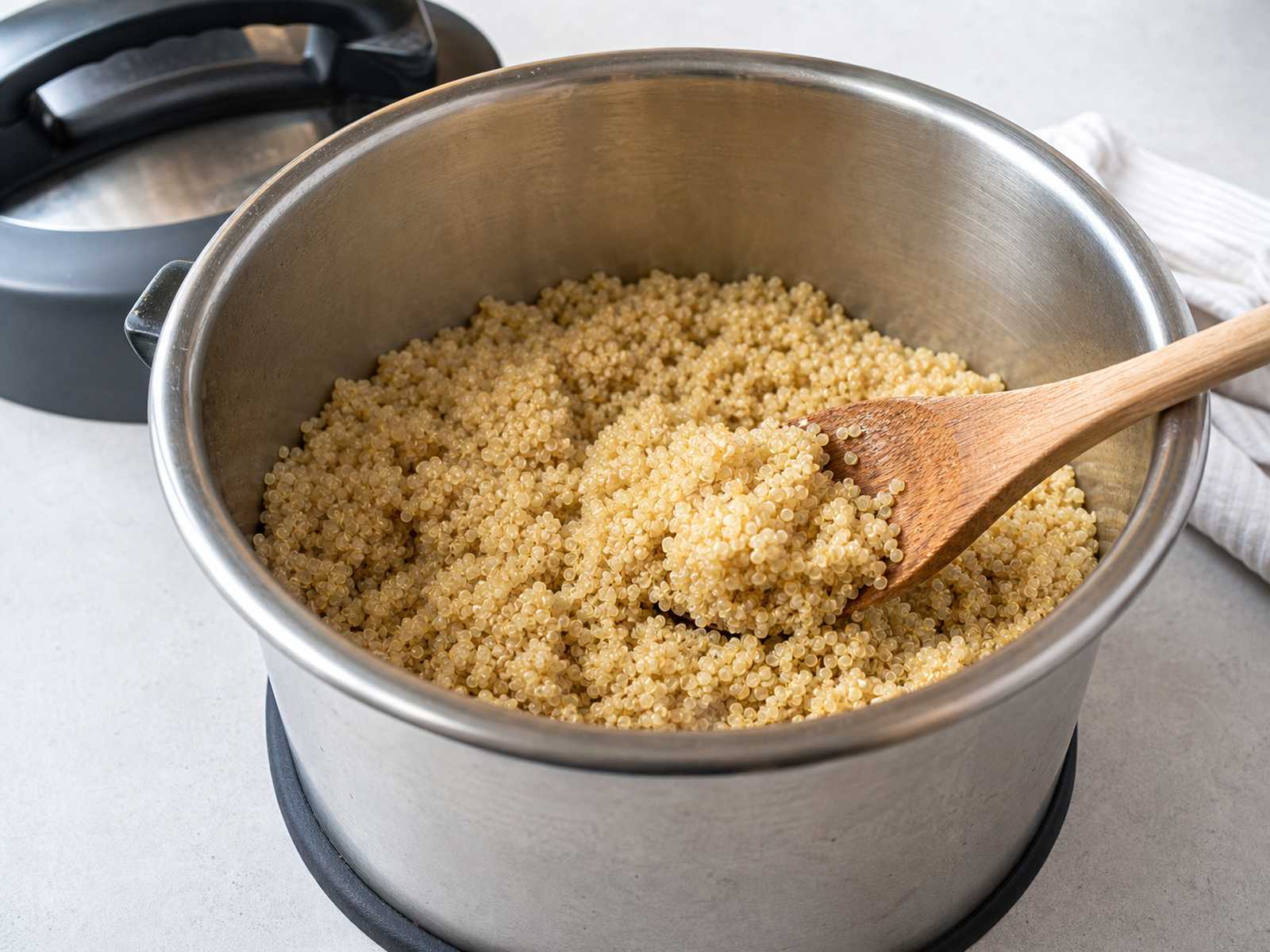
The Instant Pot uses less liquid than the stovetop method because very little steam escapes during pressure cooking. This method is helpful when you want a fast batch for meal prep, salads, bowls, or side dishes.
- Rinse 1 cup quinoa under cold water and drain well.
- Add the quinoa, 1¼ cups water or broth, and a pinch of salt to the Instant Pot.
- Close the lid and set the valve to sealing.
- Cook on high pressure for 1 minute.
- Let the pressure release naturally for 10 minutes, then carefully release any remaining pressure.
- Fluff the quinoa with a fork before serving.
For the best texture, avoid leaving quinoa on the warm setting for too long after pressure cooking. Extra holding time can make the bottom layer softer.
Fix Common Quinoa Problems
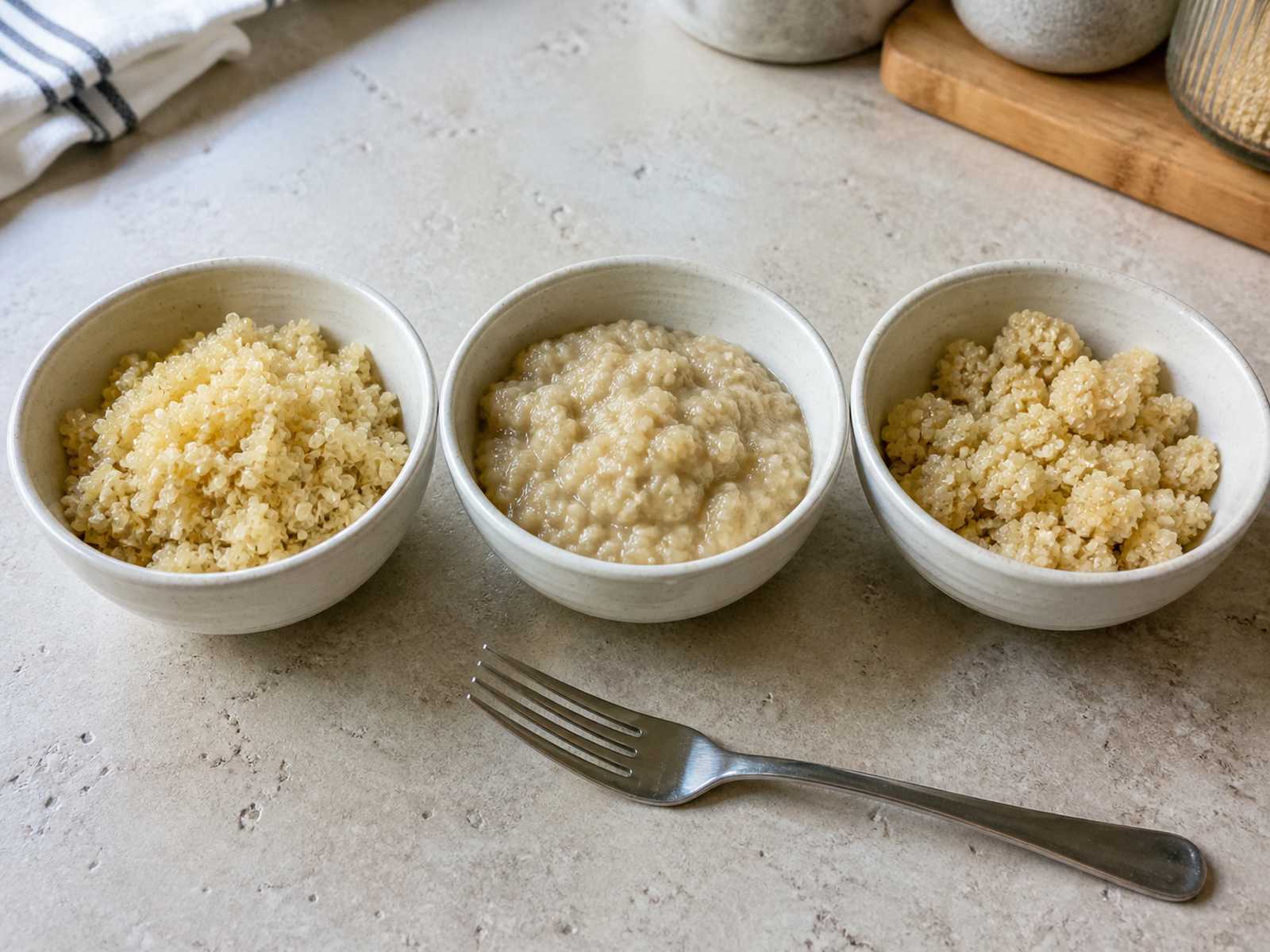
Most quinoa problems come down to water, heat, or resting time. Look at the texture first, then adjust the next batch based on what you see and taste.
| Problem | Likely Cause | Quick Fix |
|---|---|---|
| Mushy quinoa | Too much water, hard boil, or too much stirring | Cook uncovered briefly to evaporate moisture; use less liquid next time |
| Bitter quinoa | Saponins left on the seeds | Rinse better in a fine mesh strainer before cooking |
| Water left in the pan | Heat too low, lid leaking, or quinoa not fully cooked | Cook uncovered 1 to 2 minutes if tender, or cover and cook longer if firm |
| Crunchy quinoa | Not enough liquid or steam time | Add a splash of water, cover, and steam a few more minutes |
Mushy Quinoa
Mushy quinoa usually comes from too much water, cooking at too strong a boil, or skipping the resting step. Use a gentle simmer, keep the lid on, and let the quinoa steam off the heat before fluffing.
If a batch is already mushy but not burned, spread it on a plate or sheet pan for a few minutes so some steam can escape. It will not become perfectly fluffy, but it can still work in patties, veggie burgers, breakfast bowls, or soups.
Bitter Quinoa
Bitterness usually means the quinoa needed a better rinse. Rinse it in a fine mesh strainer under cold water and rub the grains gently with your fingers before cooking.
If cooked quinoa tastes bitter, try balancing it with a little salt, olive oil, lemon juice, herbs, or broth. For the next batch, rinse longer and drain well before adding it to the pot.
Water Left in the Pan
If the quinoa is tender but water remains, remove the lid and cook over low heat for 1 to 2 minutes. If the quinoa is still firm, cover the pan again and cook a few minutes longer.
Do not drain quinoa like pasta unless the batch is truly overwatered. Draining can wash away flavor and leave the grains unevenly cooked.
Crunchy Quinoa
Crunchy quinoa usually needs more steam. Add a splash of water, cover the pan, and cook on low for 2 to 3 minutes. Then let it rest covered before fluffing.
If quinoa is repeatedly crunchy, your burner may be running too hot and evaporating the water before the grains soften. Use a lower simmer or add an extra tablespoon or two of water next time.
Top Tip for Fluffy Quinoa
Do not stir quinoa repeatedly while it cooks. Let it simmer gently with the lid on, then fluff it only after it rests. Stirring too much can break the grains and make the texture sticky.
Every stovetop cooks a little differently, so check the pan around the 12-minute mark. If the water has cooked off too quickly and the quinoa is still firm, add a small splash of water, reduce the heat, and cover the pan again.
Store and Reheat Cooked Quinoa
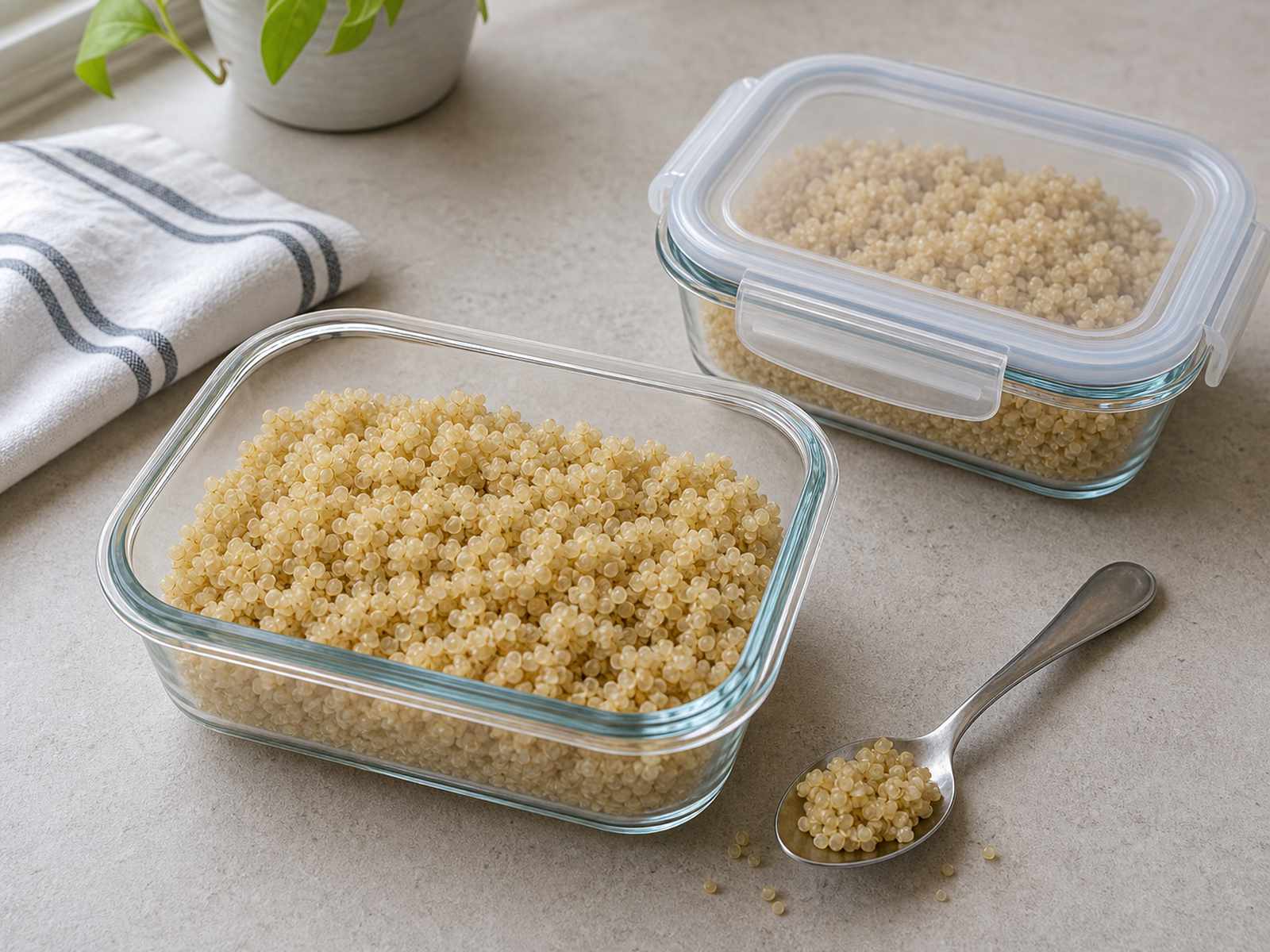
Let cooked quinoa cool, then store it in an airtight container in the refrigerator. For food safety, use cooked leftovers within 3 to 4 days, consistent with USDA leftover guidance. For longer storage, freeze cooled quinoa in flat portions for about 2 months for best quality.
To reheat, add a splash of water and warm it gently on the stovetop or in the microwave. Fluff with a fork after reheating to loosen the grains.
Ways to Use Cooked Quinoa
Cooked quinoa works well in warm bowls, chilled salads, breakfast bowls, veggie burgers, and simple side dishes. It also adds texture to meal prep because it holds well in the refrigerator.
- Quinoa salad: Toss cooled quinoa with chopped vegetables, herbs, dressing, and your favorite protein.
- Breakfast bowl: Warm cooked quinoa with milk, fruit, cinnamon, honey, and nuts.
- Vegetarian patties: Mix quinoa with beans, spices, and a binder, then pan-fry until crisp.
- Side dish: Serve quinoa with roasted vegetables, grilled fish, chicken, or saucy mains.
For a quinoa recipe on Butter-N-Thyme, try this quinoa chicken salad. If you are serving quinoa as a side, it also pairs well with this chef guide for how to cook salmon.
Prefer to watch the method? See the quinoa cooking video on YouTube.
Quinoa FAQs
Rinsing is recommended because it helps remove any remaining saponins, the natural coating that can make quinoa taste bitter. Some packaged quinoa is pre-rinsed, but a quick rinse still improves flavor for many brands.
For stovetop, microwave, and rice cooker quinoa, use 2 cups water or broth for every 1 cup quinoa. For Instant Pot quinoa, use 1.25 cups liquid for every 1 cup quinoa.
Stovetop quinoa takes about 15 minutes to cook, plus 5 minutes to rest. Microwave quinoa usually takes 8 to 12 minutes, rice cooker quinoa takes one cooking cycle, and Instant Pot quinoa takes 1 minute under pressure plus a 10-minute natural release.
One cup of dry quinoa usually makes about 3 cups cooked quinoa, enough for 4 small side-dish servings or 2 to 3 larger grain bowl servings.
Use the correct liquid ratio, keep the simmer gentle, avoid stirring while it cooks, and rest the quinoa covered before fluffing. For firmer quinoa, use slightly less liquid; for softer quinoa, use the full 2 cups liquid per 1 cup quinoa on the stovetop.
Quinoa is done when the liquid is absorbed, the grains look translucent, and the small white germ ring separates from each seed. The texture should be tender, not crunchy or mushy.
Yes. Cool cooked quinoa completely, then freeze it in flat portions for about 2 months for best quality. Reheat with a splash of water and fluff with a fork before serving.


Leave a Reply